

Adult listing tags are the metadata refiners that sit under a parent category, telling browsers and search filters exactly what a listing offers. The rule that matters most: keep tags in plain language, skip the coded slang, and cap visible tags around a few per listing. Do that and you get faster approval, cleaner discoverability, and a listing that doesn't get flagged for looking like something it isn't.
TL;DR:
- Using plain language and limiting tags to three to eight per listing increases approval speed and reduces suspicion during moderation.
- Tags should clearly describe format, kink specialty, experience level, and content warnings, with consistent naming and correct order from specific to general.
- Mismatched photos, missing verification, or incorrect category placement are common reasons for listing removal, so attach verifications and choose categories carefully.
- Overuse of tags or creating too many archive pages can cause index bloat and dilute discoverability, so maintain a controlled, canonical tag list.
- Proper tagging enhances search visibility and filtering accuracy, especially when tags are carefully tested and reused across listings.
Table of Contents
- What Are Adult Listing Tags in a Hub-and-Spoke Taxonomy?
- Naming, Counts, and Canonicalization: The Rules That Actually Work
- How Do Tags Affect Moderation and Listing Removal?
- Do Tags Help SEO or Just Create Clutter?
- What Do Good Adult Listing Tags Look Like in Practice?
- Why Taxonomy Discipline Keeps Adult Marketplaces Usable
- Ready to List? Here's Where Tagging Discipline Pays Off
- Where to Read More
- Sources
- FAQ
What Are Adult Listing Tags in a Hub-and-Spoke Taxonomy?
Think of a parent category as the hub. It's the broad shelf, like "Professional Services" or "Kink Events." Subcategories are the spokes branching off that shelf, and tags are the labels stuck to individual items sitting on it. Tags refine, they don't replicate. A tag should never try to become its own archive page unless the inventory behind it actually earns that, according to KinkyKorner's category framework.
Here's the quick test: if dozens of listings share a trait, that trait might deserve a subcategory. If only a handful of share it, it stays a tag. Create a "Rope Bondage" subcategory when there's real volume behind it; keep "Suspension" or "Single-Rope Technique" as tags underneath.
Every solid tag set covers a few essentials: format (in-person, virtual, digital download), kink specialty, experience level, and any content warnings the listing needs. Miss one of these and buyers filter right past you.
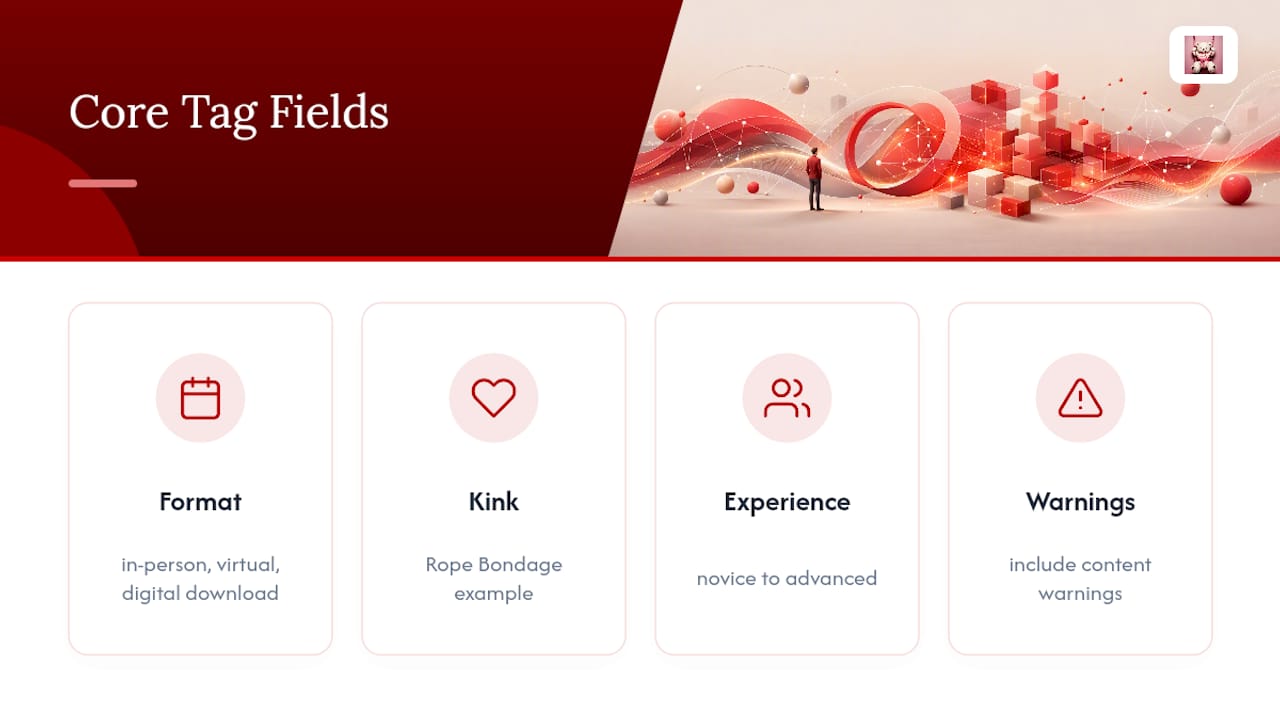
Naming, Counts, and Canonicalization: The Rules That Actually Work
Plain language wins every time. A tag like "Companionship Services" clears moderation faster and converts better than a coded euphemism, because coded shorthand confuses both automated filters and the people trying to book you, according to KinkyKorner's listing guide. Acronyms like "GFE" get flagged more often than providers expect. If you wouldn't say it out loud to a new client, don't hide it in a tag either.
Stick to these working rules when you build a tag set:
- Use sentence-case, plain-English names. No slang, no inside jokes, no abbreviations only regulars would recognize.
- Cap tags at three to eight per listing. More than that reads as keyword stuffing to both moderators and search filters.
- Order tags from most specific to most general. Lead with your niche, close with the broad category term.
- Map synonyms to one canonical tag. "Fetish Photography" and "Kink Photos" shouldn't both exist as separate tags splitting the same audience.
- Match your title and meta description to the tags you actually chose. A mismatch is one of the fastest ways to look suspicious to a review queue.
- Flag virtual versus physical clearly. It's the single biggest filter buyers use before they even open a listing.
Pro Tip: Build a canonical tag list once, save it somewhere you'll actually reopen, and reuse it across every listing you post. Testing new tags one at a time, instead of overhauling your whole set, makes it obvious which change actually moved your views.
How Do Tags Affect Moderation and Listing Removal?
Tags are one of the first things a moderation review scans, and vague or coded ones read as evasion even when that's not the intent. The fix is straightforward: literal tags reduce ambiguity, and ambiguity is what gets listings pulled.
The most common removal triggers, based on KinkyKorner's own review of pulled listings, follow a repeating pattern:
- Mismatched photos, where the images don't match the tags or description attached to them.
- Missing age verification, which is close to an automatic pull on any adult marketplace.
- Wrong category placement, where a listing sits in a hub that doesn't match its actual tags.
Attach a verification bundle to every listing before you publish: government ID on file, signed release forms for any third-party images, and transparent pricing that matches what the tags promise. Marketplaces that take compliance seriously keep audit logs of every verification check and store IDs securely, with a clear appeals path if a listing gets flagged in error.
One more habit worth building early: keep your legal name off the public listing entirely. Use a verified stage name or alias, and let the platform hold your verified identity privately on the back end. That protects you without weakening the compliance trail moderators need.
Do Tags Help SEO or Just Create Clutter?
Tags handle the long tail. Categories handle the head terms. Someone searching "kink events" lands on a hub; someone searching "rope suspension workshop virtual" needs a tag combination to find you at all. The mistake most providers make is treating tags like a keyword dump instead of a controlled vocabulary, and that habit is what causes index bloat across adult marketplaces, according to industry tag optimization guidance.
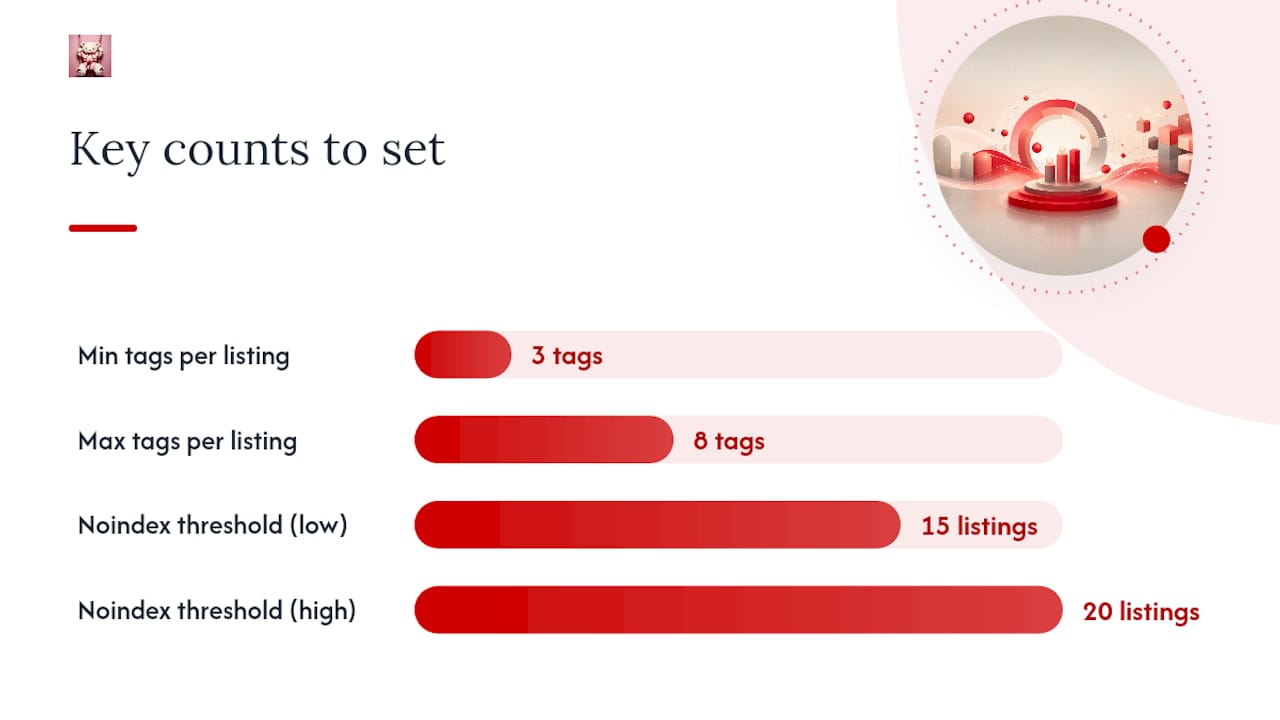
A tighter cap protects everyone's discoverability. Analysis of adult video platforms suggests a relatively small number of genuinely descriptive tags is a safer ceiling than the larger counts some sites default to, since every extra tag creates another archive page competing for the same search intent, per that same tag optimization research.
A few practical rules keep tag archives useful instead of thin:
- Set low-inventory tag archives to noindex automatically until they hit a real threshold, often cited around 15 to 20 listings.
- Maintain a synonym map so internal link equity concentrates on one canonical tag instead of splitting across near-duplicates.
- Add rating meta tags and video sitemap flags on explicit content pages, since structured data alone doesn't reliably signal explicit status to search engines, per this strategy guide.
- Separate explicit content onto its own subdomain or clearly flagged section where your platform architecture allows it.
Get the long-tail keyword mix right and tags start pulling in searches your category page never would on its own.
What Do Good Adult Listing Tags Look Like in Practice?
Three examples, three different listing types:
- Rope instructor. Parent category: Professional Services. Tags: "Rope Bondage," "Beginner Friendly," "In-Person Sessions." Add a kink-specialized flag and mark it physical, not virtual.
- Kink event listing. Category: Kink Events. Tags cover format ("Workshop"), audience ("All Experience Levels"), and pricing model ("Ticketed"). Flag virtual or physical clearly, since event-goers filter on that before anything else.
- Erotic print set. Category: Fetish. Tags: "Digital Download," "Fetish Photography," plus a content-warning tag where relevant. A literal title like "Illustration: 5-Image Fetish Set, Digital Download" clears review faster than anything vague, following KinkyKorner's erotic art submission guide.
A template you can copy for any listing:
- Title (literal, who/what/format)
- Parent category
- One to three sentence description
- Three to eight tags, ordered specific to general
- Verification checklist: ID on file, release forms attached, pricing transparent
Why Taxonomy Discipline Keeps Adult Marketplaces Usable
Most providers treat tagging as an afterthought, something to fill in fast before hitting publish. That's backwards. Tags are the layer that decides whether a buyer finds you and whether a moderator trusts you, and those two outcomes are more connected than people assume.
Plain-language tags do double duty: they clear automated filters faster and they convert better, because coded language confuses both systems and customers at the same time, per KinkyKorner's own tagging analysis. KinkyKorner built its hub-and-spoke taxonomy, pre-moderation review, and a kink-awareness field into listing templates specifically to cut down on false flags while keeping buyer trust intact, according to the platform's own listing infrastructure.
The practical move is simple: start with a canonical tag list, resist the urge to add new tags for every listing variation, and test changes one at a time so you can actually see what moved the needle.
— Prenston
Ready to List? Here's Where Tagging Discipline Pays Off
Getting your tags right is only half the job. It matters just as much where you list. KinkyKorner already runs the hub-and-spoke taxonomy and pre-moderation review described above, so a well-tagged listing here has a real shot at fast approval instead of sitting in a review queue guessing why it got flagged.

You can start with the Free Listing tier to test the waters, or move to paid plans for ongoing visibility; current prices are detailed on the pricing page. Categories like Adult Entertainment, Strip Clubs, Professional Services, Podcasts, Retailers & Studios, Only Fans Creators, Kink Events, and Fetish are all live on the category index, so you can see exactly where your listing's hub sits before you tag a single spoke. Skim the successful listing guide, then publish your first listing with a canonical tag set already in hand.
Where to Read More
For deeper detail on taxonomy structure, read Adult Listing Categories: 3 Controls Marketplaces Need. To avoid the mistakes that get listings pulled, see Adult Classifieds Mistakes That Get Listings Pulled in 2026. For event-specific tagging, check the event submission guide, or start directly on the KinkyKorner landing page.
FAQ
What Are Adult Listing Tags Exactly?
Adult listing tags are metadata labels attached to a listing under its parent category, describing details like format, kink specialty, experience level, and content warnings. They refine a category rather than replace it, helping buyers filter down to exactly what they want.
How Many Tags Should an Adult Listing Use?
Somewhere between three and eight tags per listing works best, ordered from most specific to most general. Going beyond that range starts to look like keyword stuffing to both moderators and search filters, per tag optimization research.
Why Do Coded Tags Get Listings Flagged?
Coded slang and acronyms confuse automated moderation filters, which are tuned to catch evasive language more than plain descriptions. Plain-language tags like "Companionship Services" clear review faster than shorthand, according to KinkyKorner's listing guide.
Does Kinkykorner Charge for Listing Tags?
Tags themselves are free to use across every listing tier. The tiers cover the listing itself, with options detailed on the pricing page.
Should Tags Create Their Own Archive Pages?
Only once inventory justifies it, typically once a tag's listings reach a meaningful threshold. Below that, a tag archive risks looking thin, so many platforms set it to noindex until it fills out, per industry tag guidance.