

Marketing erotic fiction in 2026 means playing a game where the refs keep changing the rules. Paid ads? Forget it. Amazon, Facebook, and Instagram/Threads all ban ads for erotica, full stop. So you build your audience the old-fashioned, intimate way: a mailing list that's yours, niche keywords that actually match what readers type at midnight, and a presence spread across platforms that won't ghost you without warning. Here's what actually works right now:
- Build a mailing list anchored by a free "reader magnet" story
- Use long-tail kink keywords like "hotwife," "monster romance," and "primal play" instead of broad terms
- Distribute across Patreon, Ko-fi, and direct sales platforms to avoid single-platform dependency
- Publish consistently, especially short-to-medium works in a word range commonly favored in the genre
- Track what sells, double down on those subgenres, and treat your catalog like a growing business
Which promotion channels actually work for erotic fiction authors?
The honest answer: fewer than you'd like, but enough to build something real.

Your author website is your home base. A blog with SEO-optimized posts targeting reader search queries ("best monster romance books," "dark romance with primal play") pulls organic traffic that compounds over time. Pair it with a newsletter, and you own that relationship outright. No algorithm can take it from you.
Subscription platforms like Patreon and Ko-fi let you monetize directly with serialized chapters, commissioned stories, and subscriber-exclusive content. They sidestep most content restrictions and create stable monthly income. For social media, Mastodon and BlueSky are essentially unrestricted for adult content, though neither runs ads. Niche erotic fiction marketplaces exist too, but their reach is limited to readers who already know to look there.
Community forums and reader groups specific to erotica are genuinely underrated. Organizations like Passionate Ink connect erotic romance authors with colleagues, readers, and advocacy. Word of mouth inside a passionate niche community moves books in ways no banner ad ever could.

How do you build a loyal reader base that actually sticks around?
The mailing list is your most important marketing investment, full stop. Indie authors earning six and seven figures consistently name their newsletter as the single asset they'd protect above everything else. Start with a reader magnet: a free short story that gives readers a taste of your voice and your kink. Make it genuinely good. It's an audition.
Your newsletter shouldn't read like a press release. Mix personal updates, behind-the-scenes glimpses, and honest storytelling with your sales announcements. Polls, reader Q&As, and feedback requests make subscribers feel like collaborators, not just customers. That intimacy is your competitive edge over mainstream fiction authors who can run ads.
Consistency in publishing keeps readers engaged between newsletters. A reader who finishes your novella and finds three more waiting for them is a reader who stays. Use your mailing list data: open rates, click-throughs, and reply patterns tell you which content lands and which falls flat.
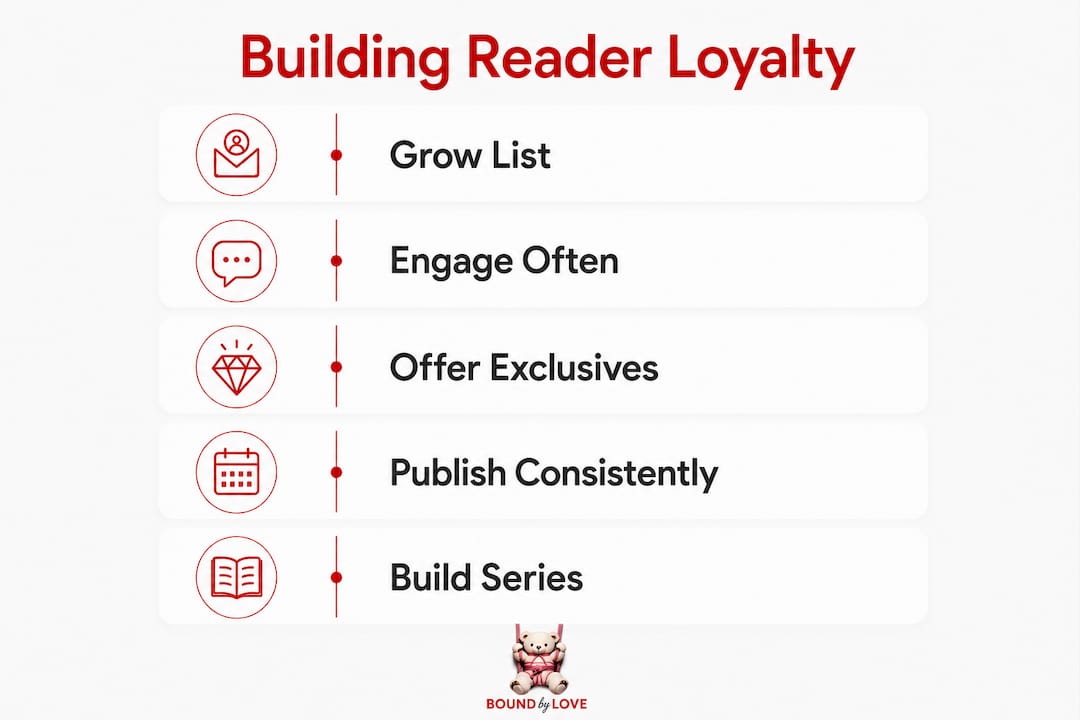
Pro Tip: Offer early access to new chapters or bonus scenes exclusively to newsletter subscribers. It turns your list into a VIP club, and people stay subscribed to clubs they feel special being part of.
Writing, publishing, and keyword strategies that move the needle
Novellas in the 20,000–40,000 word range are the sweet spot for paid erotica. Long enough to develop real tension and character, short enough to write in one to two focused weeks. Short stories at 5,000–10,000 words work as discovery content: publish them free to build readership, then convert those readers to paid novellas.
Write your blurb before you write the book. Seriously. A 150-word blurb that tells readers exactly what dynamic they're getting, what kink is front and center, and what they'll feel while reading it is your clearest signal that you have a marketable concept. On platforms that welcome taboo content, honest blurbs outperform vague ones every time. Readers searching for specific kinks want the specific thing described specifically.
For keywords, long-tail kink terms outperform broad labels. "Erotica" as a standalone keyword is a dead end. "Hotwife vacation fantasy" or "monster romance breeding" surfaces your book to readers who are already primed to buy. Use consensual framing and filter-safe substitutes where platforms require it, but never sacrifice clarity for the reader who's actually looking for your work.
| Work length | Word count | Suggested price | Primary purpose |
|---|---|---|---|
| Short story | 5,000–10,000 | Free or $5 | Discovery and list building |
| Novella | 20,000–40,000 | $5–$10 | Primary paid catalog |
| Novel | 50,000 and above | $10 and above | High-investment concept |
Build series from the start. A reader who loves book one is your most likely buyer for books two and three. Series don't need elaborate plotting: "same world, different scenarios" is enough to keep readers coming back without switching contexts.
Navigating advertising bans and platform restrictions without losing your mind
Let's be blunt: Amazon won't let you run ads for any book labeled as erotica. Facebook and Instagram apply the same ban. Meta-owned platforms including Threads follow identical rules. This isn't a gray area or a policy that might soften next quarter. It's the wall you're working around, not through.
Barnes & Noble hides erotica-designated titles from public browsing unless a user actively opts in through account settings. Google Play bars free samples containing sexual content in the first 20% of a book. Miscategorization is a real risk: authors have had romance novels dumped into erotica categories without consent, limiting their reach and triggering filters they never intended to trigger.
The practical response is distributing across multiple platforms so no single ban or demonetization event wipes out your income. Patreon, Ko-fi, and direct sales from your own site form the core of a resilient setup. Monitor your metadata regularly. An unchecked category flag or a blurb phrase that triggers a filter can suppress your book silently, and you won't know until sales drop. Learning to write compliant but enticing copy is a skill worth developing early.
Community advocacy matters here too. Organizations like Passionate Ink push back against inconsistent platform policies and share real-time intelligence about what's getting flagged and why.
What Prenston and Kinkykorner know about erotic content marketing that most guides skip
Prenston's approach to building an erotic content portfolio starts with one uncomfortable truth: you can't market what you haven't clearly defined. Knowing your subgenre, your kink, and your reader before you write a single word is what separates authors who build catalogs from authors who publish one book and wonder why nothing happened. Prenston emphasizes managing risk through diversification: multiple subgenres, multiple platforms, and a direct sales channel you control entirely.
Kinkykorner operates as a marketplace where erotic fiction authors can list their work alongside adult-themed services and reach readers who are already there for exactly this kind of content. That's a fundamentally different environment from a mainstream retailer where your book competes with cookbooks and children's novels for algorithmic favor. Listing on Kinkykorner means your work is visible to an audience that opted in, not one that stumbled in and might report your cover. The benefits of listing on a dedicated erotic marketplace in 2026 go beyond just sales: it's about being seen without apology in a space built for your work.
Prenston also points to branding as a long-term asset. Your author name, your cover aesthetic, your newsletter voice, and your social presence all compound. Readers who recognize your brand across platforms are readers who trust you enough to pre-order. That trust is built slowly, through consistent output and honest communication, not through a single viral post.
Pro Tip: Treat your erotic content portfolio like a business asset, not a side project. Catalog growth, writing discipline, and direct reader relationships are what drive sustainable income in this genre long-term.
The future Prenston sees for erotic fiction marketing is more fragmented, not less. Readers will find books through AI recommendations, niche community newsletters, and direct author relationships rather than through retailer algorithms. Authors who own their audience now, through mailing lists and direct sales channels, will be positioned to adapt as the platforms keep shifting the goalposts.
Key Takeaways
Erotic fiction marketing in 2026 runs on organic channels: mailing lists, niche keywords, and multi-platform distribution are the foundation every indie author needs before anything else.
| Point | Details |
|---|---|
| Mailing list first | A reader magnet and newsletter are your most durable marketing assets, owned by you regardless of platform changes. |
| Long-tail keywords win | Specific kink terms like "hotwife" or "monster romance breeding" surface your book to readers ready to buy. |
| Novella sweet spot | Novellas in the 20,000–40,000 word range balance production speed with reader appeal, and digital pricing usually falls between $5 and $10. |
| Diversify platforms | Spread across Patreon, Ko-fi, and direct sales so no single ban or demonetization ends your income stream. |
| Treat it as a business | Consistent publishing and catalog growth drive the six- and seven-figure outcomes serious erotic fiction authors achieve. |