

Get your Google Business Profile verified and your NAP consistent while making sure your site is crawlable for search engines. That single move, paired with targeted local proof like reviews and photos, will produce the fastest visibility gains for adult physical businesses. There's a policy catch every operator in this niche needs to respect: Google treats adult content differently, so read the checklist below before you touch a single listing.
TL;DR:
- Verifying your Google Business Profile and ensuring NAP consistency come first, as they form the foundation for all other local SEO efforts.
- Use real, in-person addresses, accurate categories, and avoid duplicate profiles to prevent suspensions and policy violations.
- Ensure your adult website is crawlable by search engines by managing age-gates, structured data, and avoiding JavaScript-only content that blocks indexing.
- Build meaningful location pages with unique local details rather than generic city swaps, and support them with relevant reviews and local backlinks.
- Regularly monitor Google Business insights, citations, and rankings at least quarterly, focusing on compliance and technical health to sustain visibility.
Table of Contents
- Your priority checklist: week one, month one, ongoing
- Setting up Google Business Profile without triggering a suspension
- Making your site crawlable without breaking your age-gate
- Building location pages that help instead of hurt
- Getting your citations and NAP right across the web
- Turning reviews into a local ranking asset
- Building local links without touching link farms
- What to track and how often to check it
- Resources worth trusting on this topic
- Why shortcuts cost you more than they save
- Listing on Kinky Korner as a complementary discovery channel
- Sources
- FAQ
Your priority checklist: week one, month one, ongoing
Local SEO for adult businesses doesn't reward guesswork. It rewards sequence. Do these in order and you'll avoid the two mistakes that sink most adult listings: policy violations and thin, duplicate content.
- Week 1: Verify your Google Business Profile, audit your NAP (name, address, phone) across every platform, and run a basic crawl check to confirm search engines can actually read your site.
- Month 1: Add local photos, set up a review request flow at the point of sale, and publish one strong service-area or location page backed by real local detail.
- Ongoing: Fix and expand citations, build local partnerships, and run a quarterly audit of your listings and pages.
Pro Tip: Do the Google Business Profile and NAP work first, before any content or link building. Everything else compounds on top of a verified, consistent foundation.
Setting up Google Business Profile without triggering a suspension
Your Google Business Profile is the single highest-leverage asset you have, and it's also the one most adult businesses mishandle. Google requires a real, in-person location to qualify for a storefront profile: no P.O. boxes, no virtual-only addresses, and the business name has to match what's on your signage and website exactly.
A few rules keep you out of trouble:
- Pick the most specific, accurate category available. A strip club listed as "night club" instead of the correct classification invites a policy flag later.
- Write your business description around services and customer experience, not explicit sexual language. "Private VIP rooms, licensed entertainers, valet parking" tells Google and customers what they need without crossing a line.
- Add local photos, correct hours, a real local phone number, and your actual service area. Google's policies require in-person contact during stated hours and prohibit misleading phone numbers or redirect URLs.
One rule from Google's own guidelines: only one profile per real-world business location is allowed, and duplicate or inconsistent profiles are a common trigger for suspension. If you get flagged, fix the underlying issue (address mismatch, duplicate listing, category error) before filing an appeal, since resubmitting without a fix just resets the clock.
Making your site crawlable without breaking your age-gate
You can have the best Google Business Profile in your city and still lose local rankings if your website is invisible to search engines. Adult sites lose visibility for one recurring reason: age-gates and JavaScript-heavy builds block crawlers from ever seeing the page.
- Run a crawl report through a tool like Screaming Frog or Google Search Console and check what's actually blocked before you assume your site is fine.
- Update your sitemap and robots.txt so local and service pages are included, and confirm your age-gate doesn't accidentally block search engine bots along with underage visitors.
- Add structured data for your local business and service offerings where it applies. This gives search engines a clean, machine-readable summary of who you are and where you operate.
- Avoid rendering critical local content only client-side. If your address, hours, and services only load after JavaScript runs, some crawlers may never see them.
- Keep HTTPS and mobile performance solid. Slow, insecure sites lose ground regardless of niche.
Industry guidance is direct on the age-gate question: implement gating so search engines can still access schema and core business information while explicit content stays behind the gate for users. Server-side rendering for the indexable parts of the page reduces the odds of accidental deindexing, and our own breakdown of technical pillars for adult website SEO covers this in more depth.
Pro Tip: Check how your homepage renders with JavaScript disabled. If your address and hours disappear, so does your local SEO.

Building location pages that help instead of hurt
A single service-area page beats a dozen thin ones. If you operate from one location, you generally need one well-built page, not a padded network of city-name variants that all say the same thing. Practitioners in local SEO consistently warn that pages built by swapping only the city name are a known trigger for doorway page filters, and Google treats that pattern as manipulative regardless of intent.
If you genuinely serve multiple distinct areas, here's how to do it safely:
- Build a canonical template, then inject real local detail into each version: a staff bio, location-specific photos, and local reviews rather than generic stock content.
- Add a short neighborhood FAQ section addressing what's actually different about that location (parking, access, nearby landmarks).
- Require a human review step before any location page goes live, checking that it reads as useful on its own rather than as a copy with a new city swapped in.
- When you don't have enough unique material for a full page, use a central service-area page and support it with targeted blog posts instead of forcing a thin page into existence.
A well-maintained handful of pages, backed by a strong Business Profile, consistently outperforms dozens of thin city pages built for volume alone.
Getting your citations and NAP right across the web
Consistent NAP (name, address, phone) across directories is one of the oldest local ranking signals, and it's also one of the easiest to get wrong once your listing exists on more than a handful of sites.
- Start your citation audit with the major aggregators and your Google Business Profile, then expand outward to niche directories.
- Track every listing in a spreadsheet with the canonical version of your name, address, and phone number, and log edits so you catch drift early.
- Adult-friendly niche directories and platforms provide real trust signals even when their individual links carry less authority than a mainstream citation source.
- Watch for aggregator-driven edits that silently change your listed hours or address, and correct mistaken entries as soon as you spot them.
Niche listings matter more here than in most industries, since mainstream directories sometimes reject or restrict adult business listings outright. A directory built for the space, like Kinky Korner, gives you a citation source that won't flag your category the way a generic platform might.
Turning reviews into a local ranking asset
Reviews do double duty for adult businesses: they're a ranking signal and proof of legitimacy to customers who are already cautious about who they trust. Ask at the moment satisfaction is highest, whether that's a receipt with a QR code, a post-visit text, or a short follow-up email.
- Surface your best reviews on both your Google Business Profile and your website, since visibility in both places reinforces the same trust signal.
- Respond to negative reviews with a neutral, professional tone. Acknowledge the concern, avoid explicit detail, and move the conversation offline when needed.
- Never offer compensation in exchange for a review or a review removal. That pattern draws exactly the kind of scrutiny you're trying to avoid.
- Loop in legal counsel when a review touches on a policy-sensitive claim (licensing, safety, legality) rather than handling it with a template response.
Pro Tip: Keep a short list of pre-approved response templates for common complaint types so your team never improvises under pressure.
Our guide on building reputation in the adult niche walks through review display examples that stay safe while still building trust.
Building local links without touching link farms
Local link building for adult businesses works best when it looks exactly like local link building for any other business: real partnerships, real community presence, nothing that reads as manufactured.
- Pitch local press and community groups with a genuine local angle, not a generic press release about your business.
- Sponsor a local event or join your chamber of commerce listing. Both produce durable, low-effort local links that age well.
- Run a small local survey or study on a topic your audience cares about. Local media outlets are far more likely to cite original data than a generic pitch.
- Skip adult-specific link networks and paid link farms entirely. They're easy to spot and easy to penalize, and the short-term gain rarely survives a Google update.
Our link building playbook for adult sites covers a technical-first approach to outreach and data-driven PR that fits this exact strategy.
What to track and how often to check it
Local SEO isn't a set-it-and-forget-it project. It needs a rhythm.
- Check Google Business Profile insights, calls, and direction requests weekly, since these move fastest and flag problems early.
- Review local organic clicks and keyword position monthly to catch slower trends.
- Run a full audit of your citations, GBP details, and location pages quarterly.
- Use UTM tags and call tracking so you know which channel actually drove a booking, not just a click.
- If a tactic stalls for two consecutive reporting periods, pivot rather than repeating it, and escalate to technical or legal support when the issue looks like a compliance problem rather than a ranking one.
Resources worth trusting on this topic
Local SEO advice for adult businesses only holds up when it's grounded in both search policy and niche-specific experience.
- Our content strategy guide for adult sites expands on the local content examples covered above.
- The legal advertising guide for adult services covers compliance details that intersect with your GBP description and ad copy.
- Our keyword selection guide supports the research behind the checklist in section two.
This article was written by Prenston, drawing on hands-on familiarity with how adult businesses get flagged, delisted, and relisted across search platforms.
Why shortcuts cost you more than they save
I've watched too many owners chase a fast local ranking trick instead of doing the boring work: verifying a profile, fixing a mismatched phone number, asking one more customer for a review. The shortcuts get you flagged. The boring work compounds. If you only do one thing this month, make it Google Business Profile verification and NAP consistency. Everything else builds on that.
— Prenston
Listing on Kinky Korner as a complementary discovery channel
Local SEO gets you found on Google. A niche marketplace gets you found by people already looking specifically for what you offer, which is a different kind of discovery that's worth having alongside your Business Profile work.
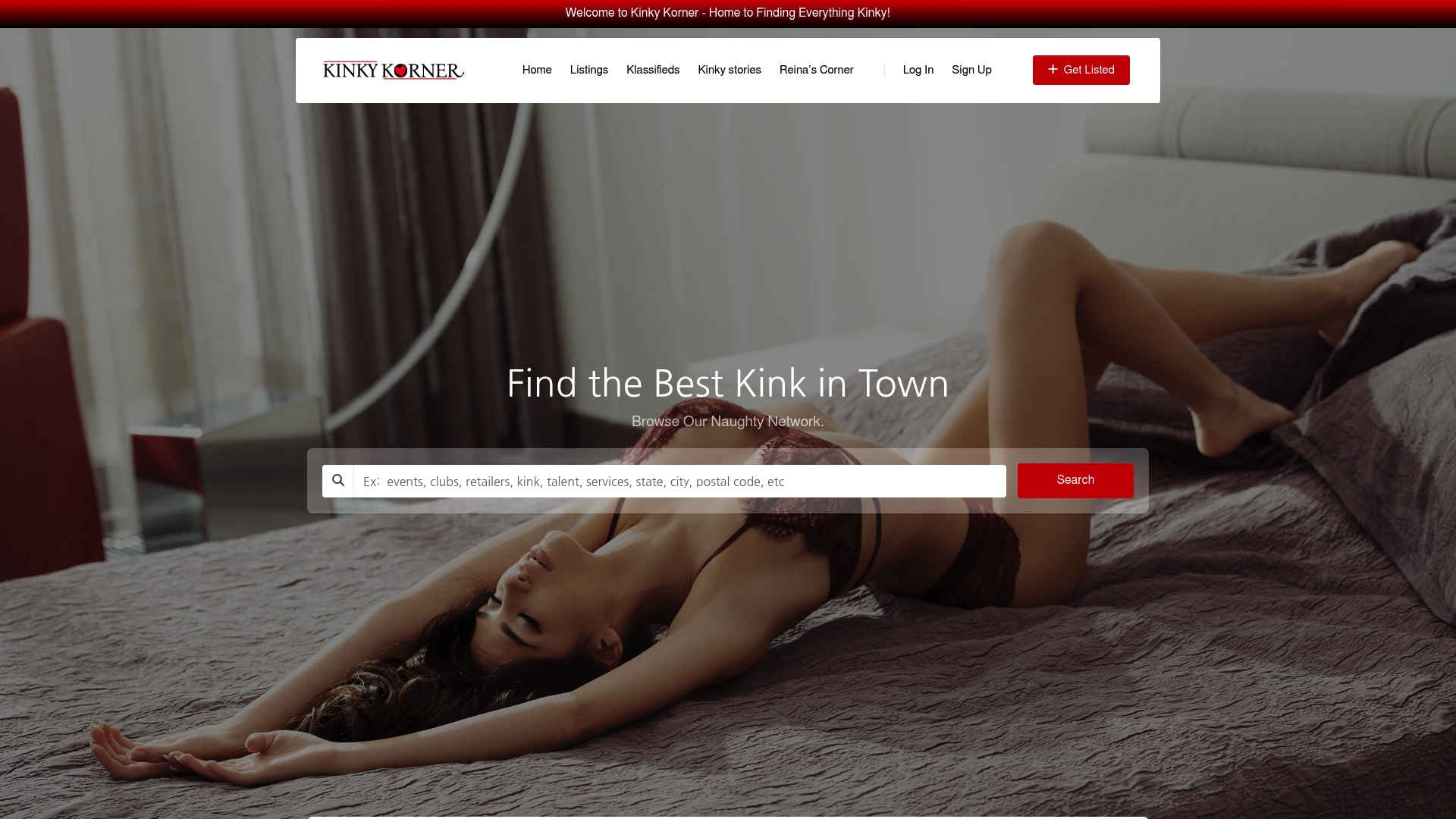
The directory lists businesses across a variety of adult-themed categories, offering category matches that complement what Google listings provide. A listing here also functions as an additional citation source, one that won't restrict your category the way a mainstream directory might.
- A free listing option allows entry into the directory at no cost, suitable for initial testing.
- The Monthly plan runs $4.99 per month for ongoing visibility without a long-term commitment, listed on our pricing page.
- An annual premium subscription provides long-term benefits; current pricing details are available on the website's pricing page.
Browse the category pages to find where your business fits, then claim or upgrade your listing when you're ready.
Sources
- Guidelines for representing your business on Google - Google Business Profile Help
- How to Build 200+ Location Pages Without Triggering Google's Doorway Page Filter - The Local Agency
FAQ
How much should I pay for local SEO?
Local SEO pricing varies widely by scope and market, with small-business retainers typically costing less than enterprise-level programs. For adult businesses specifically, budget for extra time spent on policy review and compliance checks, since that work adds hours a generic local SEO project wouldn't need.
What is adult SEO?
Adult SEO is search optimization tailored to the unique restrictions adult businesses face, including stricter platform policies, crawlability challenges around age-gates, and limited access to mainstream advertising and directory channels. It requires proving trust and relevance through signals like reviews and local partnerships rather than relying on generic keyword tactics alone.
Which adult SEO agency is the best?
There's no single best agency for every adult business, since the right fit depends on your location, budget, and whether you need technical, content, or citation-focused work. Look for a provider with specific experience in adult-industry policy compliance rather than a generalist local SEO firm.
What is the 80/20 rule in SEO?
The principle in SEO generally refers to the idea that a small set of high-impact actions, like Google Business Profile optimization and core technical fixes, drive most of your visibility gains. For adult businesses, that principle points squarely at GBP verification, NAP consistency, and crawlability, the exact priorities covered in the checklist above.