
Safe spaces in the adult industry are defined as protected physical, digital, and social environments where performers and creators can work with dignity, clear consent protocols, and access to mental health support. The role of safe spaces in adult industry settings goes far beyond a feel-good concept. These environments are the difference between a sustainable career and one that grinds you down until there's nothing left. Whether you're a solo content creator grinding from your apartment or a performer on a professional set, the infrastructure around you shapes your mental health, your safety, and your ability to keep doing this work long-term. This guide pulls together 2026 research and real industry frameworks to show you exactly what safe spaces look like, why they matter, and how to build them.
What are the essential safety practices in adult productions?
The foundation of any safe adult production is a set of non-negotiable physical and emotional protocols that protect performers before, during, and after a scene. These aren't optional extras. They're the baseline.
Intimacy coordinators manage boundaries through professional documentation and physical safety tools like genital pouches and silicone barriers, enforcing strict consent protocols to maintain performer comfort on set. That means a trained professional is in the room whose entire job is to make sure no one crosses a line, and that if a line gets close, there's a system to stop everything cold. That's not bureaucracy. That's respect made operational.
Here's what a solid safety practice framework looks like in practice:
- Pre-production consent documentation. Every performer signs detailed paperwork specifying exactly what acts they will and won't do. No verbal agreements. Paper trail only.
- Safe word enforcement. A designated safe word stops all action immediately, no questions asked, no pressure to continue. This is non-negotiable on any legitimate set.
- Physical safety tools. Genital pouches, silicone barriers, and modesty garments protect performers during simulated or partially simulated scenes.
- Routine STI testing. Testing frequency runs every 14 to 28 days alongside mental health and home/work safety assessments at specialized clinics. This rhythm keeps the whole community safer, not just the individual.
- Mental health check-ins. Holistic safety assessments at testing clinics address emotional wellbeing alongside physical health. These aren't therapy sessions, but they catch people who are struggling before a crisis hits.
Pro Tip: If you're a performer and a production doesn't have a written consent document ready before day one, that's your signal to walk. A set that skips paperwork skips everything else too.
The adult industry safety practices that actually work are the ones baked into production culture from the start, not bolted on after something goes wrong.
How does unionization enhance safe spaces for performers?
Collective organization is one of the most underrated tools for creating supportive environments for sex workers and performers. When you're a solo contractor, you have almost no leverage. When you're part of a union or professional guild, the math changes completely.
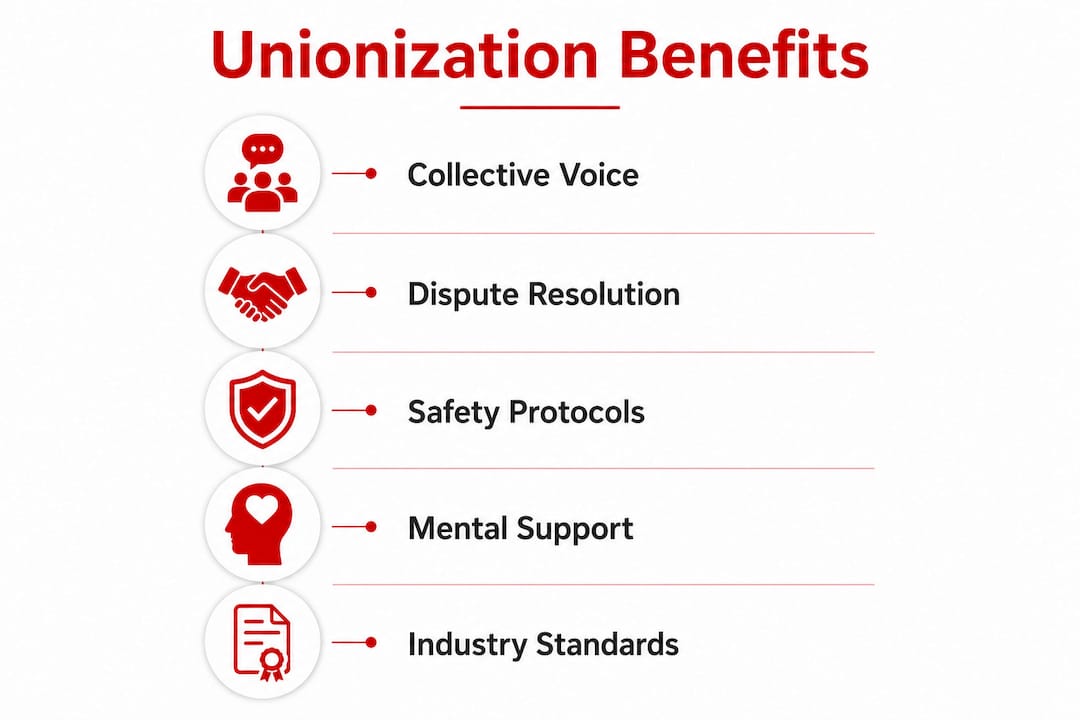
The Adult Performance Artists Guild, known as APAG, frames industry unionization not as disruptive but as essential to addressing the isolation of independence and establishing sustainable career frameworks. That framing matters. This isn't about conflict. It's about building the kind of infrastructure that makes a career in adult work survivable and even thriving.
Here's what organizational frameworks actually deliver for performers:
- Standardized safety protocols that apply across productions, so you're not renegotiating your basic dignity on every new set.
- Clear dispute resolution pathways that let you report problems without risking your reputation or your privacy. APAG specifically emphasizes recourse without exposure, which is a real and serious concern in this industry.
- Contractual standards for compensation, working conditions, and content usage rights that protect performers long after a shoot is done.
- Peer networks that break the isolation that makes so many adult industry professionals vulnerable to exploitation and burnout.
"Isolation is one of the most dangerous conditions in this industry. When you're working alone, every bad experience becomes a private wound. Collective frameworks turn private wounds into shared problems with shared solutions." — APAG's core argument for unionization
The benefits of safe spaces for performers aren't just physical. The psychological weight of knowing you have backup, that someone will take your complaint seriously, that you won't be blacklisted for speaking up, is enormous. That's what community does. It converts individual vulnerability into collective resilience.
What role does technology play in scaling safe spaces?
Technology is both a tool and a trap when it comes to maintaining safe spaces on adult content platforms. Get it right and you have a system that scales consent verification and content moderation across millions of interactions. Get it wrong and you have a machine that flags legitimate creators, misses actual harm, and burns out the human moderators trying to fix its mistakes.
The honest truth is that AI alone cannot replace human judgment in consent detection and complex moderation cases. The best practice is a layered model combining AI scale with human review, plus regular audits to minimize bias and errors. AI catches volume. Humans catch context. You need both.
| Approach | Strengths | Limitations |
|---|---|---|
| AI-only moderation | Fast, scalable, consistent flagging | Misses consent nuance, high false positive rate, context-blind |
| Human-only moderation | Context-aware, nuanced judgment | Slow, expensive, unsustainable at scale, burnout risk |
| Hybrid AI plus human | Scalable detection with human review for edge cases | Requires strong escalation matrix and regular auditing |
Platforms that treat trust and safety as a core operating system rather than a compliance checkbox see real operational benefits: reduced payment friction, lower support burden, and less reputational damage. That's not idealism. That's the business case for doing this right.
Privacy is the other piece that gets overlooked. Biometric age verification and ID checks create data that performers have a legitimate interest in protecting. Transparent data policies and clear appeals workflows aren't just ethical. They're what separates platforms performers trust from platforms they tolerate.
Pro Tip: If you're evaluating a platform to host your content, ask directly about their moderation appeals process. A platform with no clear appeals path is a platform where you have no recourse when something goes wrong.
For more on how content moderation trends are shifting in 2026, the picture is moving toward creator-protective hybrid models across the board.
How do third spaces reduce mental health risks for adult professionals?
The concept of a "third place" comes from urban sociology. It's the space that's neither home nor work, where people gather around shared identity and interests without the pressure of either environment. For adult industry professionals, third places reduce PTSD, anxiety, and social isolation risks by promoting gathering around shared interests and cutting through stigma. That's not a soft benefit. That's a measurable mental health outcome.
Specialized coworking spaces built for adult content creators are one of the most concrete examples of this in action. These aren't just shared desks. They offer soundproofing and discreet access to mitigate harassment and exposure risks, helping performers separate personal and professional life and reducing doxxing vulnerability. When your home is also your studio, the psychological boundary between your private self and your public persona collapses. That collapse is exhausting and dangerous over time.
Here's what effective third spaces for adult creators actually include:
- Professional-grade equipment and soundproofed shooting spaces that don't require you to compromise your home privacy.
- Peer-led, non-judgmental community environments where you can talk about the actual realities of the work without performing wellness for an outside audience.
- Access to mental health resources and counselors who understand the industry without pathologizing it.
- Physical security features including discreet building access and privacy-protective policies for members.
The shift that matters most is moving from reactive crisis management to proactive environment design that supports speaking up before harm escalates. Most industry mental health conversations happen after someone breaks down. The goal of a real safe space is to make the breakdown less likely in the first place. Explore what kink-friendly venues look like as physical safe spaces that combine community and professional support.
What practical steps can you take to build safe spaces in adult work?
Creating inclusive adult spaces doesn't require a union contract or a six-figure production budget. It requires intention, consistency, and the willingness to hold the line when things get uncomfortable.
Here's a practical framework for performers, producers, and platforms:
- Performers: document your boundaries before every engagement. Written limits aren't a sign of distrust. They're a sign of professionalism. Send them in advance and keep a copy.
- Producers: hire an intimacy coordinator for every production involving physical contact. This is no longer optional on any set that wants to be taken seriously in 2026.
- Platforms: build trust and safety into your operating architecture from day one. Retrofitting safety onto a platform that was built without it is expensive, slow, and usually incomplete. Strong governance, signal collection, and escalation matrices yield operational advantages beyond compliance.
- Everyone: invest in community education. Mental health literacy, consent education, and peer support training are skills, not instincts. They need to be taught and practiced.
- Leadership: make safety visible. When producers and platform executives publicly prioritize safety, it shifts culture. When they stay silent, silence becomes permission for bad behavior.
The importance of safe spaces shows up most clearly in the gap between performers who have access to these frameworks and those who don't. That gap is the difference between a career and a cautionary tale. For a deeper look at supporting adult artists through these frameworks, the case for advocacy is both moral and practical.
Key takeaways
Safe spaces in the adult industry require layered physical protocols, collective organizational support, and technology governance working together to protect performer mental health and career sustainability.
| Point | Details |
|---|---|
| Safety protocols are non-negotiable | Intimacy coordinators, safe words, and STI testing every 14 to 28 days form the baseline for any legitimate production. |
| Unionization breaks isolation | Organizations like APAG provide dispute resolution, contractual standards, and peer networks that individual performers cannot build alone. |
| Hybrid moderation is the standard | AI detection combined with human review and regular audits is the only model that scales without destroying consent nuance. |
| Third places protect mental health | Specialized coworking spaces with soundproofing and discreet access reduce PTSD, anxiety, and doxxing risk for adult creators. |
| Proactive design beats reactive cleanup | Safe spaces built into production culture from day one prevent harm rather than managing it after the fact. |
Why I think the industry is finally getting this right
I've watched this conversation shift over the past few years, and I'll be honest with you: for a long time, "safe space" in adult work was a phrase people used and then ignored the moment it cost them something. A performer would ask for a safe word protocol and get laughed off set. A creator would raise a concern about a platform's data practices and get ghosted. The culture was reactive at best and dismissive at worst.
What's different now is that the infrastructure is catching up to the rhetoric. APAG is doing real organizing work. Intimacy coordinators are becoming standard on professional sets, not a luxury. Platforms are starting to understand that trust and safety isn't a PR exercise. It's what keeps their business viable.
The part that still frustrates me is the isolation problem. So many people in this industry are working completely alone, no union, no coworking space, no peer network, just them and their camera and whatever terms a platform decides to impose that week. That's not sustainable. And the mental health toll of that isolation is real and serious and still not talked about enough.
My honest read is this: the performers and creators who are going to build long, healthy careers in this industry are the ones who prioritize community as aggressively as they prioritize content. Find your people. Join the organizations. Use the third spaces. The work is better when you're not doing it alone, and so are you.
— Prenston
How Kinkykorner supports safe spaces for adult creators

Kinkykorner is built for people who take their work seriously and want a platform that does the same. As a marketplace where adult creators can list services, share erotic literary and artistic content, and connect with a community that actually gets it, Kinkykorner operates with creator wellbeing at the center. You're not an afterthought here. The platform's structure supports the kind of transparency and community connection that makes safe spaces real rather than theoretical. If you're looking for a space where your work is respected and your boundaries are understood, explore Kinkykorner and see what a creator-first environment actually looks like in practice. The community is here. Come find your people.
FAQ
What is a safe space in the adult industry?
A safe space in the adult industry is a physical, digital, or social environment designed to protect performers and creators through consent protocols, mental health support, and clear dispute resolution. These environments reduce isolation, harassment, and occupational health risks for adult industry professionals.
How often should adult performers get STI tested?
STI testing frequency for adult performers is typically every 14 to 28 days, combined with mental health and safety check-ins at specialized clinics. This routine is the recognized baseline for professional sets and productions.
What does an intimacy coordinator do on an adult set?
An intimacy coordinator manages consent documentation, enforces safe word protocols, and oversees the use of physical safety tools like genital pouches to protect performers during intimate scenes. Their presence is a marker of a production that takes adult industry safety practices seriously.
How does APAG support safe spaces for performers?
The Adult Performance Artists Guild advocates for standardized safety protocols, clear dispute resolution pathways, and peer support networks that address performer isolation. APAG's unionization framework gives performers collective leverage they cannot build as individual contractors.
Why can't AI alone manage safety on adult platforms?
AI moderation cannot reliably detect consent nuance or understand complex contextual situations, which means it produces false positives and misses genuine harm without human oversight. The effective standard is a hybrid model combining AI detection with human review and regular auditing.