

Adult content is defined as any media not appropriate for children, typically including nudity, sexual acts, or mature themes intended exclusively for adult audiences. The term covers far more ground than most people realize. It spans explicit pornography, yes, but also erotic literature, sensual visual art, intimate ASMR recordings, and educational material about human sexuality. Organizations like the Digital Trust & Safety Partnership and IFTAS have developed formal frameworks to classify and regulate this content across platforms. Understanding what actually qualifies as adult content matters whether you're consuming it, creating it, or just trying to make sense of the rules.
What types of content are considered adult content?
The definition of adult content is broader than most people expect, and the line between categories is genuinely blurry. Explicit content includes nudity, body parts not generally exposed in public, sexually explicit material, and graphic depictions. That definition alone covers a massive range of material.
Here's a practical breakdown of the main categories:
- Explicit sexual content: Pornographic video, photography, and written erotica depicting sex acts in graphic detail.
- Mild nudity: Artistic or editorial nudity, figure drawing, nude photography with an aesthetic rather than sexual focus.
- Erotic storytelling: Written fiction with sexual themes, ranging from suggestive romance to explicit scenes.
- Sensual art: Paintings, illustrations, and sculptures with sexual or erotic themes that stop short of graphic depiction.
- Intimate ASMR and audio content: Recordings designed to create arousal through sound, voice, or guided scenarios.
- Educational sexual content: Material about anatomy, sexual health, or relationship dynamics that may include clinical nudity or frank discussion.
The distinction between these categories is not just academic. Artistic and educational nudity may be posted on many platforms with appropriate warnings and access controls, while graphic sexual content faces outright prohibition or strict gating. Context is the deciding factor.
| Content type | Classification | Platform treatment |
|---|---|---|
| Graphic pornography | Explicit adult content | Age-gated or prohibited |
| Artistic nudity | Mild adult content | Allowed with warnings |
| Erotic fiction | Adult literary content | Labeled NSFW, age-gated |
| Sexual health education | Informational adult content | Generally permitted with labels |
| Intimate ASMR | Suggestive adult content | Platform-dependent |

Platform policies on NSFW labeling vary wildly. Reddit uses community-level NSFW flags. OnlyFans requires age verification for all content. Instagram prohibits explicit nudity entirely. The same image can be acceptable on one platform and a terms-of-service violation on another.
How do legal and regulatory frameworks define and control adult content?
Legal definitions of adult content differ across jurisdictions, but the core principle is consistent: explicit sexual material requires age verification and carries penalties for non-compliance. The law is catching up fast, and platforms that ignored this are now facing real consequences.
The UK's Online Safety Act is the clearest current example of where regulation is heading globally. Under this law:
- Websites hosting pornographic content must implement robust age verification that goes beyond simple self-declaration checkboxes.
- Accepted verification methods include credit card checks, official ID matching, and selfie-based age estimation with liveness detection.
- Platforms that fail to comply face penalties up to £18 million or a percentage of global revenue, whichever is higher.
- Ofcom, the UK regulator, specifies that verification systems must be designed to prevent workarounds, not just technically satisfy a checkbox requirement.
The United States takes a different approach. The First Amendment creates significant constitutional barriers to content restriction, but federal laws like 18 U.S.C. § 2257 require producers of explicit content to maintain records verifying that all performers are adults. State-level legislation is increasingly active, with several states passing their own age verification laws for adult websites.
Pro Tip: If you're producing or distributing adult content, check both federal and state requirements in your jurisdiction. A platform that's legally compliant at the federal level may still violate state law.
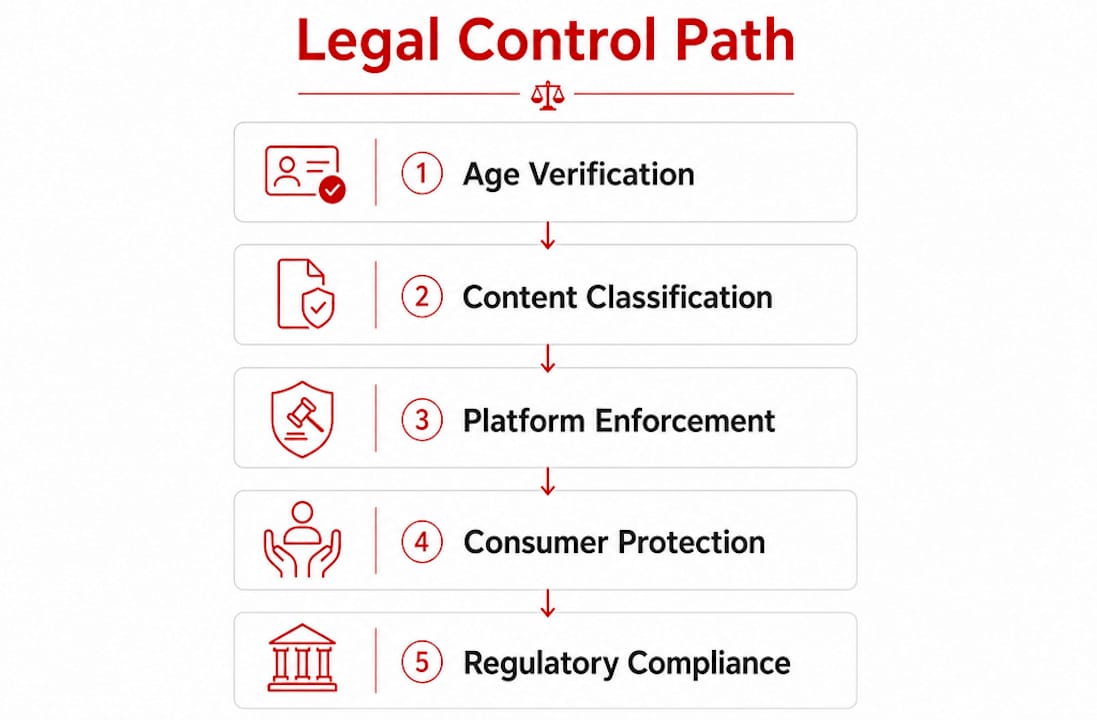
The practical effect of these regulations is that age-gating practices are evolving from simple self-declaration to auditable, multi-factor verification incorporating biometrics and official ID checks. This shift is not optional. It's the direction every major market is moving.
Why does cultural context matter in defining adult content?
Here's where it gets genuinely complicated. What counts as adult content is not a fixed, universal standard. It shifts depending on where you are, who's watching, and what the content is trying to do.
Cultural context directly shapes how explicit content is classified, and this creates real headaches for global platforms trying to enforce consistent rules. A topless image that's unremarkable in a French magazine becomes a policy violation on a platform with American community standards. A sex education video that's mandatory viewing in a Danish school curriculum might be flagged as adult content by an automated moderation system trained on different norms.
"Moderation systems need multilayer approaches to avoid overblocking or underprotection." — Digital Trust & Safety Partnership
The practical challenges this creates for platforms are significant:
- Overblocking: Automated systems trained on one cultural standard flag legitimate educational or artistic content as explicit, suppressing content that should be freely accessible.
- Underprotection: The same systems miss genuinely harmful material that doesn't match their training data's definition of explicit.
- Inconsistent enforcement: Human moderators from different cultural backgrounds apply different standards to identical content.
- Creator confusion: Content producers don't know which standard applies to their work, leading to self-censorship or accidental violations.
The solution most serious platforms have landed on is layered enforcement. Labeling, content warnings, and access controls work together rather than relying on a single binary block-or-allow decision. A piece of content might be labeled NSFW, require a click-through warning, and be age-gated, all at once. This approach respects cultural variation without abandoning protection.
The Digital Trust & Safety Partnership's framework explicitly acknowledges that cultural variation complicates any attempt at a single global definition. That's not a failure of policy. It's an honest recognition of reality.
What are practical implications for adults engaging with or producing adult content?
Whether you're a consumer or a creator, the rules around adult content have real teeth. Ignoring them isn't edgy. It's just risky.
For consumers, the basics are straightforward but worth stating clearly:
- Use platforms that verify ages and enforce consent policies. This protects you and the people whose content you're consuming.
- Understand that NSFW labels and content warnings exist for a reason. They're not censorship. They're a signal about what you're about to see.
- Check platform-specific community standards before sharing or reposting content. What's acceptable on one site is a ban-worthy offense on another.
- Be aware of your own jurisdiction's laws around downloading or possessing certain categories of explicit material.
For creators, the stakes are higher. Adult content creator types range from solo performers to professional production studios, and each faces different compliance requirements. The common thread is consent and documentation.
Consent in adult content production means more than a verbal agreement on set. It means written records, clear communication about what will be filmed and how it will be distributed, and ongoing ability for performers to withdraw consent. Platforms increasingly require this documentation before content goes live.
Pro Tip: If you're creating adult content for distribution, keep written consent records for every performer and every piece of content. Platforms and regulators are asking for this documentation more frequently, and not having it is an immediate red flag.
Adult influencer roles have expanded significantly in recent years. Creators now operate across subscription platforms, clip sites, social media with adult content policies, and dedicated adult networks. Each platform has its own content guidelines, payment structures, and compliance requirements. Knowing the rules of each platform you use is not optional. It's the cost of operating in this space.
The adult content trends in 2026 show a clear shift toward creator-owned platforms and direct audience relationships, partly driven by major platforms tightening their policies. This makes understanding what qualifies as adult content more important than ever, because the rules are changing faster than most creators can track.
Key takeaways
Adult content is any media not appropriate for children, and its classification depends on content type, cultural context, and platform policy working together.
| Point | Details |
|---|---|
| Core definition | Adult content includes nudity, sexual acts, and mature themes not suitable for children. |
| Types vary widely | Categories range from graphic pornography to artistic nudity, erotic fiction, and sexual health education. |
| Legal compliance is mandatory | UK Online Safety Act penalties reach £18 million; age verification is now a legal requirement in multiple jurisdictions. |
| Culture shapes classification | What counts as explicit differs by region, requiring layered enforcement rather than a single global standard. |
| Consent is non-negotiable | Creators must maintain written consent records; platforms and regulators are actively enforcing this requirement. |
Where I actually stand on all of this
I've spent enough time in and around adult content spaces to have a real opinion here, and it's not the one you'd expect.
The debate around adult content usually collapses into two camps: the people who want to restrict everything and the people who want to restrict nothing. Both are wrong, and both are lazy. The actual work is in the middle, where you have to think carefully about what you're protecting and what you're sacrificing.
What I've seen is that the most damaging outcomes in adult content spaces come from two specific failures. The first is platforms that allow anything because moderation is expensive and consent verification cuts into margins. The second is platforms that over-restrict because they're terrified of liability and end up blocking legitimate creators, educators, and artists. Both failures hurt real people.
The cultural context piece is the one most people skip over, and it's the most interesting. I've watched the same image get flagged as explicit on one platform and featured as art on another. The content didn't change. The context did. That tells you something important: there is no clean, universal line. There's only a set of decisions made by people with different values, different legal obligations, and different audiences.
What I think actually works is what the Digital Trust & Safety Partnership describes as layered enforcement. Label it. Warn about it. Gate it by age. Let adults make informed choices. That approach respects both protection and autonomy, which is the only honest position to hold.
The ethics of adult content are not complicated in principle. Consent, age verification, honest labeling. The complexity is in execution, and that's where most platforms fail.
— Prenston
Explore adult content safely at Kinkykorner
If you've read this far, you already understand that adult content is a broad category with real rules, real ethics, and real stakes. Where you engage with it matters as much as how.

Kinkykorner is a marketplace built specifically for adults who want to explore erotic literary content, sensual art, and adult-themed services in a space that takes consent and safety seriously. The platform connects creators and consumers with a clear commitment to age verification and community standards. Whether you're looking to discover the community or list your own adult services, Kinkykorner is built for people who know what they want and want to find it without the noise. Come as you are. Just come correctly.
FAQ
What is adult content, exactly?
Adult content is any media not appropriate for children, typically including nudity, sexual acts, or mature themes. Wiktionary defines it simply as "content not appropriate for children," which covers everything from explicit pornography to erotic fiction and sensual art.
Is adult content legal?
Adult content is legal in most jurisdictions for consenting adults, but it is subject to age verification requirements, performer documentation laws, and platform-specific regulations. The UK Online Safety Act, for example, requires robust age checks with penalties up to £18 million for non-compliance.
What qualifies as adult content on social media platforms?
Platforms define adult content differently. Instagram prohibits explicit nudity entirely, while Reddit allows it in age-gated communities. Most platforms use NSFW labels for suggestive content and outright prohibit graphic sexual material, with policies enforced through automated systems and human review.
How do platforms identify adult content?
Platforms use a combination of automated image recognition, text analysis, and human moderation to identify adult content. Classification frameworks consider whether sexual acts are depicted, the graphic nature of the material, and whether an artistic or educational framing is present.
Does cultural context change what counts as adult content?
Yes, significantly. The Digital Trust & Safety Partnership notes that cultural norms directly shape how explicit content is classified, meaning the same image can be acceptable in one region and prohibited in another. Global platforms manage this through layered enforcement: labeling, warnings, and age gating applied together rather than a single universal block.