
Supporting adult artists means providing the financial, institutional, and community resources they need to create meaningful work and sustain their well-being across every stage of their careers. This is not a niche cause. The importance of adult artists reaches into mental health, cultural identity, and economic vitality in ways most people never stop to examine. Research from Creatives Rebuild New York, the University of Arizona Health Sciences, and programs like the Finnish museum model all confirm the same truth: when adult artists get real support, everyone benefits. If you care about creative culture, this is where your attention belongs.
Why support adult artists: the case for financial backing
Money is not everything. But without it, creativity dies on the vine. The most direct answer to why support adult artists comes down to time. When artists are not scrambling to pay rent, they make more art. Full stop.
The Creatives Rebuild New York guaranteed income program proved this in hard numbers. Recipients of $1,000 per month spent about 3.9 more hours weekly on arts work, shifting time away from survival jobs. That is nearly four extra hours of creative output per week, per artist, simply because the financial pressure eased. Multiply that across a community of artists and the cultural output becomes significant.
What makes this finding even more compelling is what did not happen. Cash funding did not reduce motivation to create. Artists did not sit back and coast. They redirected energy from exhausting survival jobs into the work they actually wanted to do. Financial support reallocates focus toward creativity rather than killing the drive to create.
A common misconception is that artists primarily need exposure. Studies reveal time and economic stability are the real bottlenecks. Exposure does not pay for materials, studio space, or the mental bandwidth required to produce serious work. The benefits of supporting adult artists financially are measurable, not theoretical.
Pro Tip: If you want to support an adult artist directly, recurring monthly contributions beat one-time purchases. Predictable income is what allows artists to plan, invest in materials, and commit to long-term projects.
Here is what financial stability actually unlocks for adult artists:
- More hours dedicated to creative production each week
- Reduced anxiety from survival-mode employment
- Ability to take on ambitious, longer-term projects
- Freedom to decline exploitative or low-paying gigs
- Space to experiment without the pressure of immediate commercial return
How arts engagement protects mental health
The mental health benefits of supporting adult artists extend far beyond the artists themselves. When adult artists thrive, the communities around them feel it too.
University of Arizona Health Sciences research shows that 45 minutes of art-making reduces cortisol by 25%. Cortisol is the primary stress hormone, and a 25% reduction in 45 minutes is not a minor effect. That is the kind of result clinical interventions spend months chasing. Arts engagement works as a low-cost, scalable mental health resource that complements therapy rather than replacing it.
"Over 80% of arts-based interventions report stress reduction, showing arts' role in resilience and mental health promotion." — University of Arizona Health Sciences
The World Health Organization has taken notice. The WHO-backed Healing Arts initiative launched in 2025 positions arts engagement as a core component of whole-person health, not an optional hobby. This is a significant institutional shift. When the WHO says arts matter to health, the conversation about why adult art matters moves from cultural preference to public health policy.
Supporting adult art communities also creates social cohesion. Creative spaces pull people together across backgrounds and experiences. That sense of belonging is not soft or sentimental. It is a documented protective factor against isolation, depression, and burnout.
- Arts participation builds emotional resilience over time
- Creative communities reduce social isolation for both artists and audiences
- Arts-based stress reduction is accessible and requires no clinical setting
- Regular engagement with adult creative work normalizes emotional expression
What structural challenges do adult artists actually face?
Here is where most conversations about supporting independent artists go wrong. The focus stays on emerging artists, early grants, and first exhibitions. Mid-career adult artists fall into a gap that nobody talks about enough.
Eric Maisel's analysis is blunt about this: most support structures favor early career artists, and mid-career artists often experience isolation, unstable incomes, and a complete lack of professional anchoring. The initial buzz fades. Institutional attention moves to the next new thing. And the artist is left holding the bag, expected to keep producing at a high level without the scaffolding that made their early success possible.
The structural challenges adult artists face are not random. They follow a predictable pattern:
- Early career: Grants, residencies, and institutional attention are relatively available.
- Mid-career: Support structures thin out. Income becomes inconsistent. Visibility drops.
- Later career: Without sustained advocacy, many artists exit the field entirely, not from lack of talent but from lack of resources.
Advocating for adult artists means pushing for belonging, ethical standards, and continuity, not just writing a check. Money without community is a temporary fix. Lasting support includes dignity protection, recognition, and structural advocacy that keeps artists connected to professional networks throughout their careers.
The risks of leaving mid-career artists without support are real: isolation, exploitation by galleries or platforms that know artists are desperate, and burnout that ends careers prematurely. The impact of adult artistry on culture depends on keeping experienced artists in the game, not just celebrating newcomers.
Pro Tip: When advocating for adult artists in your community, push for multi-year support commitments rather than one-off grants. A single grant solves a single problem. Multi-year support builds a career.
What do effective support models for adult artists look like?
Real-world models show what is possible when institutions commit to the full picture of an artist's needs. Two examples stand out for their specificity and ambition.
| Support Model | What It Covers | Why It Works |
|---|---|---|
| Finnish museum program | Multi-year acquisitions, stipends, production funding, health insurance | Supports the whole person, not just the artwork, over several years |
| Galway County Council grants | Materials, courses, project funding for 13 artists totaling over €33,000 | Bridges income gaps and enables continuous professional development |
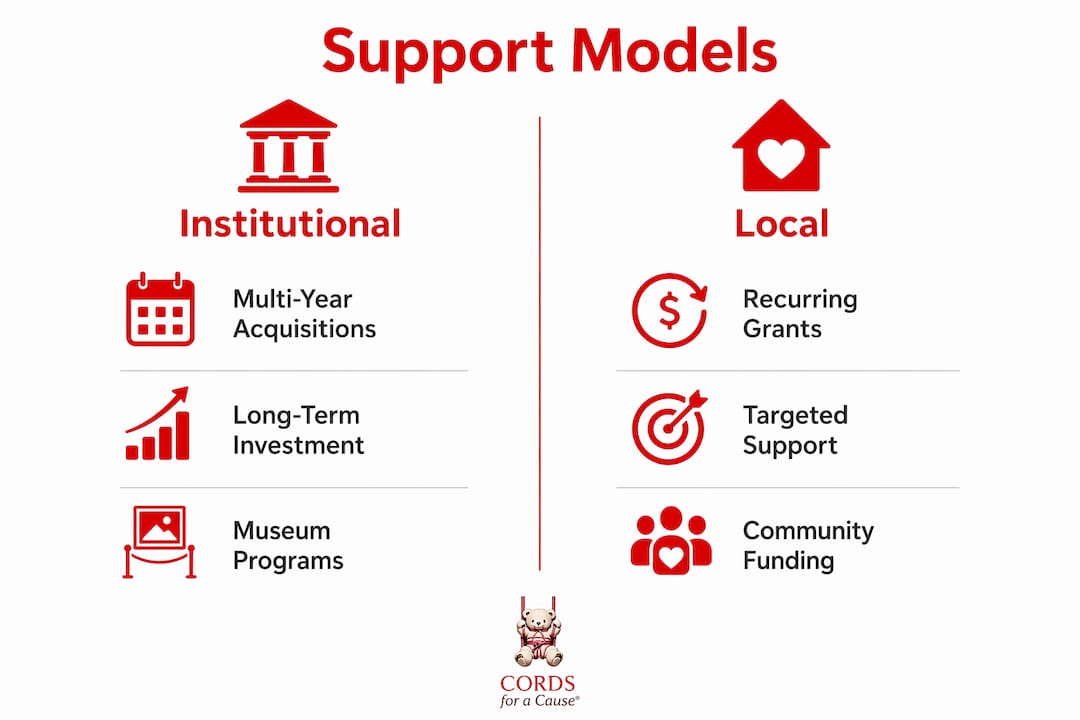
The Finnish museum's approach is genuinely radical because it treats the artist as a long-term investment rather than a transaction. Health insurance coverage alone removes one of the most destabilizing pressures adult artists face, particularly in countries without universal healthcare. Combine that with ongoing acquisitions and production funding, and you have a model that allows deep, sustained creative work rather than frantic output driven by financial panic.
The Galway County Council model proves that local recurring grants are highly effective at bridging income gaps. Thirteen artists received funding for materials, courses, and project work. That is not a massive budget by institutional standards, but it is transformative at the individual level. Local grants allow artists to plan and invest in their craft continuously rather than lurching from crisis to crisis.
Effective funding models combine unrestricted income with targeted support such as health insurance and production costs. Neither element alone is sufficient. Together, they create the conditions for an artist to focus deeply on creative work without one emergency derailing everything.
Practical ways you can support adult artists right now
You do not need to run a museum or manage a grant program to make a real difference. The impact of adult artistry depends on a broad base of supporters, not just institutional gatekeepers.
Here is where your energy and resources can go:
- Fund local grants or patronage programs that provide recurring, unrestricted income to adult artists in your community
- Advocate for structural support by pushing arts organizations and local governments to adopt multi-year commitment models
- Attend and promote arts events that feature adult artists, because visibility and audience engagement are forms of support too
- Support adult creative content platforms like Kinkykorner that give artists direct access to audiences and income streams without exploitative intermediaries
- Share artists' work across your networks with proper credit and context, because organic reach is a resource artists rarely have enough of
- Engage with erotic and adult art directly by reading, purchasing, and discussing it without shame, because normalizing adult artistry expands the market for it
If you want to go deeper on how adult creators build sustainable careers, the adult creatives guide to thriving in erotic art covers the specific pressures and opportunities in that space with real honesty.
Key takeaways
Supporting adult artists requires combining financial stability, mental health resources, structural advocacy, and community belonging to sustain creative careers over the long term.
| Point | Details |
|---|---|
| Financial support increases creative output | Artists given $1,000 per month spent 3.9 more hours weekly on arts work without losing motivation. |
| Arts engagement reduces stress measurably | 45 minutes of art-making cuts cortisol by 25%, making arts support a public health investment. |
| Mid-career artists are the most underserved | Institutional support fades after early recognition, leaving experienced artists isolated and unstable. |
| Holistic models outperform single grants | Programs combining stipends, health insurance, and production funding create lasting career stability. |
| Local recurring grants bridge critical gaps | Small, consistent funding like the Galway model enables artists to plan and invest continuously. |
The uncomfortable truth about how we treat adult artists
By Prenston
I have watched too many talented adult artists burn out not because they ran out of ideas but because they ran out of runway. The system is set up to celebrate discovery and then quietly abandon the people it discovered. We throw a party for the debut and ghost the artist at the after-party.
What bothers me most is the exposure myth. People genuinely believe that sharing an artist's work is equivalent to supporting them. It is not. Exposure does not cover studio rent. It does not pay for therapy after a brutal creative block. It does not replace the health insurance that disappears when a gallery contract ends.
The adult art world carries an extra layer of this problem. Artists creating erotic or explicit content face stigma that cuts them off from mainstream grant funding, institutional support, and even basic banking services in some cases. They are producing work that millions of people consume, and they are doing it without the safety nets that other artists take for granted.
What I have come to believe is that supporting adult artists is one of the most honest forms of cultural advocacy available. You are not backing a comfortable, socially acceptable cause. You are saying that human sexuality, desire, and the full range of adult experience deserve artistic exploration and that the people doing that work deserve dignity and stability. That takes some guts. And it matters more than most people realize.
— Prenston
Discover Kinkykorner: a space built for adult artists

Kinkykorner is a marketplace where adult artists, writers, and creators connect directly with audiences who actually value their work. No gatekeepers. No shame. Just a community built around adult creative expression in all its forms. Whether you are an artist looking for visibility or a supporter looking to engage with adult art communities in a meaningful way, Kinkykorner gives you the tools to do it. You can read erotic literary content, discover adult-themed services, and connect with independent creators who are building real careers. Join the community and put your support where it actually reaches the artists who need it.
FAQ
Why do adult artists need financial support specifically?
Adult artists, particularly those creating explicit or erotic content, are often excluded from mainstream grant programs and institutional funding, making direct financial support from audiences and patrons the primary income source available to them.
How does supporting adult artists benefit mental health?
Arts engagement reduces cortisol by 25% in 45 minutes of practice, and over 80% of arts-based interventions report measurable stress reduction, benefiting both the artists and the communities they create for.
What is mid-career invisibility for adult artists?
Mid-career invisibility describes the point where institutional attention and grant funding dry up after an artist's initial recognition, leaving them without professional anchoring, stable income, or community support despite being at the peak of their creative development.
What makes a support model effective for adult artists?
Effective models combine unrestricted income with targeted resources like health insurance and production funding, addressing the full range of an artist's needs rather than solving a single financial problem.
How can I start supporting adult artists today?
You can start by funding local arts grants, purchasing work directly from adult creators, engaging with platforms like Kinkykorner that support adult content creator growth, and advocating for multi-year institutional support in your community.