
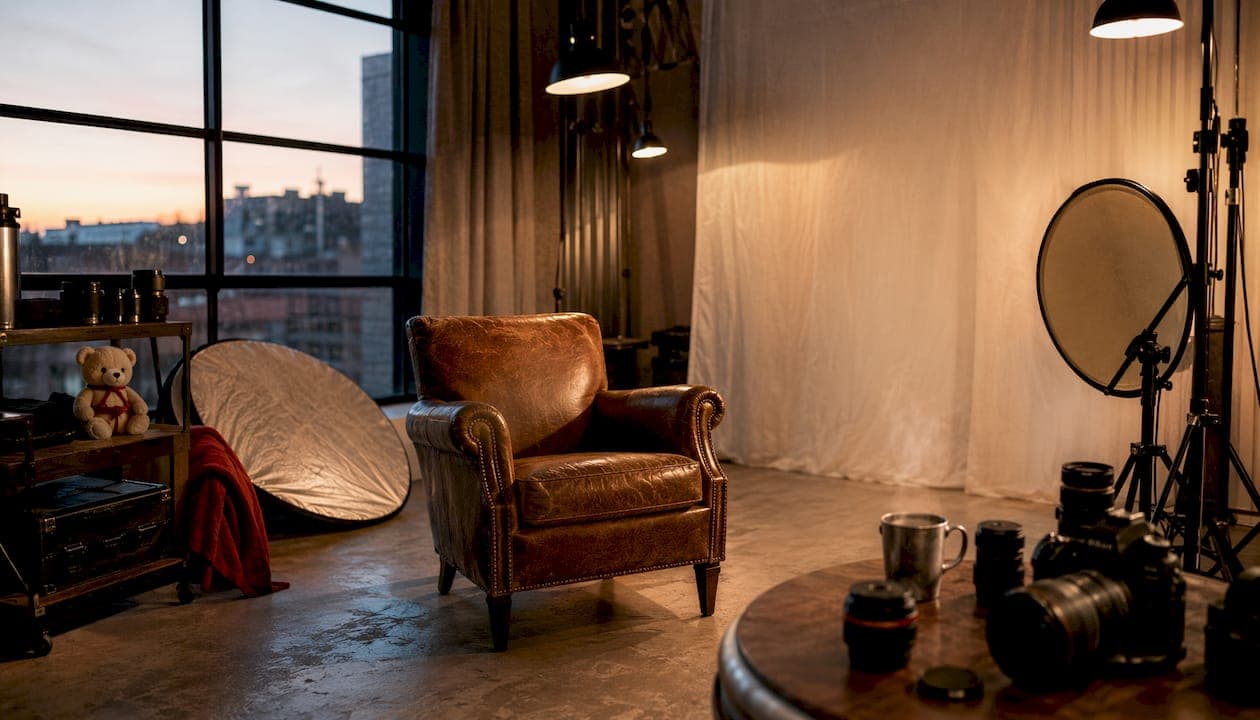
The best erotic and boudoir photography does something pornography almost never does: it makes you feel something before it makes you want anything. That tension, that pull between what's shown and what's withheld, is exactly what separates the genre from everything cheaper. The photographers featured here have built careers on that distinction, and their work is worth studying closely.
What are the best examples of erotic photography right now?
Several photographers are currently defining the conversation. Their styles range from raw and confrontational to soft and deeply intimate, but every one of them treats the body as a subject worth genuine artistic attention.
- Alex Charilaou shoots with a cinematic eye, favoring deep shadows and high contrast that give his boudoir work a noir quality. His subjects look like they own the frame, not like they're performing for it.
- Adrianianja works in a more painterly register, using soft, diffused natural light to create images that feel closer to Renaissance portraiture than commercial glamour. The skin tones are extraordinary.
- Anita Jeanine is known for her emotionally charged portraiture. Her sessions often blur the line between boudoir and fine art nude, with compositions that feel confessional and unguarded.
- Baylee Wall brings a playful, fashion-forward energy. Her work leans into color, texture, and wardrobe in ways that feel more editorial than traditional boudoir, which gives her images a distinct visual personality.
- Beth Cagoni specializes in empowerment-focused sessions. Her clients tend to be women reclaiming their bodies after major life transitions, and that emotional context shows up in every frame.
- Birdie Lyn Pavlik shoots with a documentary instinct. Her images feel caught rather than constructed, which creates an intimacy that more staged boudoir work rarely achieves.
- Bria Nicole Terry works at the intersection of boudoir and artistic nude, with a particular gift for posing that celebrates diverse body forms without flattening them into a single aesthetic.
The clearest distinction between erotic and boudoir photography comes down to explicitness and intent. Boudoir sits closer to the suggestive end of the spectrum, typically involving lingerie, implied nudity, and an emphasis on mood. Erotic photography is a style of art photography that is sexually suggestive or sexually provocative in nature, and it encompasses a wider range of subgenres including nude portraiture, glamour, bondage-inspired imagery, and conceptual uses of shadow and silhouette. Both genres share the same foundational commitment to artistic intent.
| Photographer | Signature Style | Primary Strength |
|---|---|---|
| Alex Charilaou | High contrast, cinematic noir | Mood and atmosphere |
| Adrianianja | Painterly, natural light | Skin tone and composition |
| Anita Jeanine | Emotionally charged portraiture | Intimacy and vulnerability |
| Baylee Wall | Editorial, fashion-forward | Color and wardrobe |
| Beth Cagoni | Empowerment-focused | Client connection |
| Birdie Lyn Pavlik | Documentary instinct | Candid authenticity |
| Bria Nicole Terry | Boudoir meets fine art nude | Body diversity and posing |
Pro Tip: When studying any of these photographers' work, pay attention to what they leave out of the frame. The cropping decisions, the shadows, the implied rather than shown, are often where the real artistry lives.
What makes erotic and boudoir photography so technically hard to get right?
Honestly? Almost everything. The margin between an image that feels genuinely sensual and one that feels awkward or exploitative is razor thin, and it lives in decisions most viewers never consciously notice.
Lighting is the first battleground. Soft, directional light flatters skin and creates depth, but it also has to match the emotional register of the image. A harsh strobe that works beautifully for a fashion editorial can make a boudoir shot feel clinical and cold. Most photographers working in this genre rely heavily on window light, large softboxes positioned at oblique angles, or practical light sources like candles and lamps that add warmth and intimacy to the scene. The erotic power of a photograph depends significantly on aesthetic operations of light, gesture, and composition creating a psychological dialogue among viewer, subject, and artist.
Composition in erotic photography carries more weight than in almost any other genre. Where you place the body in the frame, what you include and exclude, how much negative space you allow, all of it communicates something about how the subject is being regarded. A tight crop that isolates a shoulder or the curve of a hip can be intensely erotic without showing anything explicit. Man Ray's The Prayer (1930) shows only the hands, feet, and buttocks of a woman, and it remains one of the most celebrated erotic photographs ever made.
The ethical dimension is real and can't be separated from the technical one. Erotic photography differs from pornography in that it aims to sexually stimulate while maintaining genuine artistic contribution, rather than objectifying or depersonalizing the subject. That distinction isn't just philosophical. It shows up in how a photographer directs a session, how they handle consent, and how they make decisions in post-production.
Key artistic challenges every serious photographer in this genre navigates:
- Balancing sensuality with aesthetic quality without tipping into either sterility or vulgarity
- Managing the psychological dynamics of a session so the subject feels genuinely comfortable, not just technically compliant
- Making lighting choices that flatter diverse skin tones without homogenizing them
- Deciding how much to show versus suggest, since restraint often produces stronger images
- Maintaining ethical representation that honors the subject's agency throughout the process
Pro Tip: Shoot tethered when possible. Showing your subject the images in real time builds trust fast and lets them participate in the creative decisions, which almost always produces better expressions and more relaxed body language.
Essential boudoir poses that actually work
Posing is where a lot of boudoir sessions fall apart. The subject freezes, the photographer runs through a mental checklist of "flattering angles," and the resulting images look exactly like what they are: two people going through motions. The poses that work are the ones that feel like they emerged from the subject rather than being imposed on them.
Here are the poses that consistently produce strong results across different body types and session styles:
- The recline: Subject lies on their back or side, one arm extended above the head, the other resting loosely on the body. This lengthens the torso and creates a natural, unguarded quality.
- The seated lean: Subject sits on the edge of a bed or chair, leaning slightly forward with weight on one hand. The forward lean creates depth in the frame and a sense of engagement.
- The standing arch: Subject stands with back slightly arched, one hip pushed out, arms loose at the sides or raised. Works especially well with backlighting.
- The over-the-shoulder look: Subject faces away from the camera, then turns the head back to look directly into the lens. Creates tension between vulnerability and directness.
- The wrapped pose: Subject wraps their arms around themselves, which reads simultaneously as self-possession and invitation.
- The floor pose: Subject sits or lies on the floor, which lowers the camera angle and creates a more intimate, less formal perspective.
- The mirror pose: Subject interacts with a mirror in the frame, creating a doubled image that adds visual complexity and a layer of self-awareness.
A few practical tips for getting these poses to land:
- Give the subject something to do with their hands. Hands that have no direction look stiff. Tell them to touch their hair, rest a hand on their collarbone, or grip the edge of whatever surface they're on.
- Direct energy, not position. Instead of saying "move your left shoulder back two inches," say "imagine someone you want just walked into the room." The physical adjustment follows the emotional one.
- Shoot continuously through transitions between poses. The moments between the "official" poses are often the most authentic.
- Celebrate diverse body forms explicitly. Tell your subject what you're seeing and why it's working. Confidence in front of the lens is almost entirely a function of feeling genuinely seen.
Body positivity in boudoir photography isn't a marketing angle. It's a technical requirement. A subject who feels judged or uncomfortable will show it in every frame, no matter how technically perfect the lighting is.
How do you actually make a boudoir session successful?
Preparation is everything, and most of it happens before anyone picks up a camera. The session itself is almost the easy part if you've done the work leading up to it.
Communication before the shoot sets the entire emotional tone. A detailed consultation, whether in person, by phone, or over video, lets you understand what the subject wants to feel in the images, what they're nervous about, and what their boundaries are. That conversation also lets you explain your process, which reduces anxiety on the day. Consent isn't a checkbox. It's an ongoing conversation that continues through the entire session.
Environment matters more than most photographers admit. A cluttered, poorly lit space with a cheap backdrop communicates something to the subject about how seriously you're taking their experience. A thoughtfully arranged space, with attention to bedding, props, ambient light, and temperature, tells them this is a real creative collaboration.
A practical checklist for session preparation:
- Confirm wardrobe choices in advance and suggest options that photograph well (lace, silk, and structured fabrics tend to read better than cotton)
- Prepare the shooting environment the day before, not the morning of
- Have a playlist ready that matches the mood you're going for
- Keep the session space warm, since subjects in minimal clothing get cold faster than you'd expect
- Have a full-length mirror available so subjects can see themselves between setups
- Build in time at the start of the session for the subject to settle in before you start shooting
- Discuss post-production expectations upfront, including retouching preferences
Pro Tip: Start every session with fully clothed or lightly styled shots. This gives the subject time to warm up to the camera and to you before the session moves into more vulnerable territory. The images you get in the first fifteen minutes rarely make the final cut anyway.
Fine art erotic photography often involves specialized printing techniques like pigment printing on fine-art paper, with limited edition prints and certificates of authenticity that emphasize the work's art market value. Knowing this going in helps both photographer and subject understand that what they're creating has a life beyond the screen.
The philosophical and artistic context of erotic photography
Here's the thing about erotic art that most people skip past: it's not just about arousal. It never was. The Stanford Encyclopedia of Philosophy draws a clear line between erotic art and what philosopher Jerrold Levinson calls "erotica," which he defines as images intended to sexually stimulate but not to reward genuine artistic interest, like a provocative lingerie ad. Erotic art aims to do both simultaneously, and that dual ambition is what makes it genuinely difficult to create well.
The audience's interpretation shapes erotic art's classification, making it context and culture dependent. What reads as transgressive in one cultural context reads as classical in another. Nobuyoshi Araki's close-up photograph of a woman's eye, tilted 90 degrees to suggest female genitalia, contains no explicit sexual content and yet is widely recognized as one of the most intensely erotic photographs ever made. That's the genre at its most sophisticated: the erotic effect produced entirely through formal decisions.
The historical arc of erotic photography runs from Victorian postcards distributed through the mail in plain wrappers, to the Japanese "sukashi shunga" hidden prints designed to evade censors, to the digital era's explosion of self-directed imagery. Each shift in technology has expanded both the range of what's possible and the complexity of the ethical questions surrounding it. The spread of the internet in the 1990s brought a renewed surge in erotic photography and a proliferation of online publications catering to diverse tastes. That history matters because it explains why contemporary erotic photography is so stylistically diverse. Every current aesthetic tendency has a lineage.
The creation of erotic art is often both an intellectual and psychological exercise, challenging societal body norms and evoking specific emotions. When a subject steps in front of a camera and directs their own erotic self-portrait, they transform from a passive object into an active creator. That shift in agency is one of the most compelling things happening in the genre right now, and it's reshaping what erotic art means in the broader cultural conversation.
Where else can you find inspiration for erotic photography?
Photography doesn't exist in a vacuum, and the most interesting work in the genre pulls from sources that have nothing to do with cameras.
Painting and visual art are the most obvious starting point. The history of Western art is saturated with erotic imagery, from Velázquez's Rokeby Venus to Goya's Naked Maja to the Japanese shunga woodblock tradition. Studying how painters handled light on skin, how they composed the body within a frame, and how they used negative space gives photographers a vocabulary that purely photographic study doesn't provide. The Routledge Encyclopedia of Philosophy notes that erotic art must aim at and succeed in evoking sexual thoughts, feelings, or desires in virtue of both the nature of the scene and the manner in which it's represented. Painters figured that out centuries before photography existed.
Cinema offers something different: the erotic image in motion, which teaches you about pacing, tension, and the relationship between what's shown and what's implied. Directors like Stanley Kubrick, Jane Campion, and Wong Kar-wai have created some of the most erotically charged imagery in any medium, almost none of it explicit. Studying how they use framing, color grading, and the timing of cuts translates directly into still photography decisions.
Fashion photography sits right at the edge of the erotic and has been pushing that boundary since the 1960s. Helmut Newton, Guy Bourdin, and more recently Mert Alas and Marcus Piggott have all produced work that is simultaneously commercial and deeply erotic. The fashion context gives the imagery a kind of permission that pure boudoir work sometimes lacks, and studying it helps photographers understand how styling, set design, and casting choices shape the erotic register of an image.
Literature and music are less obvious but genuinely useful. Reading writers who handle sexuality with real craft, whether that's Anaïs Nin, Mary Gaitskill, or contemporary erotica, trains your sense of what creates tension and what deflates it. Music affects the emotional state of both photographer and subject during a session in ways that are hard to overstate. Building a playlist that matches the mood you're going for is a real creative decision, not just background noise.
If you're building a serious erotic photography portfolio, drawing from all of these sources gives your work a depth and specificity that purely photographic references rarely produce. The photographers who stand out in this genre are almost always the ones who are looking at everything, not just other photographers.
Kinkykorner is where erotic art, literary content, and adult creative services come together in one place. Whether you're a photographer looking to share your work, a subject searching for inspiration, or someone who simply wants to explore the genre with more depth, Kinkykorner gives you a space to do it without apology.

Key Takeaways
Erotic photography earns its distinction from pornography through artistic intent, compositional craft, and the psychological dialogue it creates between viewer, subject, and artist.
| Point | Details |
|---|---|
| Erotic vs. boudoir distinction | Boudoir is suggestive and mood-driven; erotic photography covers a wider range including nude portraiture, glamour, and conceptual imagery. |
| Artistic intent is the dividing line | Erotic art aims to stimulate sexually and aesthetically; pornography objectifies and depersonalizes its subjects. |
| Lighting and composition carry the erotic effect | Aesthetic operations of light, gesture, and composition create the psychological dialogue that defines the genre. |
| Session preparation determines image quality | Communication, environment, consent, and client comfort before the shoot shape every frame that comes out of it. |
| Inspiration extends beyond photography | Painting, cinema, fashion, and literature all feed the visual vocabulary that separates memorable erotic work from generic imagery. |