
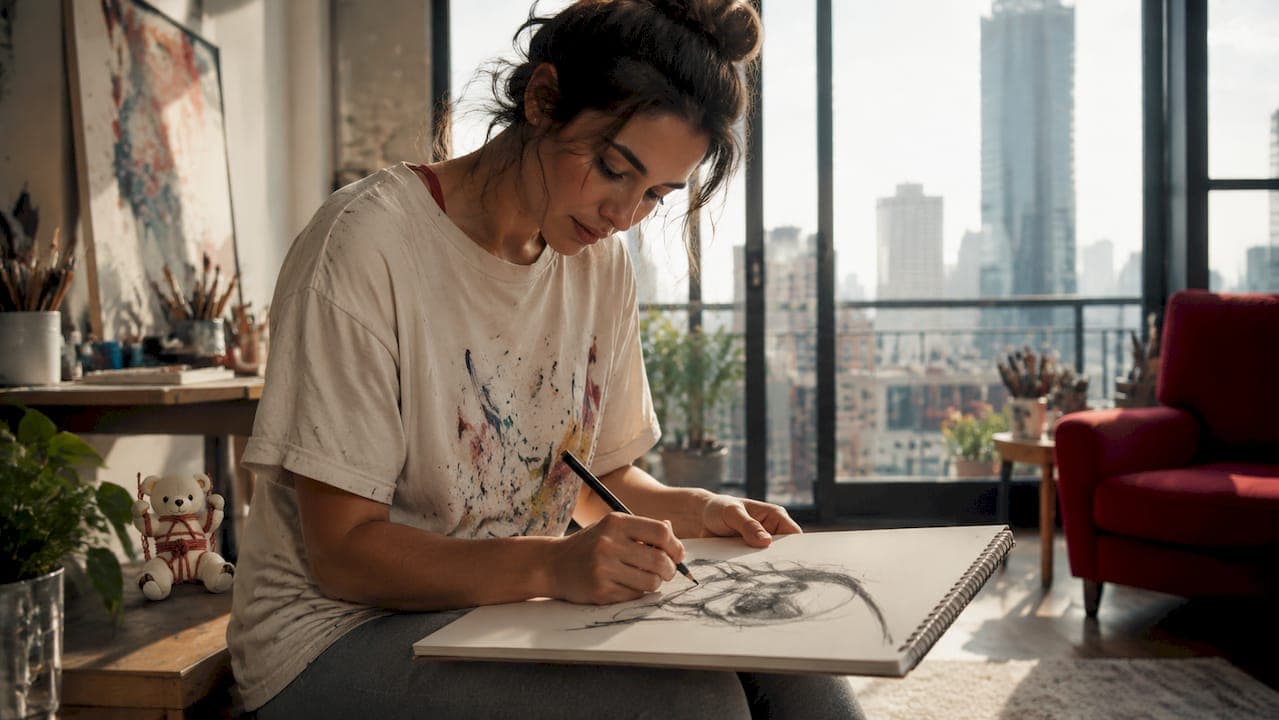
The role of art in adult content is to transform sexual imagery into meaningful expression that demands active engagement rather than passive consumption. This is not a fringe idea or a polite excuse for explicit material. It is a real, documented shift in how creators, audiences, and even legal frameworks treat adult media. From auteur-driven erotic films to illustrated synthetic art, the intersection of artistic intent and adult content is reshaping what gets made, how it gets distributed, and why it matters to people who care about both sexuality and creative truth.
How history shaped the role of art in adult content
Erotic art did not start with the internet. It started with cave paintings, Greek pottery, and Japanese shunga woodblock prints. The impulse to depict sexuality through a creative lens is as old as human expression itself.
Before digital distribution changed everything, the economics of physical media kept adult content tightly controlled. 95% of erotic content producers operated within mainstream taste boundaries, relying on stylized illustrations to sidestep censorship. That constraint was not just a legal workaround. It forced a kind of visual discipline that gave mid-century erotic imagery its distinctive aesthetic weight.
| Era | Primary Medium | Artistic Constraint | Key Aesthetic |
|---|---|---|---|
| Pre-1950s | Illustration, painting | Heavy censorship, no nudity | Suggestive, symbolic |
| 1950s–1970s | Pulp magazines, film | Distribution costs, obscenity laws | Stylized, glamorized |
| 1980s–1990s | VHS, cable | Retail gatekeeping | Explicit but formulaic |
| 2000s–present | Internet, streaming | Platform policies, age verification | Fragmented, diverse |
The internet did not just democratize access. It atomized the entire ecosystem. Suddenly, a single creator with a camera and a vision could reach a global audience without a distributor's approval. That freedom produced an explosion of diversity, but it also flooded the market with content that had zero artistic ambition. The contrast between those two poles is exactly what makes the current adult content trends in 2026 so worth paying attention to.
What differentiates erotic art from commercial pornography?
The line between erotic art and commercial pornography is not about how much skin is showing. It is about who is driving the work and why.
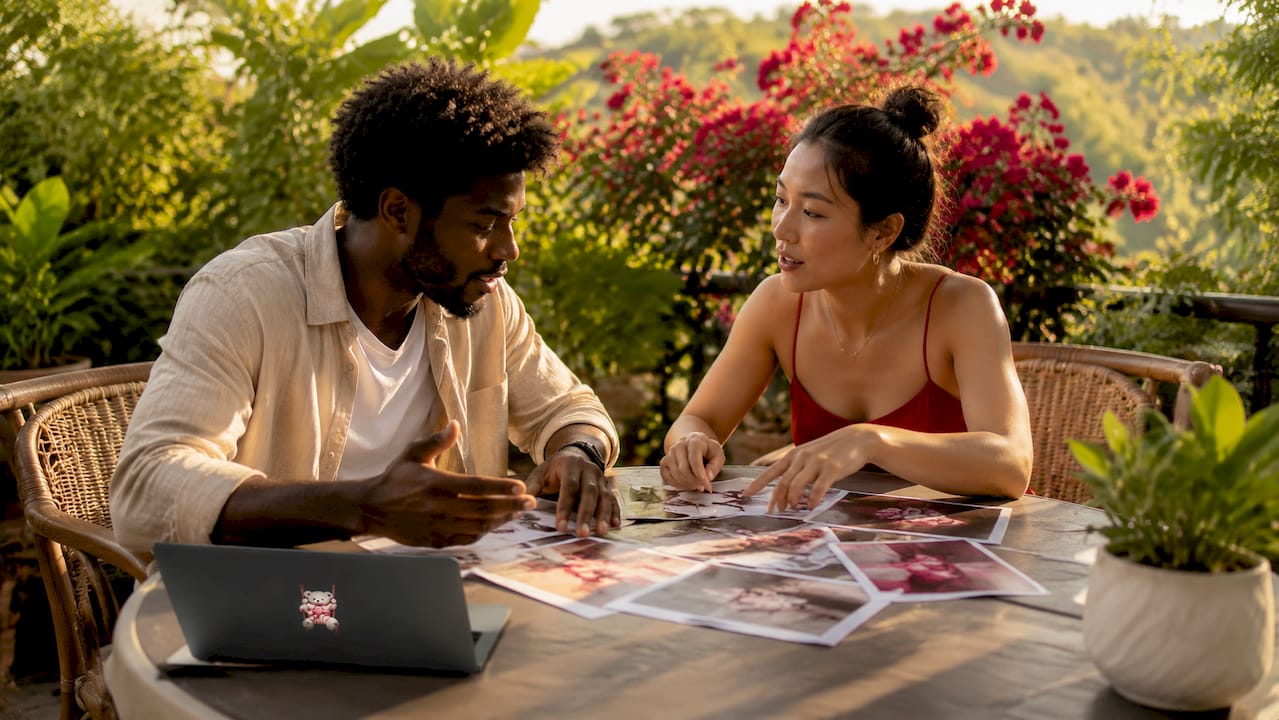
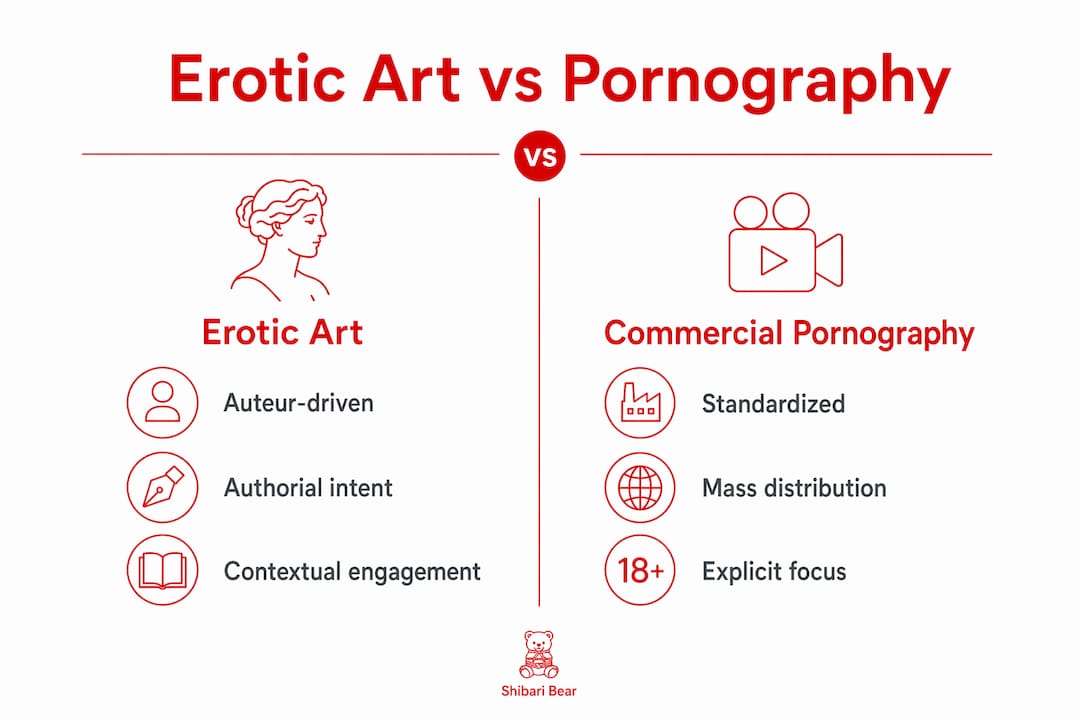
Erotic art differs from pornography in intent, demanding contextual engagement and authorial meaning rather than standardized consumption. Commercial pornography is built for efficiency. It delivers a predictable experience with minimal friction. Erotic art asks you to sit with something, feel something, maybe even feel uncomfortable. Those are fundamentally different relationships between creator and viewer.
| Dimension | Erotic Art | Commercial Pornography |
|---|---|---|
| Authorship | Auteur-driven, self-authored | Standardized, producer-directed |
| Intent | Emotional truth, provocation | Arousal, transaction |
| Viewer role | Active engagement | Passive consumption |
| Legal classification | Often artistic nudity | Explicit content, stricter compliance |
| Distribution | Galleries, art platforms, niche film | Mainstream adult platforms |
Authenticity and authorial intent define erotic art. Without self-authorship, adult content defaults to commercial pornography classification, regardless of production quality or aesthetic choices. A beautifully lit scene with a formulaic script is still pornography. A raw, imperfect scene driven by a creator's personal vision is potentially art.
Pro Tip: If you are creating adult content with artistic intent, document your creative process. Director's statements, production notes, and stated thematic goals all support an "artistic work" classification if your content ever faces legal scrutiny.
How contemporary creators use art to redefine sexuality
The most interesting adult content being made right now is not the most explicit. It is the most honest.
Creators today are shifting toward emotional truth in adult content, favoring authentic intimacy over scripted, choreographed performances. The film Truly Naked is a documented example of this, with actors explicitly discussing vulnerability and imperfection as core creative goals. That is not a marketing angle. That is a genuine artistic position.
- Sou Noaki's portraiture strips away polished industry images to reveal raw humanity in adult performers, reframing figures like Riko Hoshino as complex human subjects rather than fantasy objects.
- Ryan Czerwonko's theater-inspired adult productions reject formulaic depictions entirely, building immersive, experimental performances that prioritize emotional connection over choreographed sex acts.
- Independent erotic writers and illustrators on platforms like Kinkykorner are building literary and visual work that treats desire as a subject worth exploring with the same seriousness as any other human experience.
"Theatre-inspired adult performances prioritize connection and emotional immediacy over formulaic depictions." This is not a trend. It is a correction. The adult industry spent decades optimizing for volume and predictability. A growing wave of creators is now optimizing for meaning.
The guide to thriving in erotic art makes clear that this shift is not just philosophical. It is practical. Audiences are actively seeking out adult content that feels real, that has a point of view, and that treats them as thinking people rather than passive consumers.
What practical considerations affect artistic adult content?
Making artistic adult content is not just a creative challenge. It is a legal and technical one. The compliance landscape treats artistic nudity and explicit content very differently, and knowing the distinction can determine whether your work reaches an audience or gets buried.
- Understand the legal threshold. Artistic nudity typically requires only an 18+ warning, while sexually explicit content triggers stringent age verification under 18 U.S.C. § 2257. Positioning your work accurately from the start saves significant compliance headaches later.
- Use synthetic and illustrated art strategically. Ethical synthetic adult art focuses on unique fictional characters and stylized shading to avoid identity harm. Avoiding what practitioners call "lookalike drift" protects both your legal standing and your artistic integrity.
- Know your platform's content policies before you create. Most major platforms draw their own lines between artistic nudity and explicit content, and those lines do not always match legal definitions. Build your distribution strategy around where your work actually fits.
- Balance artistic vision with commercial viability. The practical guide for erotic content creators is direct about this: artistic intent does not pay the bills on its own. Find the overlap between what you want to make and what an audience will support.
- Document everything. Model releases, production records, and stated creative intent all matter if your work is ever challenged. Treat documentation as part of the creative process, not an afterthought.
Pro Tip: Strategic positioning as artistic nude rather than explicit content significantly reduces regulatory burden and expands your potential audience reach. This is not about hiding what you make. It is about accurately categorizing it.
What impact does artistic adult content have on culture?
Artistic adult content does something that commercial pornography rarely attempts. It changes how people think about sexuality, not just how they feel about it in the moment.
- Erotic art challenges stereotypes by centering perspectives that mainstream adult media ignores, including older bodies, non-binary identities, disability, and non-Western aesthetics.
- Author-driven sexual expression creates cultural artifacts that document how a specific person, in a specific time and place, understood desire. That is historically significant in the same way that any personal art document is significant.
- Audiences who engage with artistic adult content report a different kind of relationship with the material. They think about it. They discuss it. They return to it. That is active engagement, not passive consumption.
- The cultural case for supporting adult artists is grounded in this distinction. When you support an artist making erotic work, you are supporting a specific human vision of sexuality. When you consume commercial pornography, you are supporting a production model.
The future of adult content is moving toward this artistic pole, not away from it. Audiences are more sophisticated. Creators have more tools. And the cultural conversation around sexuality, consent, and representation is more developed than it has ever been. Artistic adult content is not a niche curiosity. It is where the most interesting work in the field is happening right now.
Key takeaways
Artistic intent, authorship, and emotional truth are the three factors that separate erotic art from commercial pornography and determine its cultural impact.
| Point | Details |
|---|---|
| Art transforms adult content | Artistic intent shifts adult media from passive consumption to active, meaningful viewer engagement. |
| History shaped aesthetics | Legal and distribution constraints forced stylized, disciplined visual approaches in pre-internet erotic art. |
| Intent defines the category | Authorial self-direction and stated meaning determine whether adult content qualifies as erotic art or commercial pornography. |
| Compliance follows classification | Positioning work as artistic nudity rather than explicit content reduces legal burden under 18 U.S.C. § 2257. |
| Culture shifts with artistic content | Author-driven erotic work challenges stereotypes and creates lasting cultural documents about human desire. |
Art, desire, and why i think most people are missing the point
Here is my honest read on where things stand. Most conversations about adult content treat art as a defense mechanism, a way to make explicit material more palatable to critics or regulators. That framing misses the actual point entirely.
Art in adult content is not a shield. It is a lens. When a director like Ryan Czerwonko builds a theater-inspired adult production, or when a photographer like Sou Noaki reframes an adult performer as a full human subject, they are not trying to sneak something past a censor. They are making a claim about what sexuality actually is. Complex. Funny sometimes. Awkward. Deeply personal.
I have watched audiences respond to artistic erotic work in ways that genuinely surprise them. They expected arousal. They got something closer to recognition. That gap between expectation and experience is where art lives, in any medium.
The challenge for creators right now is real. Platform restrictions, compliance demands, and the sheer noise of commercial content make it hard to build an audience for work that requires patience and engagement. But the audience is there. People are hungry for adult content that treats them as full human beings. The creators who figure out how to reach them, without compromising the work, are doing something genuinely important.
Support the artists making this work. Seek it out. Pay for it when you can. The economics of artistic adult content depend on audiences who understand the difference between what they are watching and why it matters.
— Prenston
Discover artistic adult content at Kinkykorner
Kinkykorner is built for exactly this kind of exploration. It is a marketplace where adult artists, writers, and creators list their work alongside services and businesses that take erotic expression seriously.

If you are tired of content that feels like it was assembled on a production line, Kinkykorner is where you find the alternative. Browse erotic literary and artistic content from creators who have a point of view, a voice, and something real to say about desire. Whether you are an enthusiast looking for work that actually moves you or a creator ready to find your audience, Kinkykorner is the space where artistic adult expression gets the room it deserves. Come see what adult content looks like when the people making it actually care.
FAQ
What is the role of art in adult content?
The role of art in adult content is to transform sexual imagery into expressive, author-driven communication that invites active viewer engagement. It distinguishes intentional erotic work from standardized commercial pornography through authorship, emotional truth, and contextual meaning.
How does erotic art differ from pornography?
Erotic art requires auteur-driven direction and authorial intent, while pornography focuses on standardized arousal and passive consumption. The distinction often determines legal classification and distribution requirements under frameworks like 18 U.S.C. § 2257.
Does artistic adult content face different legal rules?
Artistic nudity typically requires only an 18+ warning, while sexually explicit content demands stricter age verification compliance. Creators who accurately position their work as artistic nudity face significantly less regulatory burden.
Can synthetic or illustrated adult art be considered artistic?
Synthetic adult art qualifies as artistic when it features unique fictional characters, stylized aesthetics, and avoids recognizable likenesses. Ethical frameworks for synthetic erotic art prioritize originality and identity protection as core creative principles.
Why does artistic adult content matter culturally?
Artistic adult content challenges stereotypes, documents personal visions of desire, and creates material that audiences engage with actively rather than consume passively. It expands the cultural conversation around sexuality, representation, and human intimacy in ways that commercial content rarely attempts.