

Kinky self-care is the intentional integration of kink-informed practices into your wellness routine to nurture your body, mind, and erotic self simultaneously. This isn't just about getting off. It's about treating sensation play, aftercare, and conscious communication as genuine tools for nervous system regulation, emotional grounding, and physical recovery. Whether you're flying solo or deep in a dynamic with a partner, these kinky self-care tips will help you build rituals that feel as good as they are good for you.
What essential elements make kinky self-care effective?
Effective kinky self-care, what sex educators and BDSM practitioners sometimes call "erotic wellness practice," rests on four non-negotiable pillars: preparation, consent infrastructure, calibrated sensation, and recovery support. Skip any one of them and you're not doing self-care. You're just winging it.
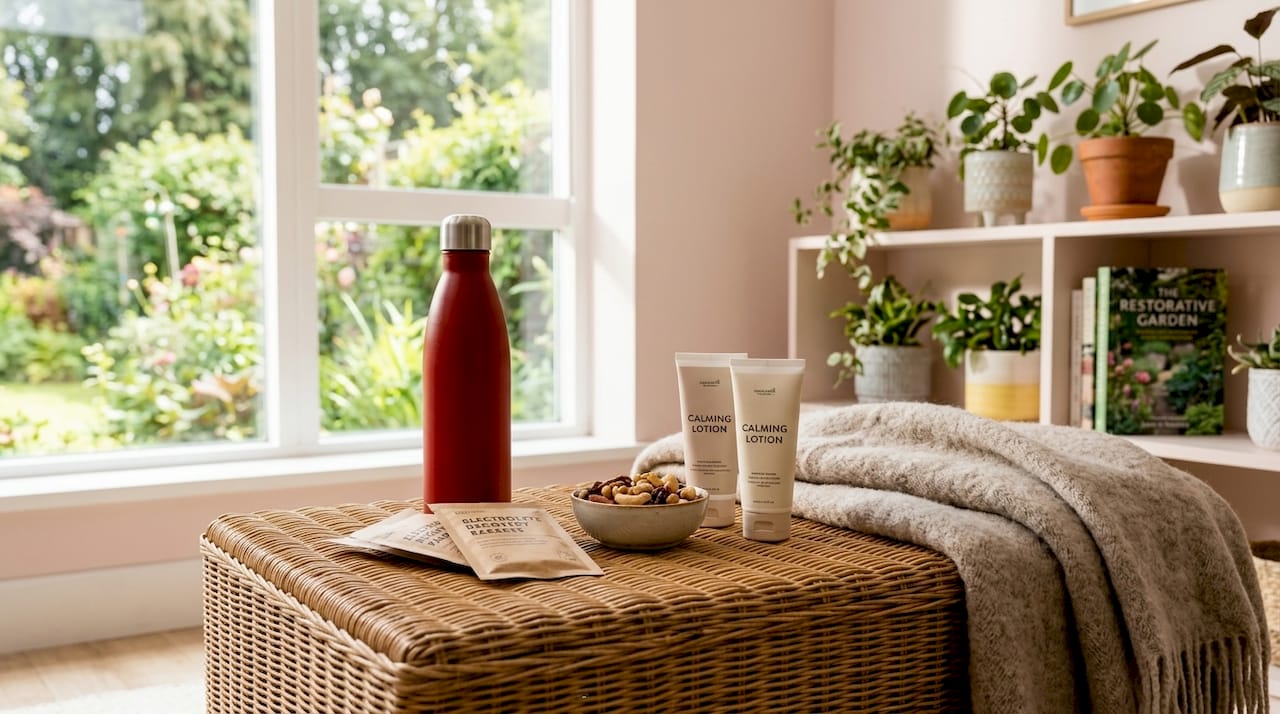
The aftercare kit is your foundation. An aftercare kit is defined as a pre-packed collection of water, electrolytes, snacks, oils, blankets, wipes, comfort objects, and a notepad designed to remove decision-making post-scene. That matters because your brain is not at full capacity after intense play. Trying to figure out what you need when you're deep in subspace or emotional overflow is like trying to cook dinner mid-panic attack. You won't make great choices.
Consent tools are not optional paperwork. A Yes/No/Maybe list is a structured framework where you privately rate kink activities and then compare overlapping interests with a partner, focusing negotiation on the "maybes" while treating hard limits as absolute. These lists work because they externalize the awkward conversation. You're not staring at someone hoping they'll guess your limits. You're working from a shared document.
Sensation play requires calibration, not courage. Wax play, impact, temperature, and pressure are all dosage problems. The experience is not universal. What feels like a warm tingle on your upper back might feel like a burn on your inner thigh. Starting with beginner-safe candles at 50 to 55°C and patch testing before full scenes is standard practice, not timidity.
Lubricant choice shapes the whole experience. Silicone lubricants last longer and retain slickness better than water-based options, which dry quickly and need reapplication. Silicone lube is safe with condoms but degrades silicone toys. Water-based lube works with everything but requires more frequent top-ups. Know what you're using before you need it.
Pro Tip: Pack your aftercare kit the day before a planned scene, not the morning of. Decision fatigue is real, and pre-scene prep is one of the most underrated kinky self-care moves you can make.
1. Build your aftercare kit before you need it
Preparation before scenes with a packed aftercare kit supports effective recovery specifically because cognitive function is compromised post-play. This means the time to stock your kit is not after the scene. It's days before. Think water, electrolyte drinks, a soft blanket, body-safe massage oil, wipes, a comfort snack, and a notepad for any post-scene feelings you want to capture.
Experienced players actually maintain multiple kits tailored to different play spaces, auditing contents every two to three months to replenish and refine. If you play at home, at a dungeon, or at a partner's place, each location gets its own kit. That level of intentionality is what separates reactive recovery from genuine erotic self-care.
2. Use a Yes/No/Maybe list for honest consent
The Yes/No/Maybe list is one of the most practical consent negotiation tools available to kink practitioners at any experience level. You rate activities privately, share results, and build your scene around genuine overlap. No pressure, no guessing, no awkward silences where someone says "sure" when they mean "absolutely not."
These lists should be revisited every six to twelve months because your desires and limits shift. What was a hard no last year might be a curious maybe now. What felt exciting six months ago might feel like something you're done with. Treating consent as a living document rather than a one-time checkbox is one of the most intimate self-care acts you can practice with a partner.
3. Calibrate sensation play with patch tests and safe zones
Sensation and temperature play are not one-size-fits-all. Heat perception in wax play depends on skin thickness, hormone levels, circulation, and even room temperature. That means the same candle at the same distance can feel completely different on different days or on different bodies. Calibration, patch tests, and gradual intensity increases are the standard safety practice for good reason.
Start with safe zones like the upper back, which tolerates heat best. Avoid bony areas, the face, genitals during first sessions, and anywhere with thin or sensitive skin. Hold candles at the recommended starting distance and work closer only after you've confirmed comfort. This isn't about being cautious. It's about making the experience actually good.
Pro Tip: Keep a small notepad in your aftercare kit specifically for logging sensation play details: candle type, distance, body area, and your reaction. Over time, this becomes a personalized map of your pleasure.
4. Prioritize hydration, warmth, and gentle touch post-play
Aftercare duration is individualized based on nervous system activation depth and can range from twenty minutes to two hours or more. Physical warmth, hydration, calibrated physical contact, and a clear time container are the functional requirements. This is not cuddling for the sake of it. It's physiological co-regulation, a process that supports your nervous system's return from a heightened state and prevents subdrop.
Subdrop is real, it's physical, and it hits differently for everyone. Some people crash within an hour. Others feel it the next day. Knowing your own pattern and building aftercare that matches it is one of the most self-aware kinky relaxation methods you can develop. Warmth plus hydration plus gentle touch is the baseline. Build from there.
5. Incorporate erotic self-massage as a solo practice
Solo kinky self-care is its own discipline. Self-aftercare after solo play requires deliberate routines because emotional vulnerability and nervous system drop still happen when you're alone. Hydration, warmth, breathing exercises, quiet time, and journaling all support recovery. But erotic self-massage as a proactive practice, not just post-scene recovery, is one of the most underused sensual self-care ideas out there.
Use a body-safe oil, set a deliberate environment with lighting and temperature you actually enjoy, and treat the session as a full sensory experience rather than a means to an end. This kind of mindful, intentional touch builds body literacy. You learn what you actually like, where you're sensitive, and what kind of pressure or temperature works for you. That knowledge makes every future scene, solo or partnered, significantly better.
6. Choose your lubricant based on activity and body chemistry
Lube is not a universal product. Silicone lube lasts longer and stays slick through extended play, making it ideal for impact scenes or anything involving sustained friction. Water-based lube is compatible with all toy materials and is easier to clean up, but it dries faster and needs reapplication. Neither is universally better. The right choice depends on what you're doing and what your body responds to.
If you have sensitivities, fragrance-free and glycerin-free water-based options like Sliquid H2O or Good Clean Love are worth trying. For silicone-safe play, Überlube and Pjur Original are widely trusted. Knowing your options before you're mid-scene and suddenly dry is basic erotic self-care hygiene.
7. Use grounding techniques to close the loop after play
Grounding after a scene is not just nice to have. It's how you close the neurological loop and return to baseline. Playlist creation, journaling, gentle movement like stretching or a slow walk, and breathwork are all effective grounding techniques that support nervous system recovery. The goal is to signal to your body that the intensity is over and safety is present.
Some people find that a specific song or scent becomes a reliable anchor for post-scene grounding. That's not superstition. That's conditioning. Your nervous system learns to associate the cue with safety, and over time, the transition out of a heightened state becomes faster and smoother. Build that anchor deliberately.
8. Create a personalized kinky self-care ritual
A personalized ritual is what separates a one-off experience from a sustainable practice. Start by assessing your preferences, sensitivities, and limits honestly. Then decide which elements belong in your routine: sensory tools like wax candles or massage oils, communication methods like safewords and check-ins, and aftercare components like your kit and grounding practice.
For solo routines, a simple structure works well. Set the environment, prepare your tools, engage with intention, and close with structured aftercare. For partnered routines, add negotiation, role clarity, and synchronized aftercare where both people's needs are addressed. Use check-ins and journaling to refine the ritual over time. What works in month one may need adjusting by month three. That's not failure. That's the practice evolving.
You can explore kink practices in depth to find which activities resonate most before building them into a regular ritual.
9. Match your tools to your experience level
Not every tool or technique belongs in every practitioner's kit. Beginners do best with gentle wax play using low-temperature candles, simple aftercare kits, and basic water-based lubricants. The priority at this stage is learning your body's responses without overwhelming them.
| Experience Level | Recommended Tools | Key Consideration |
|---|---|---|
| Beginner | Low-temp candles (50-55°C), water-based lube, basic aftercare kit | Patch test everything; keep sessions short |
| Intermediate | Custom aftercare additions, Yes/No/Maybe lists, new sensation tools | Revisit consent lists every 6 months |
| Advanced | Impact kits, extended aftercare protocols, silicone lube, arnica ointment | Schedule post-scene check-ins; audit kits quarterly |
Extended impact aftercare at the advanced level includes cooling compresses for twenty minutes and arnica ointments applied over several days, with scheduled check-ins to monitor bruise development. That level of structured recovery is what makes intense play sustainable long-term.
Key takeaways
Effective kinky self-care requires preparation, calibrated sensation, honest communication, and structured aftercare to support physical and nervous system recovery.
| Point | Details |
|---|---|
| Pack your aftercare kit early | Pre-scene prep removes decision fatigue when cognitive function is compromised post-play. |
| Use consent tools consistently | Yes/No/Maybe lists should be revisited every 6 to 12 months as desires evolve. |
| Calibrate sensation carefully | Patch test wax play and sensation tools before full scenes; safe zones and distance matter. |
| Match lube to activity | Silicone lube lasts longer; water-based lube works with all toys. Know the difference. |
| Solo aftercare is non-negotiable | Nervous system drop happens alone too. Hydration, warmth, and journaling support recovery. |
What I've learned from treating kink as actual self-care
Here's my honest confession: I used to treat aftercare as the awkward part after the good stuff. A glass of water, a blanket, done. It took me longer than I'd like to admit to understand that aftercare is not a courtesy. It's the whole point. The scene is the intensity. The aftercare is where you actually integrate it.
The moment I started packing my kit the day before, logging my sensations, and treating my Yes/No/Maybe list as a living document rather than a one-time form, everything shifted. The play got better because I was more honest about what I wanted. The recovery got faster because I stopped improvising it. And the solo sessions stopped feeling like a lesser version of partnered play. They became their own complete practice.
Communication is the part most people rush or skip entirely. I get it. Negotiating desires out loud feels clinical when you're trying to stay in the mood. But building trust through consent is what makes the erotic space feel genuinely safe, and a genuinely safe space is where the best experiences happen. That's not a soft take. That's just what I've seen work, over and over.
Honor your nervous system's timing. Some people need two hours of quiet and warmth after a heavy scene. Others are fine in twenty minutes. Neither is wrong. The only mistake is pretending you're fine when you're not, because the crash will come later and it'll be harder to manage alone.
— Prenston
Explore your kinky self-care journey with Kinkykorner

Kinkykorner is built for people who take their erotic lives seriously. Whether you're looking for curated adult services, erotic literary content, or a community that actually gets what you're exploring, Kinkykorner brings it all together in one place. You can browse kink and wellness resources that support everything from beginner sensation play to advanced aftercare protocols. This is not a generic wellness platform with a kink filter slapped on top. It's a space designed specifically for adults who want to explore, connect, and practice with intention. Take the next step and find what fits your practice.
FAQ
What are kinky self-care tips exactly?
Kinky self-care tips are practical strategies that blend erotic play with wellness practices, covering preparation, sensation calibration, communication tools, and aftercare to support physical and emotional recovery.
How long should aftercare last after a kink scene?
Aftercare duration is individualized and can range from twenty minutes to two hours or more depending on nervous system activation depth and personal needs.
Can you practice kinky self-care solo?
Solo kinky self-care is a complete practice. Emotional vulnerability and nervous system drop still occur during solo play, making structured aftercare with hydration, warmth, and journaling just as important as in partnered contexts.
What lubricant is best for kink play?
The best lubricant depends on the activity. Silicone lube lasts longer for extended play but degrades silicone toys. Water-based lube is compatible with all toy materials but requires more frequent reapplication.
How often should you update a Yes/No/Maybe list?
Yes/No/Maybe lists should be revisited every six to twelve months because desires, limits, and comfort levels shift over time. Treating consent as a living document rather than a fixed agreement supports safer and more honest kink practice.