

To submit erotic art, make sure you are 18 or older, hold the copyright to your work, have signed model releases for identifiable subjects, meet the portal's file specs, and pay any non-refundable fee before the call closes. Two references anchor every step below: 18 U.S.C. §1466A governs what you legally cannot depict, and the Seattle Erotic Art Festival's artist FAQ shows what a real portal actually asks for.
TL;DR:
- Most festivals charge non-refundable fees that cover a limited number of submissions, with deadlines strictly enforced and time zone considerations crucial.
- High-quality, well-prepared images that follow recommended technical standards and include clear metadata significantly improve chances of passing the review process.
- Signed model releases and adherence to legal statutes like 18 U.S.C. §1466A are mandatory to avoid legal issues, especially when depicting minors or ambiguous age subjects.
- Jurors prioritize concept strength, explicitness of erotic intent, and presentation quality, making tailored artist statements and clear imagery essential for success.
- Festival acceptance mainly offers visibility and networking opportunities, with most artists earning modest income and using online marketplaces for ongoing promotion.
Table of Contents
- Who Can Enter and What Counts as Erotic Work
- Typical Fee Structures, Deadlines, and What Fees Buy
- Preparing Portfolio Images and Files That Pass Technical Checks
- Model Releases, Consent Proof, and Legal Red Flags
- How to Use Festival Submission Portals Without Getting Rejected
- Practical Logistics for Accepted Physical Work
- What Juries Look For and How to Improve Your Odds
- Prenston's Checklist for a Submission-Ready Entry
- Privacy Concerns and Handling Sensitive Content
- Typical Payment, Prize, or Exposure Benefits for Accepted Works
- Tips for Preparing Artwork to Meet Genre and Taste Expectations
- Primary Links to Festival Portals and Legal Text
- Why I Keep Telling Artists to Submit Anyway
- Where KinkyKorner Fits Once the Festival Season Ends
- Sources
- FAQ
Who Can Enter and What Counts as Erotic Work
Every legitimate call for erotic art starts with the same baseline: you must be 18 or older, and you must be the copyright holder or have documented permission to submit. Collaborative pieces usually need co-credit listed on the entry form, and most calls, including the Dirty Show, restrict entries to original work you have not previously exhibited at the same festival. Media accepted spans painting, photography, sculpture, digital art, and mixed media, though some calls cap entries per artist or waive fees for international submitters.
What separates "erotic" from a figure study is often just framing. A caption or short artist statement that names the erotic intent helps jurors sort ambiguous pieces correctly instead of filing them under fine art nudity, a point echoed in submission guidance from niche publications that specialize in explicit content.
Before you open any application, gather:
- Proof of age for yourself and any depicted models
- Signed model releases for identifiable subjects
- High-resolution image files and a short artist statement
- Documentation proving you own the copyright or have permission to use reference material
Typical Fee Structures, Deadlines, and What Fees Buy
Most festivals charge a non-refundable entry fee that unlocks a set number of submission slots per category rather than one flat fee for unlimited entries. Deadlines are rarely soft. SEAF's call closes at 11:00 PM local time on the stated date, and missing that window by minutes means your work simply is not considered, according to SEAF's own FAQ page.
Many artists report modest returns from art overall, often finding festivals more valuable for visibility than direct income, which makes budgeting for fees and calendaring deadlines carefully worth the extra ten minutes, according to survey reporting from Hyperallergic.
- Pay attention to time zone listed on the call, not your own
- Note whether early-bird pricing exists before the standard window opens
- Save every payment receipt and portal confirmation email
- Mark notification and exhibition dates on your calendar the day you submit
Preparing Portfolio Images and Files That Pass Technical Checks
Technical rejection is avoidable and usually comes down to sloppy file prep. SEAF recommends images sized within a recommended range of pixel dimensions on the longest side, while smaller publications like Little Rocked Zine accept JPEG, PDF, and HEIC formats depending on the piece.
- Shoot 2D and 3D work under even, neutral lighting against a plain background, including the frame or a scale reference for sculptures
- Export images at the recommended pixel dimensions, saving prints at 300 DPI when a physical reproduction is involved
- Name files clearly (artist last name, title, medium) and fill in every metadata field the portal asks for, including dimensions and price if requested
- For multi-piece or series submissions, order images so the strongest, clearest piece leads and note in your statement how the pieces relate
Pro Tip: Compose your lead image so it reads clearly even as a thumbnail, since that is often the first and only impression a juror gets in an early screening pass.
Model Releases, Consent Proof, and Legal Red Flags
A signed model release is not optional paperwork, it is often the difference between an accepted piece and a legal liability. A usable release includes the model's name, a statement confirming they are 18 or older, the date, and both signatures. Festivals may request releases at submission or hold them in reserve and ask only if a piece is flagged.
The law that matters most here is 18 U.S.C. §1466A, which criminalizes obscene visual depictions of minors in sexually explicit contexts. This statute can apply to drawings, paintings, and digital or AI-generated images even when no real minor exists, which is why age-ambiguous subjects are a hard line, not a gray area.
A visual depiction of a minor engaging in sexually explicit conduct can be prosecuted under federal law even if it is not photographic and the minor is not real.
- Never submit work where a subject's age could reasonably read as under 18
- Avoid simulated minors, bestiality, or graphic sexual violence in any submission
- Keep releases organized by piece and redact sensitive ID numbers before filing
- Consult an attorney if a piece's subject matter falls into any legal gray zone
How to Use Festival Submission Portals Without Getting Rejected
Portal mechanics trip up more artists than actual jury rejection does. Most failures come down to avoidable friction: wrong email on file, a cloud link set to private, or a payment that did not clear before the deadline.
- Create your artist profile well before the deadline and double-check the email address on file
- Pay the entry fee and confirm exactly which categories or number of pieces it unlocks
- Upload each piece as instructed, filling in the artist statement and attaching model releases where required
- Preview your entry before finalizing, since most portals will not let you edit after submission
- Confirm your work appears under "My Submissions" and screenshot the confirmation page as backup proof
Set any shared image links to accessible by anyone with the link. A private folder is one of the most common reasons an otherwise strong entry never gets reviewed.
Practical Logistics for Accepted Physical Work
Once a piece is accepted, shipping and handling become your responsibility unless the call states otherwise. Pack for transit with sturdy crating, follow any stated weight or size limits, and include a prepaid return label if the festival requires one.
- Insure the piece for its full value in transit, since festivals typically cover the venue but not shipping damage
- Label crates clearly with your name, contact information, and handling instructions
- Include an inventory sheet inside the package listing piece title, medium, and dimensions
- Expect standard consignment terms if the piece sells, often a commission split with payment issued weeks after the show closes
Pro Tip: Request written confirmation from festival receiving staff the moment your piece arrives, so you have a paper trail if anything gets lost or damaged before the show opens.
What Juries Look For and How to Improve Your Odds
Jurors typically weigh four things: concept strength, clarity of erotic intent, technical execution, and how well the piece is presented in the submission itself. A blurry photo of a strong painting loses to a sharp photo of a decent one more often than artists expect.
- Tailor your artist statement to each call instead of reusing the same paragraph everywhere
- Avoid resubmitting a piece unchanged to the same festival year after year
- Lead with your clearest, most erotic-forward image rather than saving it for later in the set
Many visual artists earn a modest share of their income directly from art sales, with a majority holding outside work to make ends meet, according to survey data reported by Hyperallergic. Treat acceptance as a visibility win first and an income stream second. If you are accepted, read the exhibition contract closely, including delivery deadlines and any exclusivity clauses before you sign.
Prenston's Checklist for a Submission-Ready Entry
After going through calls for erotic art repeatedly, a few habits separate artists who get consistent acceptances from those who get sporadic ones. Build a folder for every submission containing high-resolution images, signed releases, your artist statement, an accessible cloud link, and your payment receipt, all before you touch the portal.
Frame your erotic intent plainly in your statement rather than hoping the image speaks for itself. Jurors moving through hundreds of entries respond to clarity, not mystery.
- Keep a master document tracking which pieces went to which call and when
- Reuse strong artist statement language but adjust it to match each call's specific theme
- Check KinkyKorner's guide to erotic art submissions for portfolio prep tailored to adult-themed platforms
- Review portfolio creation tips for adult creators before your next shoot or scan session
Privacy Concerns and Handling Sensitive Content
Erotic art submissions carry privacy stakes that a landscape painting never will. Model releases, personal contact information, and sometimes identifiable faces all pass through third-party portals, so treat every upload like it could be seen by someone other than the jury.
Redact anything unnecessary before you submit. A model release needs a signature and a date, not a scanned driver's license with a full ID number visible. If a portal asks for identifying documents to verify age, send them through a secure channel the festival specifies rather than a general upload field, and ask what the festival's retention policy is if it is not stated.
Keep your own copies of everything you send, stored somewhere private and backed up. If a piece features a model who later asks to be removed from public exhibition, having organized records makes it far easier to respond quickly. Festivals vary in how long they retain submission materials after a call closes, so do not assume your files disappear once the show ends.
If you are submitting under a pseudonym for professional or safety reasons, check whether the portal requires legal name matching for payment or contracts. Some do, even when your public artist credit differs, and finding that out after acceptance creates unnecessary friction.

Typical Payment, Prize, or Exposure Benefits for Accepted Works
Financial return varies widely by festival, and most artists should treat acceptance as a visibility opportunity rather than a paycheck. Some festivals offer cash prizes for juried standouts, others operate on a straight commission split if a piece sells during the show, and many offers neither, just wall space and a catalog credit.
Exposure benefits tend to matter more than direct sales for most participants. Being selected gives you a credit line for your portfolio, a chance to network with curators and collectors who attend adult art shows specifically, and often press coverage tied to the festival itself. Survey reporting indicates many artists earn modest income from their art overall, according to Hyperallergic's reporting on artist debt, which frames festival participation as one piece of a broader visibility strategy rather than a reliable revenue line.
If a sale does happen, ask upfront what commission the festival takes and when payment gets issued, since terms differ call to call and are rarely negotiable after acceptance. Read the fine print on prize categories too. Some carry cash, others carry only a certificate or feature placement, and knowing which before you submit helps you set realistic expectations for the show.
Tips for Preparing Artwork to Meet Genre and Taste Expectations
Erotic art festivals are not looking for shock value alone, they are looking for work that is unmistakably erotic in intent and confident in execution. A piece that reads as ambiguous nudity rather than erotica tends to get passed over regardless of technical skill, so clarity of theme matters as much as the linework or brushstroke.
Study the specific festival's past accepted work if galleries or archives are available. Tone varies: some calls lean toward tender intimacy, others toward provocative or taboo themes, and matching your submission to a festival's general sensibility improves your odds without requiring you to compromise your style.
Avoid leaning on shock for its own sake. Jurors reviewing large batches of submissions tend to remember pieces with a clear point of view over ones that push boundaries without a concept behind them. A strong artist statement can do real work here, explaining the emotional or conceptual core of a piece that might otherwise read as purely explicit.
Technical polish still counts. A well-lit photograph of a painting or a clean scan of a drawing communicates professionalism before a juror even considers the content, and sloppy documentation can undercut an otherwise strong piece.

Primary Links to Festival Portals and Legal Text
Bookmark these before your next call:
- Seattle Erotic Art Festival's artist FAQ for exact portal steps, fees, and deadlines
- 18 U.S.C. §1466A for the federal statute governing obscene depictions
- The Dirty Show's submission page for another working example of call terms and entry rules
Why I Keep Telling Artists to Submit Anyway
Festivals rarely pay the bills. What they build is harder to put a number on: a credit line, a room full of people who get your work without explanation, curators who remember your name next year. I have watched artists treat a single acceptance as a career turning point when really it was just one good door opening among many they still had to knock on.
Enter selectively, prepare thoroughly, and never let a deadline push you into submitting something you would not stand behind legally or personally. The work has to be yours, consensual, and clean of any ambiguity that could turn a submission into a problem.
— Prenston
Where KinkyKorner Fits Once the Festival Season Ends
Festival exposure is seasonal. A KinkyKorner listing is not. Once you have built a portfolio strong enough for a jury, that same material works just as hard on a marketplace built specifically for adult and kink-focused audiences searching for artists like you year round.
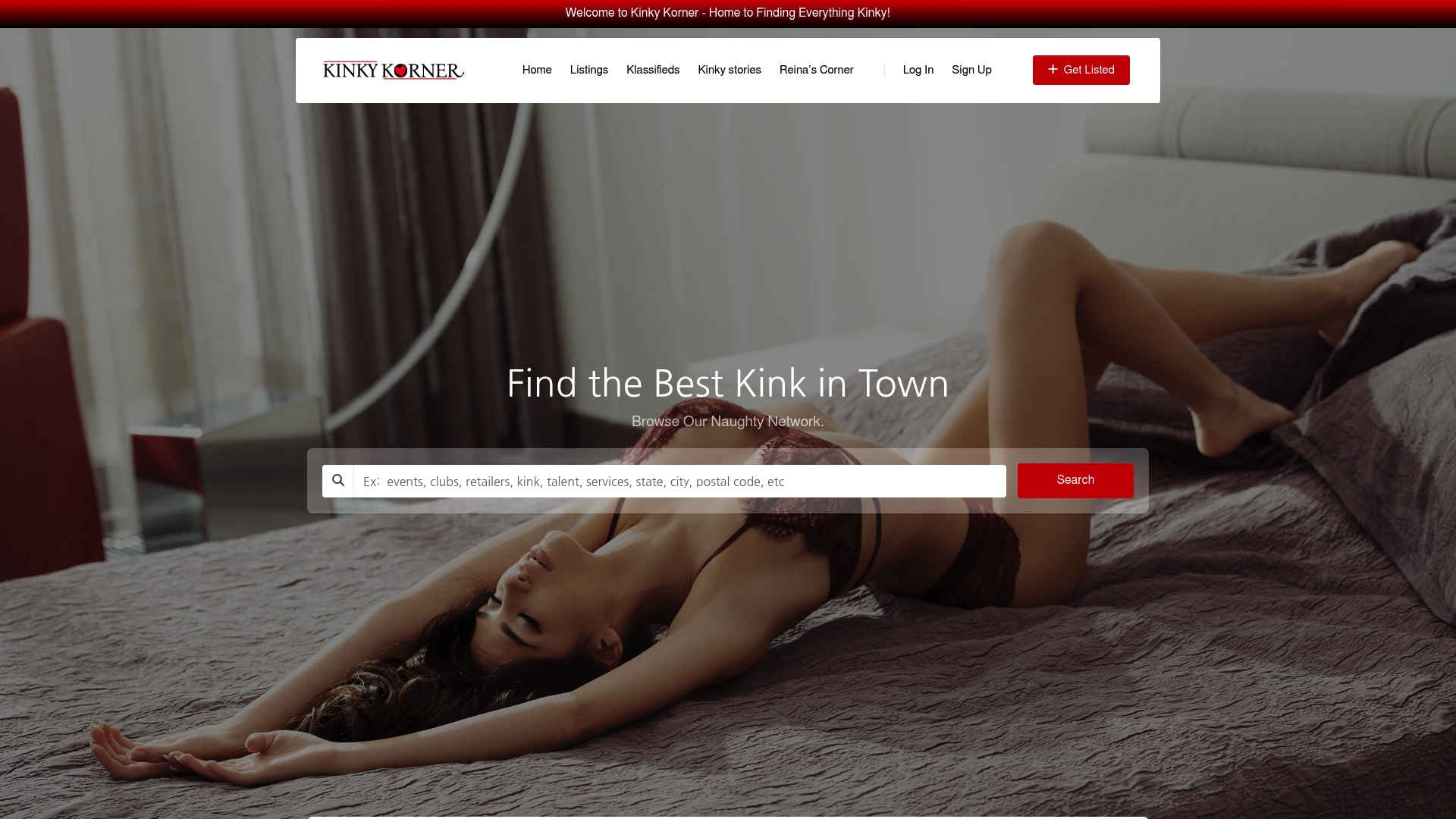
The Free Listing gets a profile up with no cost while you test the waters. The Monthly plan runs $4.99 per month for artists who want ongoing visibility between festival cycles, and the Yearly Premium plan runs $149.95 per year for those ready to commit to a permanent presence in the Only Fans Creators, Kink Events, or Fetish categories.
- Use a marketplace listing to keep selling between festival calls, not just during them
- Compare pricing tiers to decide which plan matches your submission schedule
- Prepare the same high-resolution portfolio assets you used for festival entries and reuse them on your profile
Create your profile on KinkyKorner and give your erotic art a home that does not close after one weekend.
This article is general information, not a substitute for advice from a qualified lawyer. Consult a qualified legal professional about your own circumstances before acting on anything here.
Sources
- U.S.C. §1466A — Obscene visual representations of the sexual abuse of children
- Seattle Erotic Art Festival — FAQs for artists
- Submission guidelines — Little Rocked Zine
- Debt plagues artists regardless of career stage, survey finds — Hyperallergic
FAQ
Is selling NSFW art illegal?
Selling adult art itself is not illegal in the United States, but specific content can cross into obscenity or child exploitation law depending on subject matter. 18 U.S.C. §1466A criminalizes obscene visual depictions involving minors regardless of medium, so the legality hinges on what is depicted, not on the sale itself.
Do NSFW artists make money?
Income varies widely, and many artists earn modest amounts from their art overall, according to survey reporting from Hyperallergic. Festival acceptances and marketplace listings tend to function more as visibility tools than guaranteed income streams for most artists.
What is freaky art called?
There is no single official term, though "erotic art" is the industry-standard phrase used by festivals, publications, and archives. Some communities also use "kink art" or "fetish art" depending on the specific themes a piece explores.
What is NSFW artwork?
NSFW stands for "not safe for work" and describes any content, including art, that is sexually explicit or otherwise inappropriate for a general workplace setting. Erotic art specifically refers to work created with sexual or intimate themes as its central artistic intent, as opposed to incidental nudity.
Where can I submit erotic art besides festivals?
Beyond festivals like the Seattle Erotic Art Festival or the Dirty Show, niche zines and specialty publications such as Little Rocked Zine accept explicit work with clear submission guidelines. Adult-focused marketplaces also give artists a year round outlet between festival cycles.