

Trust is the single most important currency in the adult industry. Not reputation, not traffic, not content quality. Trust. The role of trust in adult industry platforms has shifted from a nice-to-have feature to the core mechanism that determines whether a platform survives or collapses. Modern adult audiences now expect the same level of transparency they get from hospitality apps and financial services. If you're building, creating, or consuming in this space, understanding how trust works is not optional.
How does the role of trust in adult industry platforms actually work?
Trust in adult entertainment is not abstract. It is a revenue protection necessity that shows up in concrete business outcomes. Platforms without verification systems experience high user churn. That churn translates directly into lost subscriptions, lost ad revenue, and a reputation that takes years to rebuild.
Think about what you're actually asking someone to do when they sign up for an adult platform. You're asking them to hand over payment details, personal preferences, and sometimes their real identity. That's an enormous ask. The only thing that makes it reasonable is trust. Without it, users bounce fast and they don't come back.

The importance of trust in adult industry spaces also runs in the other direction. Creators need to trust that their identity is protected, that their content won't be stolen, and that the people they interact with are who they say they are. Catfishing and impersonation are not minor annoyances in this industry. They are safety threats with real legal and personal consequences.
Platforms ignoring trust become fragile regardless of how much traffic they pull. A smaller, well-moderated platform with strong verification can outperform a massive, unmoderated one. That's not a theory. That's the current reality of how adult digital marketplaces compete.
What verification technologies are reshaping adult platform safety?
Identity verification is where the rubber meets the road on trust. The old approach was crude: upload a photo of your ID, hope it doesn't get leaked, repeat the process every time you work with someone new. That model created serious vulnerabilities for creators and users alike.
TrustLink, launched by Pearl Industry Network in early 2026, represents a fundamentally different approach. It is an identity verification platform built specifically to address catfishing and impersonation in adult creator spaces. The core mechanic is "verify once, share selectively." A creator verifies their identity one time, then shares credentials only with verified users they choose to engage with. No raw ID documents floating around. No repeated exposure.
Here's why that matters. Every time a creator hands over raw ID documents, they create a new point of vulnerability. TrustLink eliminates that repetition. The selective credential sharing model prevents the most common identity theft vectors in adult creator collaborations.
Pro Tip: If you're a creator evaluating platforms, ask directly whether the platform uses a "verify once" model or requires repeated raw ID submissions. The answer tells you everything about how seriously they take your safety.
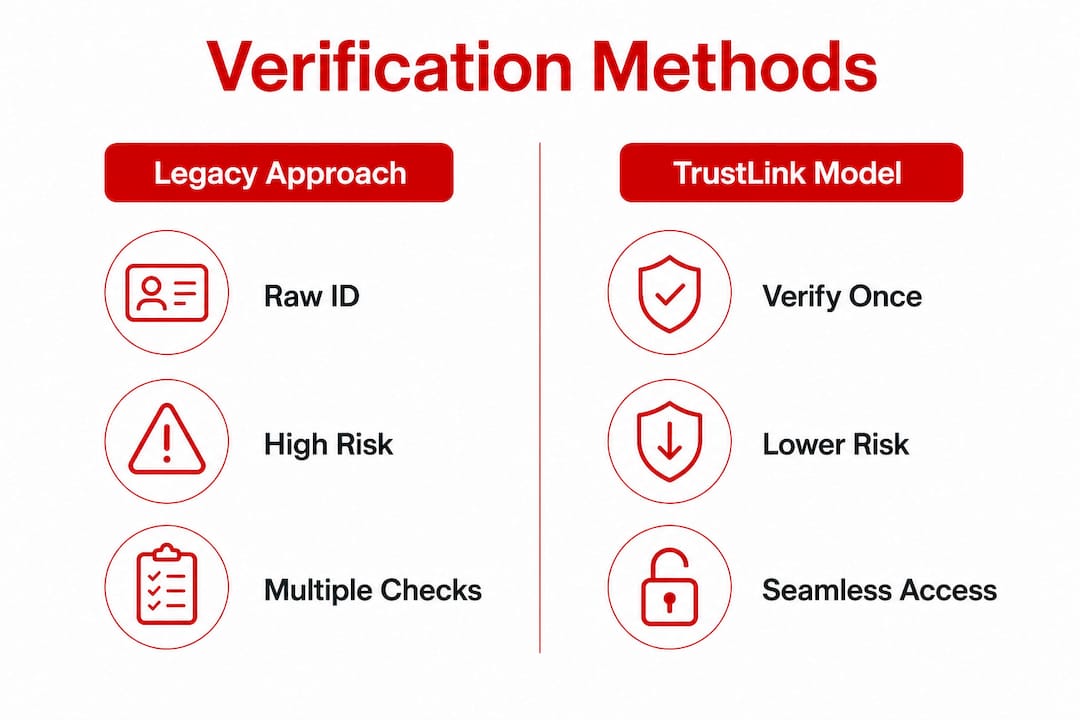
Compare the two approaches side by side:
| Verification Approach | Risk Level | Creator Experience | User Confidence |
|---|---|---|---|
| Legacy raw ID sharing | High | Repeated exposure, stressful | Inconsistent |
| Enterprise "verify once" (TrustLink model) | Low | Single verification, selective sharing | Consistent and auditable |
The gap between these two approaches is not incremental. It's the difference between a platform that treats trust as an afterthought and one that has built it into the product architecture from day one.
How do regulations shape trust and safety in adult services?
Regulatory pressure is no longer a distant threat for adult platforms. The Digital Services Act and similar international frameworks now demand transparent, auditable safety systems that combine AI moderation with human oversight. Compliance is not optional. Non-compliance means deplatforming, fines, and the kind of press coverage that kills user confidence overnight.
Here's how the layered trust and safety model actually works in practice:
- AI handles first-pass moderation. Automated filters scan content at scale, flagging potential violations before they reach a human reviewer. This handles the volume problem.
- Human moderators manage high-risk cases. Consent verification, exploitation concerns, and nuanced context require human judgment. AI cannot reliably make those calls.
- Appeals go to human decision-makers. When a creator or user disputes a moderation decision, a person reviews it. This is non-negotiable under current regulatory frameworks.
- Audit trails document every decision. Regulators want to see that platforms can account for their moderation choices. Documented processes protect platforms legally.
- Privacy protections run throughout. Every step in the moderation chain must handle personal data in compliance with applicable privacy laws.
The hybrid AI plus human model is the industry standard for good reason. AI alone misses context. Humans alone cannot handle volume. Together, they create a system that is both scalable and defensible.
Pro Tip: Platform builders should document their moderation workflows in writing before launch. Regulators and payment processors both ask for this documentation, and having it ready signals operational maturity.
The practical effect on user experience is significant. When users know a platform has real moderation, they engage more openly. When creators know their content is reviewed by a system that understands context, they feel safer posting. Trust and safety operations are not just compliance overhead. They are a direct input into user satisfaction.
Why do user reviews drive trust in adult marketplaces?
Independent customer reviews have become one of the strongest trust signals in adult services. Users in this space are more selective and cautious than in almost any other digital marketplace. The stakes feel personal. A bad experience is not just inconvenient. It can feel violating.
Balanced, honest reviews give prospective users something that platform marketing never can: an unfiltered read on what the experience is actually like. Pricing transparency, service quality, creator responsiveness, and platform reliability all show up in review aggregations in ways that official descriptions never capture.
Here's what separates high-trust from low-trust marketplace dynamics:
- High-trust platforms display both positive and negative reviews without filtering. They respond to complaints publicly. They show verified purchase or verified engagement badges on reviews.
- Low-trust platforms suppress negative feedback, show only curated testimonials, and make it difficult to find independent opinions.
The difference is obvious to anyone who has spent time on both types of platforms. Transparent feedback mechanisms differentiate brands in a crowded market in ways that ad spend simply cannot replicate.
Building trust with adult consumers through reviews also requires platforms to be honest about their policies. Clear pricing, explicit refund terms, and straightforward content guidelines reduce the friction that leads to disputes and negative reviews in the first place. When you set accurate expectations, you get fewer disappointed users. It's that simple.
What practical steps build and sustain trust in adult services?
Failing to build trust upfront creates direct costs: payment processor friction, increased support volume, and legal exposure. Embedding trust controls at the product design stage is far more effective than trying to clean up problems after they occur.
Here's what that looks like in practice across different stakeholder roles:
- For platform builders: Integrate identity verification at onboarding, not as an optional add-on. Build moderation workflows before you have content to moderate. Document your data privacy practices in plain language that users can actually read.
- For creators: Use platforms that support privacy-conscious verification tools. Maintain consistent profiles across platforms so users can verify your identity through multiple signals. Respond to user feedback publicly and professionally.
- For users: Check whether a platform displays independent reviews before you engage. Look for visible moderation policies and clear escalation paths for reporting problems. Treat platforms that cannot answer basic questions about their safety practices as red flags.
Trust also lives in the details of how a platform communicates. Clear pricing with no hidden fees, honest descriptions of what services include, and responsive support all contribute to the kind of customer loyalty that sustains long-term revenue. Moving beyond transactional interactions toward transparent personal engagement is what separates platforms users return to from platforms they abandon.
Pro Tip: Audit your platform's onboarding flow from a new user's perspective every quarter. If you cannot find the privacy policy, the moderation guidelines, or the refund terms in under 60 seconds, your users cannot either.
Trust is the infrastructure, not the decoration
I've spent enough time watching platforms rise and fall in this industry to say this plainly: the ones that treat trust as a feature they'll add later never make it. Trust is not a layer you apply on top of a working product. It is the foundation the product sits on.
What I find genuinely exciting about where things stand in 2026 is that the tools are finally catching up to the need. TrustLink's "verify once" model is the kind of thinking that should have existed years ago. The hybrid AI and human moderation frameworks that serious platforms now run are more sophisticated than anything the mainstream social media world had at a comparable stage of development. The adult industry, for all the stigma it carries, is building some of the most thoughtful trust infrastructure in digital media right now.
The platforms I've seen fail fastest are the ones that prioritized traffic over safety. They got the users. Then they lost them all at once when one high-profile incident exposed how little protection actually existed. That collapse is not recoverable. You can understand adult listings and navigate platforms safely, but only if those platforms have done the work first.
The uncomfortable truth is that trust is expensive to build and cheap to destroy. Every shortcut in verification, every suppressed review, every unanswered support ticket is a withdrawal from an account that has a hard floor. Hit that floor and the platform is done, regardless of how much content it hosts.
— Prenston
Find your community on a platform that takes trust seriously
If you're looking for a space where trust is built into how things work, not bolted on as an afterthought, Kinkykorner is worth your time.

Kinkykorner is a marketplace where creators, service providers, and curious adults can list adult-themed services, explore erotic literary and artistic content, and connect with a community that values authenticity. The platform is built around the idea that safety and openness are not opposites. You can explore adult marketplace listings that are transparent about what they offer, who is behind them, and how they operate. Whether you're a creator looking for a platform that respects your privacy or a user who wants to engage without the anxiety of wondering if anything is real, Kinkykorner is the place to start.
Key takeaways
Trust in the adult industry is a direct business asset. Platforms that build it into their infrastructure from the start outperform and outlast those that treat it as optional.
| Point | Details |
|---|---|
| Trust drives retention | Platforms without verification experience high user churn and long-term revenue loss. |
| Verify once, share selectively | Tools like TrustLink reduce creator identity exposure by eliminating repeated raw ID sharing. |
| Hybrid moderation is the standard | AI handles volume; human moderators handle consent, context, and appeals. |
| Reviews are trust signals | Transparent, balanced user reviews differentiate credible platforms from low-trust ones. |
| Build trust at design stage | Embedding safety controls early prevents payment friction, legal risk, and support overload. |
FAQ
What is the role of trust in the adult industry?
Trust is the foundation that determines user safety, creator protection, and platform revenue in adult services. Platforms lacking verification and transparent policies experience high churn and rapid credibility collapse.
How does TrustLink improve creator safety?
TrustLink, launched by Pearl Industry Network in 2026, allows creators to verify their identity once and share credentials selectively, eliminating repeated raw ID exposure and reducing identity theft risk.
Why do user reviews matter on adult platforms?
Independent reviews give users unfiltered insight into service quality, pricing, and platform reliability. Balanced, transparent feedback is one of the strongest trust signals in a crowded adult marketplace.
What is a hybrid trust and safety model?
A hybrid model combines AI filters for first-pass content moderation with human reviewers for high-risk cases, consent decisions, and appeals. This approach handles scale while preserving the nuanced judgment that AI cannot replicate.
How can platforms build trust with adult consumers?
Platforms build trust by embedding identity verification at onboarding, displaying independent reviews, maintaining clear pricing and refund policies, and documenting moderation workflows before launch.