

Cam modeling is live, interactive video performance streamed to paying viewers in real time. You perform, they watch, they tip or pay per minute, and you keep a cut. That's the whole engine. If you're thinking about starting, the path looks like this:
- Verify your age and ID — you must be 18+ and will need government-issued ID before any platform approves your account
- Choose a platform type — freemium cam sites with built-in traffic, premium pay-per-minute platforms, or independent creator platforms each have different trade-offs
- Set up basic gear — a 1080p webcam, ring light, and clear microphone get you live; starter gear often totals $70–$100 for the basics
- Schedule your first shows — consistency matters more than production value in the early months
- Treat it as self-employment — the IRS classifies cam models as self-employed, so you'll track income and expenses from day one
- List on a marketplace — platforms like Kinkykorner give you a discovery layer beyond the cam site itself
Realistic timeline: most performers reach steadier income after 6–12 months of consistent, scheduled streaming. Not passive income. A real gig.
Table of Contents
- What is cam modeling, and how does a live show actually work?
- How do cam models actually get paid?
- What types of platforms can you perform on?
- What gear do you actually need to start?
- How do you go from zero to your first consistent shows?
- Staying safe and legally compliant in the United States
- How to grow an audience and run camming like a real business
- Key Takeaways
- The part most beginner guides won't tell you straight
- Get discovered on Kinkykorner's adult marketplace
- Useful sources and further reading
What is cam modeling, and how does a live show actually work?
A cam model, also called a camgirl, camboy, or webcam model, is a video performer who streams live via webcam to an online audience, typically in exchange for tips, tokens, or per-minute fees. The interaction is the product. Viewers aren't just watching a recording; they're in the room with you, typing requests, tipping for specific acts, and building a relationship with the performer in real time. That parasocial pull is what separates camming from pre-recorded adult content.
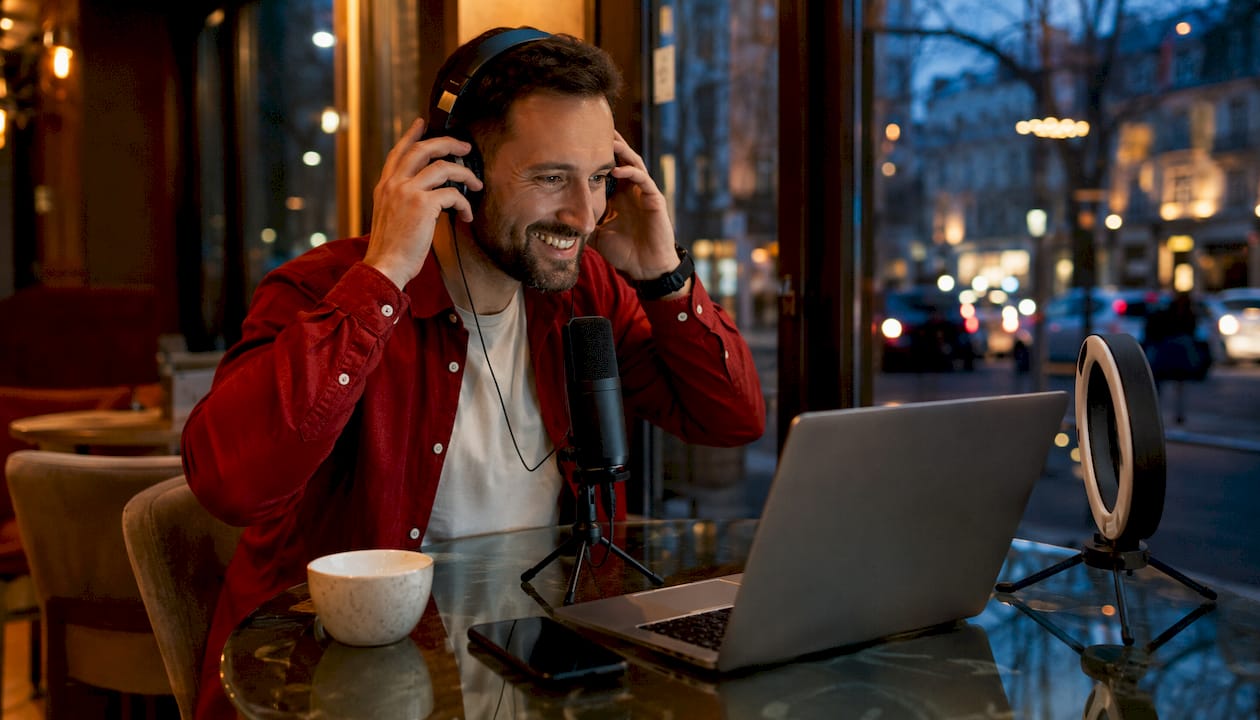
The cam industry evolved into a multi-billion-dollar space driven by exactly that personalization. Viewers return not just for explicit content but for the performer they feel connected to.
The main show formats
Public rooms are the entry point. You stream to anyone who visits your room, free to watch but with tipping enabled. Your goal is to convert lurkers into tippers and tippers into regulars.
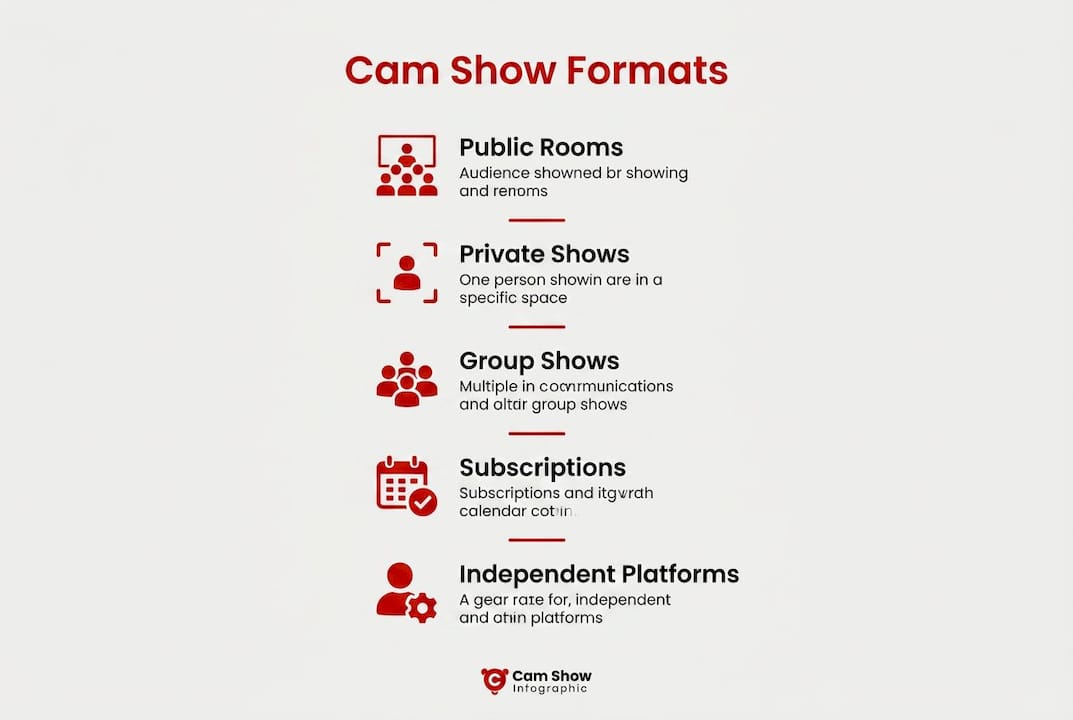
Private shows are one-on-one sessions where a viewer pays a per-minute rate for exclusive access. These are where per-minute earnings stack up fast, but you need enough traffic in your public room first to funnel viewers into privates.
Ticketed or group shows let multiple viewers pay a flat entry fee for a scheduled performance. Lower barrier for viewers than a private, higher volume for you.
Subscription or fan-club models work like a monthly membership. Viewers pay a recurring fee for access to exclusive content, direct messaging, and sometimes priority in shows. This is the closest camming gets to passive income, though building a subscriber base takes time.
Independent platforms let you host your own content and set your own prices without a third-party cam site taking a large cut. The trade-off is that you bring your own traffic.
Non-adult camming is real and growing. Some performers stream gaming, cooking, fitness, or lifestyle content and monetize through tips and subscriptions without explicit material. Platform rules vary sharply here, so check terms before you assume.
Terms you'll hear constantly
- Cam site / camming site: a third-party hosting platform that handles the video feed, payments, and interface so you focus on performing
- Tokens / tips: the virtual currency viewers buy and send to performers; platforms convert tokens to cash at a set rate
- Private show: a paid, one-on-one session, usually billed per minute
- Per-minute rate: what a viewer pays each minute of a private show; you set this within platform limits
- Fan subscriptions: recurring monthly payments for exclusive access or content
- Teledildonics: interactive toys that sync to tip triggers, so a viewer's tip physically activates a device during your show — a significant engagement and monetization tool for performers who use them
The COVID-19 pandemic accelerated traffic to camming platforms and broadened who enters the industry, pulling in performers from backgrounds that had nothing to do with adult entertainment before 2020. The audience composition shifted too, which is worth knowing if you're thinking about niche positioning.
How do cam models actually get paid?
Cam models earn through tips and tokens, private shows, subscriptions, paid messages, and content sales, with platforms mediating every transaction. Here's how each stream works in practice:
- Tips and tokens: viewers buy tokens from the platform and send them during your stream. You receive a percentage of the token value in cash. The platform sets the token-to-dollar conversion rate.
- Private shows: billed per minute at a rate you set (within platform limits). High-value but requires a warm audience first.
- Subscriptions and fan clubs: monthly recurring revenue from loyal viewers. Slower to build, but the most stable income stream once established.
- Clip and photo sales: pre-recorded content sold directly to viewers, either through the platform's built-in store or via independent clip sites.
- Paid messages: some platforms let viewers pay to send a direct message or request. Low per-transaction value but adds up.
- Group and ticketed shows: flat-fee events where multiple viewers pay to attend a scheduled performance.
What drives the gap between top earners and beginners
Earnings variability is real and significant. Audience size, niche, scheduling consistency, tipping culture on your chosen platform, and your ability to convert casual viewers into regulars all shape your income more than any single show. Top performers treat camming as a small business with a content calendar, a pricing strategy, and a retention plan. Beginners who approach it as "turn on the camera and see what happens" typically stall out within a few months.
The financial model runs on parasocial relationships more than on explicit content alone. Performers who build rapport, remember viewer names, and show up on a predictable schedule retain viewers at a much higher rate than those who rely purely on what they're willing to do on camera.
Pro Tip: Focus on retention over acquisition. One regular who tips consistently every week is worth more than ten one-time visitors. Greet returning viewers by name, acknowledge their tips publicly, and give them a reason to come back on a specific day.
What types of platforms can you perform on?
Platform choice is one of the most consequential decisions you'll make early on. The four main categories each have a different trade-off between discoverability, revenue share, and control.
| Platform type | Discoverability | Revenue split shape | Traffic required | Ideal for |
|---|---|---|---|---|
| Freemium public cam sites | High — built-in audience | Platform takes a larger cut | Low — platform drives traffic | Beginners building an audience |
| Premium pay-per-minute sites | Medium — niche audience | Moderate cut, higher per-minute rates | Low to medium | Performers comfortable with private shows |
| Independent creator platforms | Low — you own the funnel | Low platform cut, you keep more | High — you bring your own traffic | Established performers with a following |
| Marketplaces and classifieds | Medium — local and niche discovery | Listing fee model, no per-show cut | Low — browsing-based discovery | Performers wanting local or niche visibility |
Freemium cam sites have the largest built-in audiences. You stream publicly, viewers tip, and the platform takes a percentage. The cut can be steep, but the traffic is real and you don't need to build it yourself. For beginners, this is usually where you start.
Premium pay-per-minute platforms attract viewers who already intend to pay. The audience is smaller but more transactional, which can mean higher per-session earnings once you have a profile established.
Independent creator platforms let you run subscriptions, sell content, and message fans directly. The platform cut is lower, but you are entirely responsible for driving traffic to your page. Social media promotion, cross-platform funneling, and SEO matter here in a way they don't on a cam site.
Marketplaces and classifieds like Kinkykorner operate differently from all of the above. Instead of hosting live streams, they function as a discovery layer: a place where performers and adult service providers list their services so potential clients and viewers can find them. Kinkykorner's adult services marketplace is built specifically for kink and fetish-adjacent performers, which means the audience browsing it is already self-selected and interested. Listing there alongside your primary cam platform adds a discovery channel you wouldn't otherwise have.
Pro Tip: If you're new, start on a platform with built-in traffic while simultaneously building an independent funnel. List on a marketplace like Kinkykorner for local and niche discovery. You're not choosing one or the other — you're stacking channels.
- Research your chosen platform's payout threshold and minimum before you commit
- Check age verification and ID requirements upfront — they differ by platform
- Read the content rules carefully; what's allowed on one site can get you banned on another
- Understand how the token-to-dollar conversion rate works before your first show
What gear do you actually need to start?
You don't need a studio. Seriously. The barrier to entry is lower than most people assume, and starter gear often totals $70–$100 for the basics. Here's what matters and what it costs.
| Equipment | Low-end cost | Why it matters |
|---|---|---|
| HD webcam (720p minimum, 1080p recommended) | $30 | Image quality directly affects viewer retention |
| Ring light or softbox lighting | $30 | Flat, even lighting makes an inexpensive webcam look like a high-end one |
| USB microphone or headset mic | $30 | Viewers will tolerate average video; they won't tolerate bad audio |
| Laptop or desktop PC | Already owned or $300+ | Needs to handle streaming without overheating |
| Broadband internet | Existing plan | Minimum 5 Mbps upload for stable 1080p streaming |
| Optional: teledildonics / interactive toy | — | Expands tip-trigger monetization for interactive shows |
A few technical minimums worth knowing: aim for at least 5 Mbps upload speed for stable 1080p streaming, though 10 Mbps gives you headroom. Set your webcam to 1080p at 30fps if your connection supports it; 720p at 30fps is the floor. Lighting matters more than camera resolution. A $30 ring light in a dark room beats a $200 webcam with overhead fluorescents.
- Background: clean, intentional, and free of identifying details (no mail, diplomas, or location clues visible)
- Streaming software: OBS Studio is free and handles most cam setups; some platforms have their own built-in broadcaster
- Backup plan: know what you'll do if your internet drops mid-show — have a mobile hotspot ready if possible
Start cheap. Upgrade after your first 60 days once you know what's actually limiting your performance.
How do you go from zero to your first consistent shows?
The path from "thinking about it" to "streaming regularly" has a clear sequence. Skip steps and you'll hit avoidable problems.
- Make the consent and boundary decision first. Decide what you will and won't do on camera before you ever go live. Write it down. This becomes your tip menu and your profile rules. Changing your mind under pressure from a viewer mid-show is a bad place to make that call.
- Gather and verify your ID. You must be 18+. Every legitimate platform requires government-issued photo ID. Have it ready before you apply.
- Create your stage name and brand. Pick a name that's searchable, memorable, and completely separate from your legal identity. Set up a dedicated email address under that name.
- Set up your account and complete verification. Submit your ID, fill out payment details, and read the platform's content rules before you do anything else.
- Build your profile. Include your schedule, your tip menu (what you'll do for specific tip amounts), your rules (what you won't do), and your personality. A blank profile converts nobody.
- Do two or three test streams. Private, with no audience, just to check your audio levels, lighting, and connection stability. Fix problems before they happen live.
- Go live on a set schedule. Pick three days a week and a consistent time. Announce it in your profile. Show up every time.
- Engage actively during shows. Read the chat. Say names. Respond to tips immediately and specifically. The first 15 minutes of a show set the tone for everything that follows.
- Set up your payout details and understand the threshold. Know exactly how much you need to earn before you can withdraw, and what the payment schedule looks like.
- Convert your first regulars. After a few weeks, you'll notice the same usernames returning. These are your future subscribers. Treat them like VIPs.
What the first year actually looks like
Weeks 1–4: Technical setup, first shows, zero to minimal earnings. You're learning the platform and finding your rhythm.
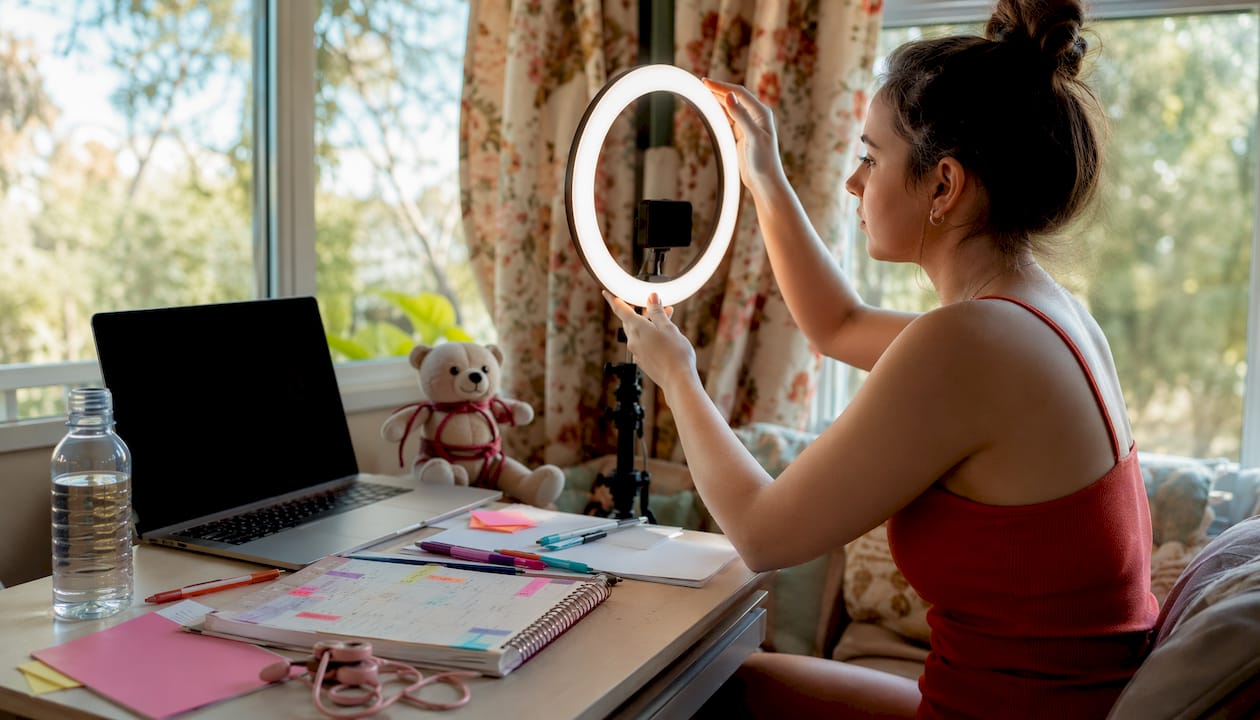
Weeks 5–12: Audience starts to form. A handful of regulars appear. Earnings are inconsistent but real.
Months 3–6: If you've been consistent, you have a recognizable presence. Tip averages start to stabilize.
Months 6–12: Most performers reach steadier income after this period of consistent streaming. This is when the business mindset starts paying off.
For your profile, include: your schedule, your tip menu with clear amounts and corresponding acts, your hard limits, your personality (a few lines about who you are and what your shows feel like), and your social handles if you cross-promote. Check out tips for adult content creators to stand out for more on profile optimization.
Staying safe and legally compliant in the United States
Cam modeling is generally legal in the United States when you're of legal age and performing consensually. But "legal" doesn't mean "no paperwork." You have real obligations, and ignoring them creates real problems.
Privacy protection
Your real name, location, and personal life need to stay completely separate from your cam persona. This isn't paranoia; it's standard practice. Common mitigation steps include stage names, separate streaming devices, VPNs, geo-blocking, and watermarking content. Use geo-blocking to prevent viewers in your city or state from accessing your stream if the platform supports it. Watermark every piece of content you sell with your stage name, not your legal name.
Pro Tip: Use a dedicated secondary device for streaming only. Never log into personal accounts, email, or banking on your streaming device. This single step dramatically reduces the risk of IP-based identification and accidental personal exposure.
Strip metadata from any photos or videos before selling them. Metadata can contain GPS coordinates, device model, and timestamps that you don't want attached to content that's going to live on the internet forever.
Legal obligations for U.S. performers
The IRS treats cam modeling as self-employment. That means you file a Schedule C, pay self-employment tax, and make quarterly estimated tax payments if your liability exceeds a certain threshold. Track every dollar of income and every legitimate business expense from day one.
If you produce content that could be considered sexually explicit under federal law, you should be aware of 18 U.S.C. § 2257 recordkeeping requirements, which mandate that producers of certain explicit content maintain age verification records for all performers. The Department of Justice's guidance on federal law is the authoritative source here. When in doubt, consult a lawyer who works with adult performers.
For managing the operational and legal side of an adult business, how to manage an adult business online covers the practical recordkeeping and compliance basics in plain language.
Safety procedures
- Report harassment and abusive behavior to the platform immediately; document it with screenshots before reporting
- Use two-factor authentication on every account connected to your cam persona
- Have a trusted person who knows what you do and can be an emergency contact
- Know the platform's abuse reporting process before you need it
- Connect with performer community groups and forums; peer support is genuinely useful when you hit a difficult session
This article is general information, not legal or tax advice. Confirm current rules with the IRS, a qualified tax professional, or a lawyer familiar with adult entertainment law for your specific situation.
How to grow an audience and run camming like a real business
The performers who make consistent money treat camming like a small business with a content strategy, a pricing structure, and a growth plan. The ones who don't, burn out or plateau fast.
Audience growth tactics
Consistency is the single biggest driver of audience retention. Show up on the same days at the same time, every week, without exception. Viewers plan their evenings around performers they trust to be there. A predictable schedule is a competitive advantage most beginners underestimate.
Cross-promotion matters too. Build a presence on social platforms that allow adult content promotion, and use them to announce your schedule, tease upcoming shows, and drive traffic back to your cam profile. Attracting adult audiences through social funnels is a skill that compounds over time. The more channels pointing at your profile, the less dependent you are on any single platform's algorithm.
- Remember regulars by name and reference past conversations
- Create recurring show themes or events (e.g., a specific show type every Friday) to give viewers something to anticipate
- Repurpose clips from shows as promotional content where platform rules allow
- Build your reputation in the adult niche through consistency and follow-through on what you promise in your tip menu
Pricing and tip menu structure
Set your per-minute private show rate at a level that reflects your experience and audience size. New performers often start lower to build volume, then raise rates as demand grows. Your tip menu should have a range of price points, from small accessible tips to larger premium requests, so viewers at every spending level have a way to engage.
Subscription tiers work best when each tier has a clear, distinct value. A basic tier might mean access to a content archive; a premium tier might include direct messaging or priority in shows. Don't create tiers that overlap or confuse.
Bookkeeping basics
Track income and keep records for deductions including equipment, internet service, and the portion of your housing used exclusively for streaming. Set aside a percentage of every payout for taxes. Quarterly estimated tax payments to the IRS are required once your tax liability reaches a certain threshold. Use accounting software or a simple spreadsheet from the start; reconstructing a year's income from memory is a nightmare.
Work-life balance and mental health
Set hard stop times for your streams and honor them. Debrief after difficult sessions, especially ones involving harassment or boundary-pushing. Peer support groups for cam performers exist and are worth finding. The work can be emotionally demanding in ways that aren't obvious from the outside, and having people who understand the specific pressures makes a real difference.
Key Takeaways
Cam modeling is a live, interactive video performance career that functions as self-employment, requiring consistent scheduling, privacy discipline, and a genuine business mindset to generate steady income over 6–12 months.
| Point | Details |
|---|---|
| Core definition | Cam modeling is live, paid video performance where viewers tip, pay per minute, or subscribe for access. |
| Revenue streams | Tips and tokens, private shows, subscriptions, content sales, and paid messages are the primary income sources. |
| Startup gear | A 1080p webcam, ring light, and USB mic cover the basics; starter gear often totals $70–$100 for the basics. |
| Legal and tax obligations | The IRS classifies cam modeling as self-employment; track income, deduct business expenses, and keep age verification records. |
| Kinkykorner for discovery | Listing on Kinkykorner adds a niche marketplace channel for performers seeking kink and fetish-adjacent audiences beyond their primary cam platform. |
The part most beginner guides won't tell you straight
Here's the honest version: cam modeling is not a side hustle you can half-ass. The performers who make real money treat it like a media business, not a hobby. They have a content calendar, a pricing strategy, a privacy protocol, and a growth plan. They know their regulars' names. They show up on schedule even when they don't feel like it.
What most beginner guides get wrong is the framing. They present camming as a low-effort income stream with high upside, and then bury the 6–12 month timeline in a footnote. The upside is real. The timeline is real too. The performers who succeed are the ones who go in knowing both.
The other thing worth saying plainly: the interactive model is the product. Viewers aren't paying for content they can find elsewhere. They're paying for you, specifically, in real time, responding to them. That's a skill. It takes practice, emotional intelligence, and the ability to hold a persona under pressure. If you can do that consistently, the income follows. If you can't, no amount of expensive gear will fix it.
Privacy is not optional. It's not something you set up "eventually." Do it before your first show, not after something goes wrong.
And finally: list everywhere that makes sense for your niche. Your primary cam platform is not your only discovery channel. Marketplaces, social platforms, and classifieds all add surface area. More surface area means more viewers finding you, which means more regulars, which means more income. That's the whole game.
Get discovered on Kinkykorner's adult marketplace
If you're building a cam modeling presence and want a discovery channel that already attracts kink and fetish-interested audiences, Kinkykorner is worth a serious look. It's a marketplace where adult performers, service providers, and creators list their services for an audience that's actively browsing for exactly what you offer. No algorithm fighting mainstream platforms. No explaining your niche to a general audience. The people on Kinkykorner are already there for it.
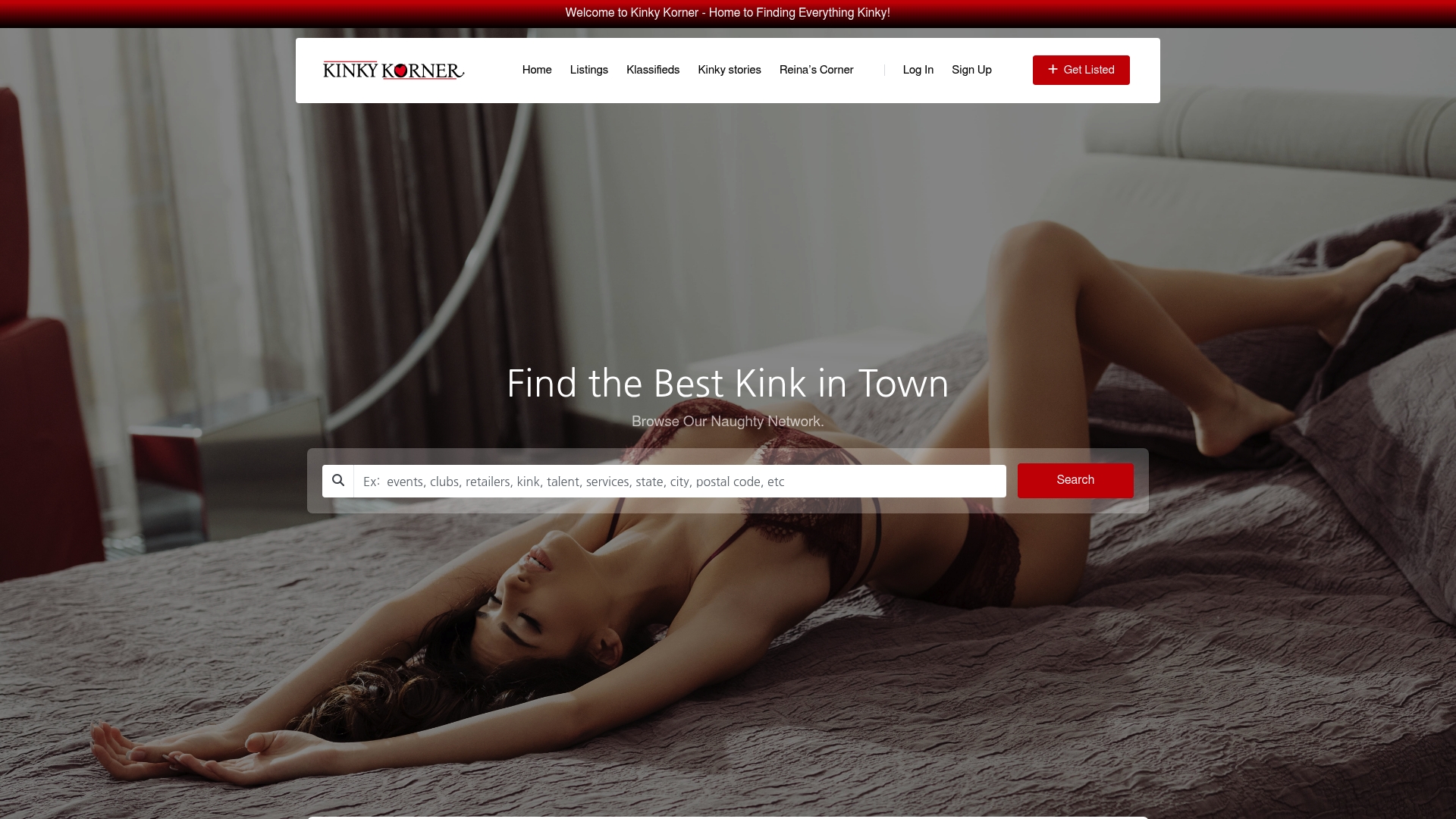
Unlike a cam platform, Kinkykorner doesn't take a cut of your show earnings. You pay for a listing, your profile gets in front of a self-selected adult audience, and you drive that traffic wherever you want: your cam profile, your fan subscription page, your DMs. It's a top-of-funnel tool that works alongside whatever primary platform you're already using. Create your listing on Kinkykorner and start showing up where your audience is already looking.
Useful sources and further reading
These are the sources that informed this guide, plus internal resources worth bookmarking if you're serious about building a cam modeling career.
- IRS Self-Employed Tax Center — the authoritative source for understanding your tax obligations as a self-employed cam model in the United States
- DOJ Citizens' Guide to Federal Law on Child Pornography — essential reading for understanding 18 U.S.C. § 2257 recordkeeping requirements that apply to explicit content producers
- Webcam model — Wikipedia — a solid overview of the industry's history, terminology, and platform mechanics
- Camming — Social Sci LibreTexts/15%3A_Sex(uality)_Work_that_Engages_with_the_Body/15.05%3A_Camming) — academic context on camming as labor, including income disparities and performer motivations
- CamRankings: How to Become a Cam Model — practical gear, platform, and earnings guidance from a practitioner-focused source
- Aruna Talent: How to Become a Webcam Model — candid timeline and scheduling guidance for new performers
- Sexuality & Culture: Who Are the People Behind the Webcam? — peer-reviewed research on performer motivations, job satisfaction, and privacy needs
- Kinkykorner: How to Advertise Adult Services Legally in 2026 — practical guidance on lawful promotion for adult performers in the U.S.
- Kinkykorner: Adult Content Creator Types: Opportunities and Growth — overview of creator formats including camming, subscriptions, and independent platforms
For personalized tax guidance, consult a CPA or tax professional with experience in self-employment and adult entertainment. For legal questions about content compliance, speak with an attorney familiar with adult performer law in your state.