

Reviews are the adult industry's primary trust and quality-control signal, guiding consumer choice, protecting privacy, and driving creator iteration across every format from erotic fiction to live services.
- Kinkykorner operates as a marketplace where service listings and erotic content live or die by their reputation, making review integrity central to the platform's value.
- The EU's Digital Services Act (DSA) sets a global benchmark: very large platforms hosting user-generated adult content must conduct risk assessments and transparency reporting, raising the bar for how review systems are built and governed.
- Industry reviewer Sherri Shaulis has long argued that good reviews are audience-focused and that performers should treat feedback as categorized data, not personal attack.
- Site testing has shown that even basic written review content can reduce bounce rates and increase time on site, improving user engagement.
Table of Contents
- How does the role of reviews in adult industry platforms actually work?
- What do reviews actually do for consumers and creators?
- How should platforms handle reviews responsibly?
- How should you read reviews when choosing adult services or erotic content?
- How do you write a review that's actually useful and safe?
- What are the real risks and limits of reviews in this space?
- What's the practical playbook for platforms, creators, and marketplaces?
- Key Takeaways
- Why review transparency is something Kinkykorner takes seriously
- Useful sources and further reading
How does the role of reviews in adult industry platforms actually work?
Review systems in adult entertainment run on a spectrum from low-effort to high-effort signals, and each channel feeds decisions differently.
Common feedback channels:
- Star ratings: fast, high-volume, aggregate into trust scores
- Written reviews: slower, richer, surface billing and privacy issues brand pages hide
- Comment threads: real-time, public, useful for spotting patterns
- Direct messages: private, high-trust, often where the most honest feedback lands
- Polls and formal forms: quantifiable, directly integrated into production choices
Audience polls turn passive consumption into co-creation. A studio runs a poll on preferred scenario types, tallies the results, and the next script reflects the winning preference. That feedback loop is now standard practice for creators who want to hold a dedicated fanbase.
| Feedback type | Platform handling | Creator response |
|---|---|---|
| Star ratings | Aggregate trust metric, displayed publicly | Benchmark against category average |
| Written reviews | Moderated, indexed for search | Categorize into narrative vs. technical issues |
| Comment threads | Moderated, public record | Monitor for repeated complaints |
| Direct messages | Private, platform-logged | Address individually, note patterns |
| Polls | Quantified viewer preference | Integrate directly into upcoming scripts |

Academic research treats sex-review sites as market-mediating infrastructure with real policy implications, not just consumer convenience tools.
What do reviews actually do for consumers and creators?
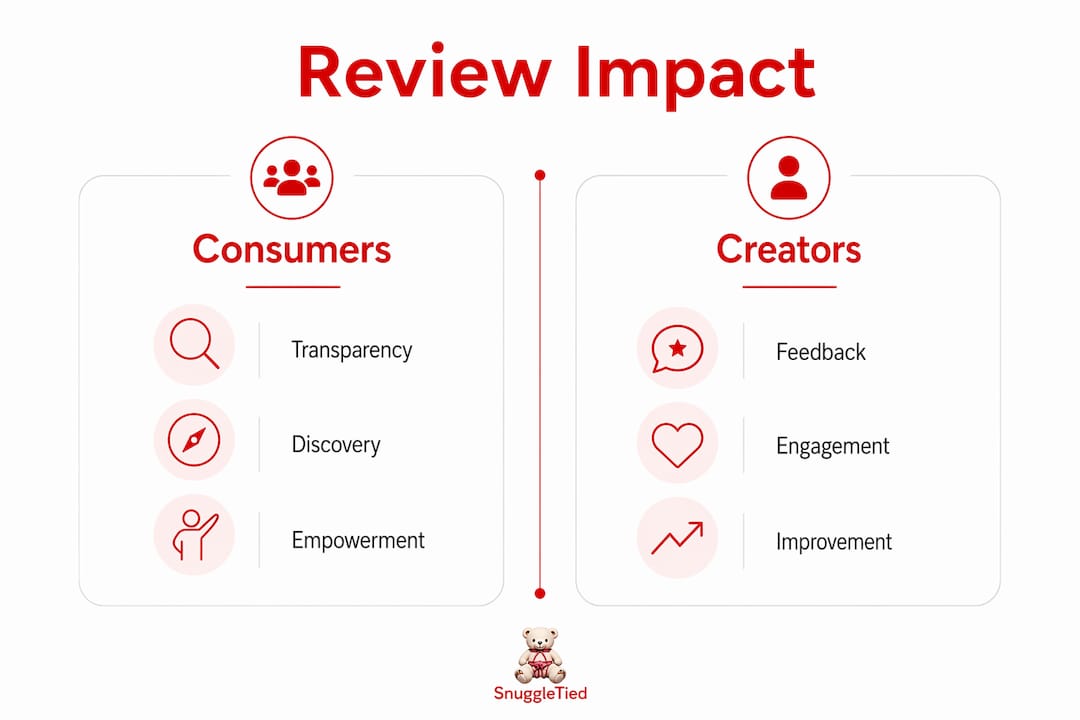
For consumers, reviews shift power away from opaque providers. Customer reviews increase transparency in a market where billing practices and privacy policies are rarely disclosed upfront. A written review that flags a recurring charge or a data-sharing concern is worth more than any marketing copy.
For niche erotic content specifically, reviews help readers and viewers discover content that matches their actual preferences rather than what an algorithm guesses. Reputation comparisons across listings on a marketplace like Kinkykorner let you make a real choice, not a blind one.
For creators and studios, the value is iterative. Studios use external review feedback to adjust casting, pacing, and story elements. Practitioners break feedback into actionable buckets: physical adjustments, emotional delivery, timing. Then they test specific scene changes rather than reacting to general impressions.
Pro Tip: Sort your reviews into two buckets before acting: narrative feedback (story, pacing, character) and technical feedback (audio, lighting, format). Narrative issues need creative decisions; technical issues need production fixes. Mixing them creates confusion and stalls improvement.
"The hallmark of a useful professional review is audience focus and actionable commentary. Performers should treat feedback as data to categorize into physical, narrative, and delivery adjustments." — Sherri Shaulis, via Elite Daily
Creators who treat feedback as part of the production cycle sustain longer engagement and stronger fanbases. That's not a soft benefit. It's the difference between a one-time buyer and a subscriber who stays for years.
How should platforms handle reviews responsibly?
Platform operators carry the heaviest responsibility in this ecosystem. A review system that lacks moderation or privacy controls doesn't just fail users. It actively causes harm.
Core platform responsibilities:
- Publish a transparent moderation policy users can actually read
- Allow anonymous or pseudonymous reviews to protect reviewer identity
- Provide clear abuse and doxxing report pathways with defined response timelines
- Verify reviewer accounts where appropriate without creating friction that kills participation
Implementation checklist:
- Build a moderation workflow with human review for flagged content
- Rate-limit review submissions to reduce coordinated fake-review campaigns
- Offer verified-purchase or verified-interaction badges where technically feasible
- Create an appeals process for reviews removed by moderation
- Audit review content quarterly for bias patterns or coordinated manipulation
The DSA's risk assessment requirements apply to very large platforms operating in the EU, but they set a practical standard worth following in the U.S. context too. Platforms that conduct regular transparency audits and publish moderation reports build the kind of credibility that keeps users from migrating to less regulated alternatives. Research on content moderation shocks shows that when a major platform tightens policy without clear communication, fringe sites absorb displaced traffic, often at a 55% increase in visits within six months. Transparent, well-communicated review policies reduce that flight risk.
For U.S.-based platforms, safe spaces and privacy protections aren't optional extras. They're the foundation of a review system anyone will actually use honestly.
How should you read reviews when choosing adult services or erotic content?
Use reviews to confirm trust signals first: billing clarity, privacy practices, content accuracy. Subjective taste is secondary.
Consumer decision checklist:
- Check the date. Reviews older than six months may not reflect current service quality or ownership.
- Look for patterns, not outliers. One furious one-star review means less than five reviews all mentioning the same billing issue.
- Cross-reference platform safety statements with what reviewers actually report about privacy and data handling.
- Prefer corroborated reports for billing and privacy concerns. A single claim is noise; three matching claims are a signal.
- Check reviewer history where visible. A profile with one review is less reliable than one with a consistent track record.
Red flags worth stopping for:
- Suspiciously glowing reviews with no specific detail ("Amazing! Perfect! 10/10!")
- A cluster of five-star reviews posted within days of each other
- Absence of any negative feedback on a listing that's been active for years
- Reviews that read like marketing copy rather than personal experience
Pro Tip: Use platform filters aggressively. Sort by "most recent" and "lowest rated" before reading the top reviews. The bottom of the stack is where the real information lives.
Low-friction feedback tools like star filters and reviewer reputation scores produce more reliable signals than high-effort forms. Combine them with platform trust statements for a fuller picture.
How do you write a review that's actually useful and safe?
A useful review covers the service experience, billing process, and content accuracy. It does not include personal identifiers, intimate physical descriptions of performers, or anything that could be used to locate or harass someone.
What to include:
- Context: what type of service or content you accessed
- What happened: the actual experience, factually described
- Verifiable facts: billing process, response time, content match to description
- Recommendation: would you return, and under what conditions
What to leave out:
- Real names of performers beyond their professional identity
- Physical details that go beyond what the listing itself discloses
- Threats, personal attacks, or language designed to harm rather than inform
Pro Tip: If you have a billing or privacy complaint, report it to the platform privately before posting publicly. Platforms often resolve legitimate issues faster through direct channels, and a resolved complaint is more useful to future users than an unresolved public grievance.
One legal note: posting identifying personal information about performers without consent can expose you to civil liability under U.S. privacy law. Keep it factual, keep it professional.
What are the real risks and limits of reviews in this space?
Reviews in adult services carry risks that mainstream entertainment review ecosystems don't face at the same intensity.
Key risks:
- Fake or incentivized reviews distort trust signals and mislead consumers
- Harassment campaigns target performers through coordinated negative reviews
- Doxxing: reviews that include identifying details can endanger performers
- Biased sampling: stigma means satisfied users often stay silent while angry ones post
- Cultural shame skews the review pool toward extreme reactions
"Review sites in commercial sex markets function as market-mediating infrastructure, enabling organizing, searching, and reporting of consumer experience — and influencing policy discussions." — Cambridge Social Policy and Society
That infrastructure cuts both ways. The same visibility that protects consumers can expose performers to coordinated harm. Mainstream film criticism faces trolling; adult industry reviews face doxxing and targeted harassment at a categorically different level.
For creators and platforms: adopt a selective assimilation strategy. Not every negative review warrants a response or a change. Distinguish between feedback that reflects a genuine service gap and feedback that reflects personal animus or coordinated attack. Respond to the former; document and report the latter.
Pro Tip: Set a threshold before acting on negative feedback. If fewer than three independent reviewers flag the same issue, treat it as an outlier. If three or more unconnected reviewers mention the same problem, treat it as a production or service gap worth fixing.
What's the practical playbook for platforms, creators, and marketplaces?
For platforms:
- Publish moderation policies in plain language, not legal boilerplate
- Default to privacy-protective settings (anonymous reviews on by default)
- Build verified-remedy workflows: when a reviewer reports a resolved issue, allow them to update the review
- Collect feedback at low-friction moments, not through long forms sent days after the interaction
For creators:
- Categorize incoming feedback weekly into narrative, technical, and interpersonal buckets
- Communicate changes back to your audience ("You asked for longer scenes, here's what we did")
- Use audience feedback to refine your portfolio and attract the right subscribers, not just more subscribers
For marketplaces like Kinkykorner:
- Display trust signals prominently: moderation policy links, verified reviewer badges, response rate data
- Make moderation transparency visible, not buried in a footer
- Promote listings that demonstrate active engagement with reviewer feedback
Pro Tip: The most effective feedback loop isn't just collecting reviews. It's closing the loop publicly. When a creator or platform visibly acts on feedback, future reviewers trust that their input matters, which increases both volume and quality of future reviews.
Key Takeaways
Reviews function as the adult industry's primary trust mechanism, and both consumers and creators get more value from them when they understand how to read, write, and act on feedback responsibly.
| Point | Details |
|---|---|
| Reviews as trust signals | Use reviews to verify billing clarity, privacy practices, and content accuracy before committing. |
| Low-friction feedback wins | Star ratings and comment prompts generate more reliable signal volume than long feedback forms. |
| Selective assimilation | Act on feedback when three or more independent reviewers flag the same issue; treat isolated complaints as outliers. |
| Privacy-first reviewing | Never include personal identifiers in reviews; report billing or privacy issues to the platform privately first. |
| Platform transparency matters | Platforms with visible moderation policies and verified-remedy workflows retain users and reduce migration to less regulated alternatives. |
Why review transparency is something Kinkykorner takes seriously
What I keep coming back to is this: the adult industry has always operated in the shadows, partly by necessity and partly by habit. Reviews drag it into the light, and that's uncomfortable for everyone at first. Providers who've coasted on opacity suddenly have a public record. Consumers who've been burned finally have somewhere to say so. Creators who've been guessing at what their audience wants now have actual data.
Kinkykorner was built on the premise that transparency isn't a threat to this industry. It's the thing that makes it sustainable. When listings carry honest reviews and creators respond to feedback openly, the whole marketplace gets better. Readers find erotic content that actually matches what they're looking for. Service providers who do the work get rewarded for it.
If you want to contribute to that, start by leaving an honest review on any listing you've used. Read Kinkykorner's trust and moderation resources. And if you're a creator, treat every piece of feedback as a data point, not a verdict.
Useful sources and further reading
The claims in this article draw from academic research, industry commentary, and policy analysis. The table below maps each source to its primary relevance.
| Source | What it covers |
|---|---|
| The Judgement Machine (Cambridge) | Academic framing of review sites as market-mediating infrastructure in commercial sex markets |
| WIK Working Paper on Adult Online Economics | DSA obligations, risk assessments, and platform transparency requirements |
| Asymmetric Content Moderation (SSRN) | Traffic displacement effects when platforms apply content moderation without clear communication |
| The value of porn criticism (NCC Linked) | How studios use third-party criticism as a quality-control and iteration mechanism |
| Sherri Shaulis interview (Elite Daily) | Professional reviewer conventions: audience focus, actionable critique, feedback as data |
| Customer Reviews for Adult Sites (Medium) | Trust and transparency argument; reviews as consumer power tools |
| Building an adult review directory (CrakRevenue) | Engagement metrics: bounce rate and session duration impact of review content |
| Market research for spicy creators (SexWorkCEO) | Low-friction feedback collection strategies and response rate optimization |
| Fan feedback in fetish content evolution | Audience-driven adaptation in niche genres and long-term engagement |
| Kinkykorner: Trust in the Adult Industry | Platform-level trust building and review transparency practices |
This article provides general information about review practices in the adult industry and does not constitute legal, financial, or professional advice. Confirm current platform policies and applicable U.S. laws with a qualified professional for your specific situation.