

NSFW content is defined as "Not Safe For Work" material, meaning any content that is inappropriate to view in professional, public, or family settings. The label started as internet slang in the late 1990s and has since become a universal warning system across social media, forums, and adult platforms. It covers far more than just sexual content. Violence, hate speech, drug imagery, and graphic horror all fall under the NSFW umbrella. If you've ever wondered why certain posts carry that tag or what it actually means across different platforms, this breaks it all down.
What is NSFW content, and what does the label cover?
NSFW stands for "Not Safe For Work" and signals that content is unsuitable for viewing in workplaces, public spaces, or around children. The label is a social warning, not a legal classification. No law requires it. Communities and platforms adopted it organically because people needed a fast, clear way to flag sensitive material before someone opened it at their desk.
The scope of NSFW is wider than most people assume. Sexual content gets the most attention, but the label applies to anything that could embarrass, offend, or disturb a viewer in a professional or public context. That includes graphic violence just as much as nudity.

Understanding the full range matters because platforms, employers, and payment processors all treat NSFW material differently. Knowing what qualifies helps you navigate those rules without getting blindsided.
What types of content are commonly labeled NSFW?
NSFW covers eight distinct categories, and each one earns the label for a different reason. Here is what falls under the tag:
- Nudity and sexual content. Explicit images, videos, or written erotica depicting nudity or sexual acts. This is the category most people associate with NSFW, and it is the most regulated by platforms like Reddit, OnlyFans, and Tumblr.
- Graphic violence and gore. Real or realistic depictions of injury, death, or extreme physical harm. War footage, crime scene images, and slasher film clips all qualify.
- Severe profanity. Heavy use of vulgar or offensive language, particularly in contexts where it targets individuals or groups.
- Hate speech. Content that demeans people based on race, gender, religion, sexuality, or other identity markers. This category overlaps with platform terms of service violations.
- Drug imagery. Visual or written glorification of illegal drug use, including detailed instructions or promotional framing.
- Gambling promotions. Advertising or content that promotes gambling, particularly when it targets vulnerable audiences.
- Body horror. Disturbing depictions of the human body in unnatural or grotesque states, including certain medical imagery used outside of educational contexts.
- Shock content. Material designed purely to provoke disgust or extreme emotional reactions, with no artistic or informational purpose.
The common thread across all eight is that they are inappropriate in professional or public environments. A surgery video shown in a medical school class is educational. The same footage posted without context on a general forum is NSFW.
Pro Tip: When you are unsure whether something needs an NSFW tag, ask yourself: "Would I be comfortable if my boss walked by while this was on my screen?" If the answer is no, tag it.
Educational and artistic content sometimes gets a pass. A painting of a nude figure in an art history context is handled differently than explicit pornography. Platforms account for this with sub-labels, which is covered in the moderation section below.
How did the NSFW label originate and evolve?
The term originated in late 1990s internet forums as a piece of informal etiquette. Early internet users on platforms like Usenet and early message boards needed a shorthand to warn others before they clicked a link. "NSFW" solved that problem in four letters.
The evolution happened in stages:
- Late 1990s. The term appears in forum posts and email chains as informal slang. No platform enforces it. Users self-police out of courtesy.
- Early 2000s. Broader adoption across forums like Something Awful and early Reddit. The tag becomes expected behavior, not just polite practice.
- Mid 2000s to 2010s. Mainstream platforms begin codifying the label. Reddit introduces NSFW post flairs. Tumblr builds content filters around it. The term enters mainstream dictionaries.
- 2020s. Automated AI classifiers take over much of the detection work. Platforms like OnlyFans and Reddit now combine user self-tagging with machine learning systems to manage content at scale.
The label never became a legal standard. Courts and regulators use different frameworks, like obscenity law in the United States, which relies on the Miller test. NSFW remains a community and platform convention, which is exactly why it varies so much between sites. What Reddit allows, a corporate Slack workspace bans outright.
NSFW vs. NSFL vs. SFW: what is the difference?
These three labels form a spectrum of content sensitivity, and confusing them leads to real problems for both posters and viewers.
| Label | Full Name | What It Signals | Typical Examples |
|---|---|---|---|
| SFW | Safe For Work | Appropriate for all audiences and environments | News articles, product photos, general entertainment |
| NSFW | Not Safe For Work | Inappropriate in professional or public settings | Adult content, graphic violence, strong profanity |
| NSFL | Not Safe For Life | Traumatic content that may cause lasting distress | Real death footage, severe injury, extreme gore |
NSFL acts as a "trauma alarm" rather than a workplace warning. The distinction matters. NSFW content might make your coworker uncomfortable. NSFL content can genuinely disturb someone for days. Real death footage, catastrophic injury videos, and extreme abuse documentation fall into NSFL territory.
SFW is the baseline. Most content online is SFW by default. The label only gets used explicitly when someone wants to reassure viewers that a post in an otherwise NSFW space is safe to open.
Pro Tip: If you are posting in a community that defaults to NSFW content, use [SFW] in your title when your post is clean. It saves your audience the hesitation.
The ladder from SFW to NSFW to NSFL is not just about explicitness. It is about the potential psychological impact on the viewer. That framing is useful when you are deciding how to label your own content.
How do online platforms moderate and apply NSFW warnings?
Platforms use a two-tier system to manage NSFW content. The first tier is user self-tagging, where cooperative users mark their own posts before publishing. The second tier is automated AI classifiers that scan untagged content and flag it for review or automatic restriction.
Neither tier works perfectly on its own. Self-tagging relies on good faith. Automated classifiers produce false positives, sometimes flagging medical diagrams or artistic nudity as explicit content. The combination of both systems reduces errors significantly.
Platforms like Reddit, Tumblr, and OnlyFans each handle this differently:
- Reddit uses community-level NSFW settings and individual post flairs. Entire subreddits can be marked NSFW, which restricts them from appearing in default feeds and requires age verification to access.
- Tumblr rebuilt its entire content policy after a 2018 ban on adult content, implementing automated detection that became notorious for over-blocking legitimate art.
- OnlyFans operates as an explicitly adult platform with age verification at the account level, making NSFW the default rather than the exception.
Modern moderation uses sub-labels like "medical," "artistic," "suggestive," and "explicit" to distinguish between types of sensitive content. A sub-label of "medical" on an image of a wound prevents it from being treated the same as gratuitous gore. This reduces over-blocking and protects legitimate content creators.
The core purpose of NSFW warnings is viewer consent, not censorship. The label gives you the choice to opt out before you see something you did not ask for. That distinction matters. A warning respects your autonomy. A blanket ban removes content entirely.
NSFW classification also bleeds into commerce. Payment networks increasingly treat NSFW content as "not safe for commerce," making funding decisions based on whether a platform hosts adult or explicit material. This affects adult content creators directly, as processors like Visa and Mastercard have policies that restrict or require additional verification for NSFW commerce.
The unwritten rule of NSFW etiquette is simple: tag before you post. Place [NSFW] at the start of a title or subject line so the warning appears before any preview loads. It is a small act of respect that protects both the viewer and the poster.
Key Takeaways
NSFW content is a social warning label covering eight content categories, and its primary function is to obtain viewer consent before exposure to sensitive material.
| Point | Details |
|---|---|
| NSFW definition | "Not Safe For Work" flags content inappropriate for professional or public viewing. |
| Eight content categories | Adult content, graphic violence, profanity, hate speech, drug imagery, gambling, body horror, and shock content all qualify. |
| NSFL is more extreme | NSFL signals traumatic content like real death footage, a step beyond standard NSFW material. |
| Consent over censorship | NSFW warnings exist to give viewers a choice, not to ban content outright. |
| Two-tier moderation | Platforms combine user self-tagging with automated AI classifiers to manage NSFW content at scale. |
Why NSFW labeling is more nuanced than most people think
I'll be straight with you: when I first started paying attention to how NSFW labels actually work, I thought it was simple. Naked? NSFW. Violent? NSFW. Done. But the more time I spent around adult content platforms and online communities, the more I realized the label is doing a lot of heavy lifting that most people never notice.
The part that genuinely surprised me is how much the consent framing matters. NSFW is not a "this content is bad" stamp. It is a "you get to decide" signal. That reframe changes everything about how you think about moderation. A platform that hides content behind a warning respects its audience. A platform that deletes it without warning treats its audience like children.
The commerce angle is the piece most people miss entirely. When payment processors start making decisions based on NSFW classifications, the label stops being just a community courtesy and becomes a financial gatekeeping tool. Adult content creators on platforms like adult listings sites feel this directly. A misclassification does not just hide your post. It can cut off your income.
The future of NSFW moderation is going to get messier before it gets cleaner. AI classifiers are improving, but they still struggle with context. A nude figure in a Renaissance painting and explicit pornography look similar to a pixel-level classifier. Sub-labels help, but they require platforms to invest in nuance rather than just speed. Most platforms choose speed. That is the honest truth about where we are right now.
— Prenston
Kinkykorner: where NSFW content has a proper home
Adult content deserves a space where NSFW tagging is built in from the start, not bolted on as an afterthought.
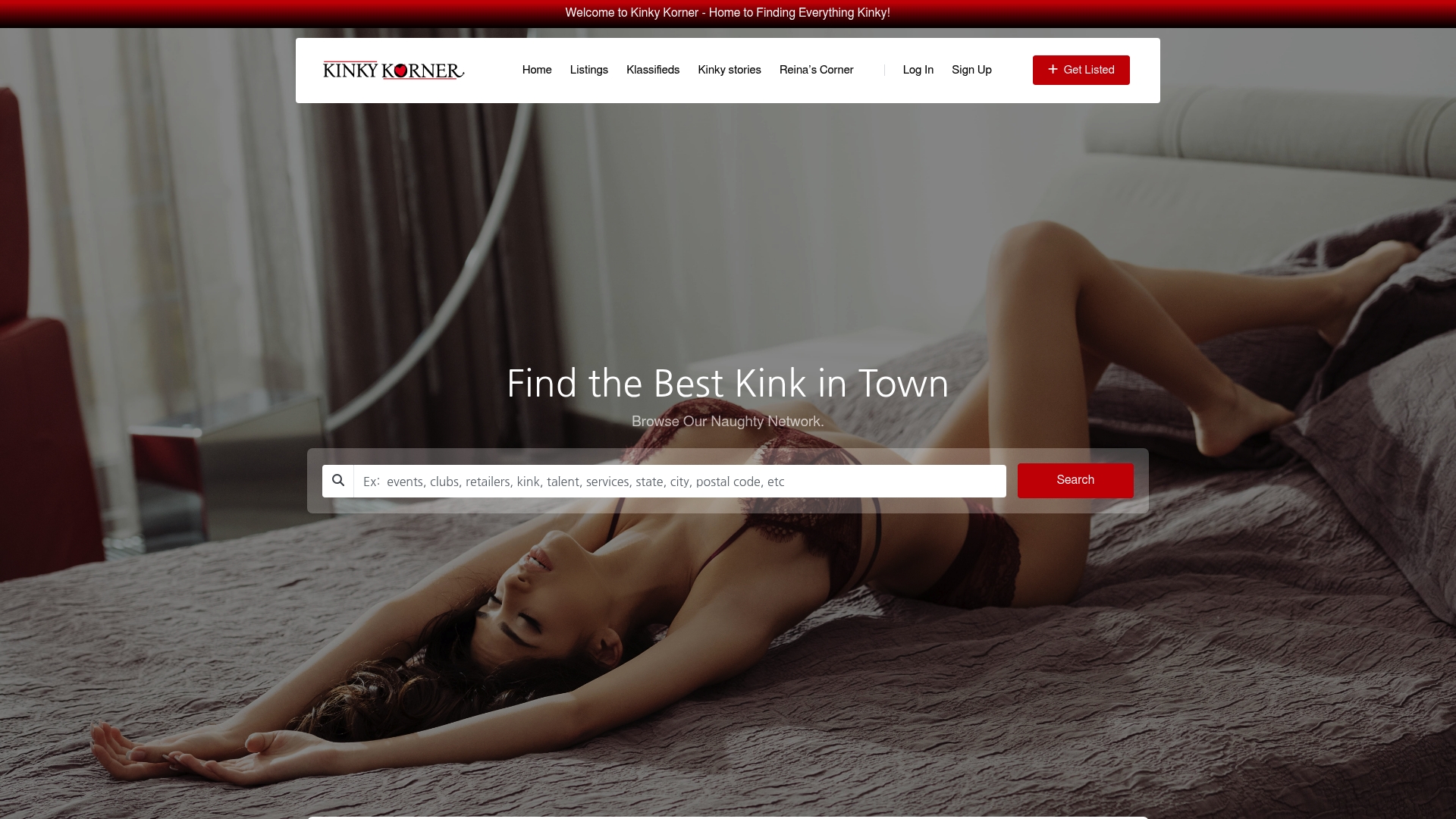
Kinkykorner is a marketplace where adults can list services, businesses, and erotic literary and artistic content with proper context and community standards in place. The platform treats NSFW labeling as a feature, not a filter. Readers can browse curated adult content knowing that consent and context are baked into the experience. Whether you are a creator looking for the right audience or a reader looking for something real, Kinkykorner gives NSFW content the framework it actually needs. Check out the 2026 content strategy guide if you want to understand how serious adult platforms handle this right.
FAQ
What does NSFW stand for?
NSFW stands for "Not Safe For Work." It is a social warning label used online to signal that content is inappropriate for professional, public, or family viewing environments.
Is NSFW only about sexual content?
No. NSFW covers eight categories including graphic violence, hate speech, severe profanity, drug imagery, gambling promotions, body horror, and shock content, not just nudity or sexual material.
What is the difference between NSFW and NSFL?
NSFW warns that content is inappropriate for workplaces. NSFL, or "Not Safe For Life," signals content that is genuinely traumatic, such as real death footage or extreme injury, and may cause lasting psychological distress.
Why do platforms use NSFW warnings instead of just deleting content?
The primary purpose of NSFW warnings is viewer consent. The label gives people the choice to opt out before seeing sensitive material, rather than removing content that adults may legitimately want to access.
How do platforms detect untagged NSFW content?
Platforms combine user self-tagging with automated AI classifiers that scan images and text. This two-tier system catches untagged content while minimizing false positives through sub-labels like "medical," "artistic," and "explicit."