
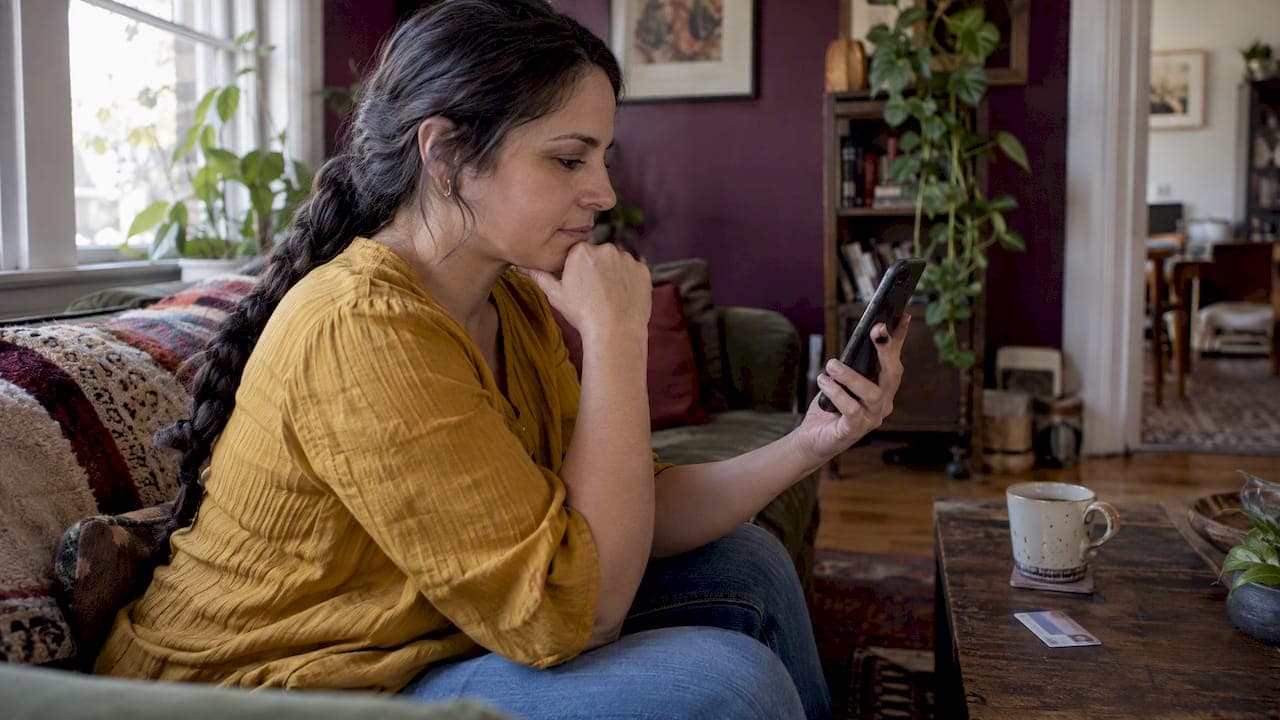
About half the country now requires adult websites to check that visitors are 18 or older before showing sexual material. These are state laws, not a federal one, and the Supreme Court upheld the Texas version in June 2025. The list of states keeps growing, the technical rules differ from one to the next, and a tick box that says "I am 18" is often no longer enough. Here is what is in force, who it hits, what it costs to ignore, and what it means whether you read, perform, sell or run a site.
TL;DR
- Roughly 27 to 28 states, depending on who is counting, require age verification for commercial adult-content sites. Louisiana was first, in 2023.
- In Free Speech Coalition v. Paxton (June 2025), the Supreme Court upheld Texas's law, which opened the door for other states.
- Covered sites must use real methods: government ID, digital ID, or transactional data checks. A self-declared click is the weak option.
- Penalties can be steep. Texas allows up to $10,000 per day, and up to $250,000 if a minor gets in.
- There is no federal mandate yet. The SCREEN Act is still sitting in committee.
Table of Contents
- Why you are suddenly being asked for ID
- What the Supreme Court actually decided
- Which states have these laws
- What counts as "harmful to minors"
- How verification has to work
- Penalties for getting it wrong
- Is a disclaimer enough?
- The privacy problem is real
- What about federal law?
- If you list services or run a business
- Our take
- Getting listed without the headaches
- FAQ
- Sources
Why you are suddenly being asked for ID
If a site you have used for years suddenly wants a selfie or a driver's license, this is why. Since 2022, a wave of state laws has required confirming a user's age before showing sexual material considered harmful to minors. Sites that skip it risk civil penalties or private lawsuits.
The operators have two real choices. They can pay for ID-checking services, which can run into the millions, or they can block traffic from the states with laws. Blocking is a business decision, not a government ban. That is why a site may work fine in New Mexico and throw a wall at you in Texas.
It also explains the VPN question. Utah tried to extend its rules to people reaching content from inside the state through a VPN, but a federal court blocked that provision in September 2026. Courts are still sorting out where the edges are.
What the Supreme Court actually decided
In June 2025, the Court ruled in Free Speech Coalition, Inc. v. Paxton that Texas may constitutionally require adult-content sites to verify that users are 18 or older. The date of the ruling was June 27, 2025.
The reasoning matters. The Court applied intermediate scrutiny, meaning the government's interest in protecting children justifies the incidental burden on adults. Before that, the Congressional Research Service had explained that these mandates raise First Amendment concerns because they burden adults' access to protected speech, and that the analysis turns on tailoring and the verification burden. After Paxton, that fight is much harder for challengers to win on the basic question. Narrower disputes (VPNs, data retention, which sites count) are still live.
Which states have these laws
Louisiana's law took effect January 1, 2023. Utah, Mississippi, Virginia, Arkansas, Texas, Montana, North Carolina, Idaho, Kansas, Kentucky, Nebraska, Indiana, Alabama, Oklahoma, Florida, Tennessee, South Carolina, Georgia, Wyoming, South Dakota, North Dakota, Arizona, Ohio, Missouri, West Virginia and Iowa followed in that order. Iowa's took effect July 1, 2026.
Counts differ by tracker. One reports 27 states with laws for commercial adult sites as of August 2026, another 28 states enforcing as of mid-October 2026. Treat the number as a moving target and check a current tracker before you make decisions. Laws pass, get enjoined, and get amended.
Where the laws apply
The rule of thumb: the laws apply where the material is viewed, not where it is created, posted or hosted. A performer in California whose content is watched in Texas is in Texas's reach. According to the Free Speech Coalition, Florida, Indiana, Kansas, Kentucky and Wyoming specifically apply to state residents, and Indiana, South Dakota, Tennessee and Missouri apply to all sites, not just commercial entities.
That last point catches people. Many laws only bite when a site is built for profit and a big share of it is explicit. Some do not care about that. If you run a forum, a blog with erotic fiction or a listing board, do not assume the "commercial" or "one-third" test saves you.
The one-third test
Most laws were written around a threshold: if roughly one-third or more of a site's content is sexual material harmful to minors, it must verify. Missouri's 2026 bill, for example, targets a commercial entity knowingly and intentionally publishing a website with more than one-third such material, and it requires a third party to do the verifying, one that may not retain identifying information.

What counts as "harmful to minors"
This is the phrase doing the heavy lifting. Texas HB 1181, effective September 1, 2023, defines it as material designed to appeal to a minor's prurient interest, patently offensive as to minors, and lacking serious literary, artistic, political or scientific value for minors.
The last prong is why writers and artists in the kink world should read their own state's statute rather than panic. Serious literary and artistic work can fall outside the definition. But a court decides that, not a website owner, and an operator who guesses wrong pays for it. If you are not sure whether your site or your content is covered, ask an attorney who handles First Amendment and adult-industry work in your state. Do not rely on a blog post, including this one.
How verification has to work
The statutes name acceptable methods. Texas requires reasonable age verification through digital ID, government ID, or a commercial system using public or private transactional data. Across states, common methods are government-issued ID, state or digital ID, an independent third-party service checking authoritative databases, or a transactional-data method, with permitted methods and privacy obligations varying by state.
Some quirks:
- Re-verification. Under Tennessee law, verification lasts for the lesser of the active session or 60 minutes, then users must verify again.
- Third parties. Several states push the check onto a separate verifier so the site never holds your ID.
- 18, not exact age. Most adult-content laws only require the operator to determine whether you are at least 18, not how old you are. That is a different track from COPPA's under-13 privacy regime and from social-media statutes that may use other cutoffs.
If you want a plain walk-through of the methods and their tradeoffs, we wrote one on how to verify age online with privacy first.
Penalties for getting it wrong
Numbers from Texas show the scale: penalties may reach up to $10,000 per day, and up to $250,000 if a minor gains access. Other states use different mixes of attorney-general enforcement and private suits. A small operator can be wiped out by one bad quarter of non-compliance, which is exactly why many small sites simply geo-block.
Is a disclaimer enough?
Short answer: where a state requires verification, a disclaimer alone is not it. An "Enter if you are 18+" button asks the visitor to say so. The laws ask the site to check. The FTC, in its 2025 COPPA policy statement, notes that newer age-verification mechanisms can determine age more reliably than a user-provided response. That statement is about children's privacy rather than adult-site statutes, but the logic is the same: self-declaration is the weakest signal.
That said, a clear age gate still has a job. In states without a mandate, or on pages that are not covered, it sets expectations, supports your terms of use, and shows good faith. Here is how we would word one, in our own plain style:
- The warning: "This site contains adult material about kink and fetish. You must be at least 18 to enter."
- The what-happens-next: "In some states we are required to check your age with an ID or a third-party service. We do not store your ID." (Only say this if it is true.)
- The choice: "Enter" and "Leave" buttons that are equally easy to find, plus a link to your terms and privacy policy.
- The out: a line for parents about filtering tools, if you want to include one.
What you promise about data must match what you do. A false "we never keep anything" line is its own legal problem.
The privacy problem is real
Critics are not just whining. Verification creates risks of unauthorized data retention, leaks of government ID, and biometric data storage, and there is often little enforcement to make sure third-party verifiers actually delete what they collect. Facial recognition and digital ID systems add misuse and leak risks on top.
For people in the kink community, the stakes are not abstract. Your interests are nobody's business, and an ID tied to a browsing record is the kind of thing that ends careers and relationships when it leaks. Practical habits:
- Prefer verifiers that check and discard, and that say so in writing.
- Never upload ID to a site you cannot identify.
- Be suspicious of any "verification" page reached from an ad or a pop-up.
- Use a separate email for adult accounts.
We go deeper in our piece on privacy in adult marketplaces.
What about federal law?
Nothing federal has been enacted. The SCREEN Act (S.737) was introduced February 26, 2025 and referred to the Senate Commerce Committee, where it remains at the introductory stage. Other bills are circulating in the 119th Congress, including ones that would put the check on device operating systems. Until one passes, the patchwork of state laws is the law of the land.
If you list services or run a business
This is where we spend most of our days. If you are a performer, a venue, a creator or a retailer, the laws touch you in a few places:
- Your own site may be covered based on how much explicit material it holds and where visitors are.
- Platforms you list on may block or gate states, which affects your reach.
- Record-keeping rules like 2257 are separate from age verification of viewers, and you need both right. See our 7 steps to 2257 compliance.
For the wider picture, start with our adult content legalities guide, the practical compliance checklist and the state-by-state rules for listing adult services. Classified ads have their own rules, covered in U.S. fetish classified rules.
Our take
We will say it plainly. Keeping kids away from explicit material is a fair goal. Making every adult hand a stranger their driver's license to read a filthy story is a clumsy way to get there, and anyone who has lived in this community knows how fast a leaked list becomes a weapon. Both things are true at once.
So here is how we run Kinky Korner. We are a directory and a reading room, built for people who want to find each other and find good work without being treated like criminals. We list businesses, creators, events and services across categories like Kink Events, Retailers & Studios and Professional Services, and we care about verifying who is listing, because trust is the product. Listings are for adults, and we push providers to be upfront about their own compliance. We think a platform that collects as little as possible and says exactly what it does with it earns more loyalty than one that hoards data and promises the moon.
If you are a provider, do not wait for a letter from an attorney general. Learn your state, get advice that fits your setup, and build verification into how you work.
— Prenston
Getting listed without the headaches
If you offer services or run a venue and want to be found by the right audience, you can start with a free basic listing, or step up to a monthly plan at $4.99 per month or a yearly premium plan at $149.95 per year. See the details on our pricing page, or browse the categories to see where you would fit. Our guide to adult listing verification explains how we think about checking providers.
FAQ
Is AgeVerif safe to use?
We cannot vouch for any single verifier, and you should not trust one on its word alone. Look for a clear statement that your ID or face scan is deleted after the check, a named company with a privacy policy, and a page you reached by typing the site address yourself. Known risks include data retention and leaks, so if a service will not say what it deletes, skip it.
Is 18 or 21 the adult age online in the US?
For adult-content verification laws, the line is generally 18, and the operator needs to establish that you are at least 18, not your exact age. Other rules, like alcohol sales or some venue policies, use 21. Your state's statute controls, so check it.
Does age verification law apply to a site hosted outside my state?
Usually yes. The laws apply where the material is viewed, not where it is created or hosted, according to the Free Speech Coalition. A site based in one state can still be covered because of readers in another.
Why not just use a VPN?
Many people do, but it is not a settled legal safe harbor. Utah tried to cover VPN users and a federal court blocked that piece, yet other states may try different approaches. Site operators can also block VPN traffic on their own.
Sources
- CNN: Pornhub has blocked access from a third of the US
- Mayer Brown: Little Users, Big Rules (January 2026)
- Age Verification Laws by State (2026)
- Free Speech Coalition: Age Verification FAQ
- AVP Association: State laws for adult content
- Texas HB 1181, enrolled text
- Missouri House Bills 1839, 2921 and 3015
- Adult Web Census: Age-verification laws by US state
- Censorship Tracker
- Congressional Research Service: Online Age Verification (Part II)
- FTC: COPPA Enforcement Policy Statement on age verification
- The 19th: Why some states are requiring ID to see adult content
- CIPL: Age Assurance and Age Verification Laws in the United States
- Congress.gov: S.737, SCREEN Act