
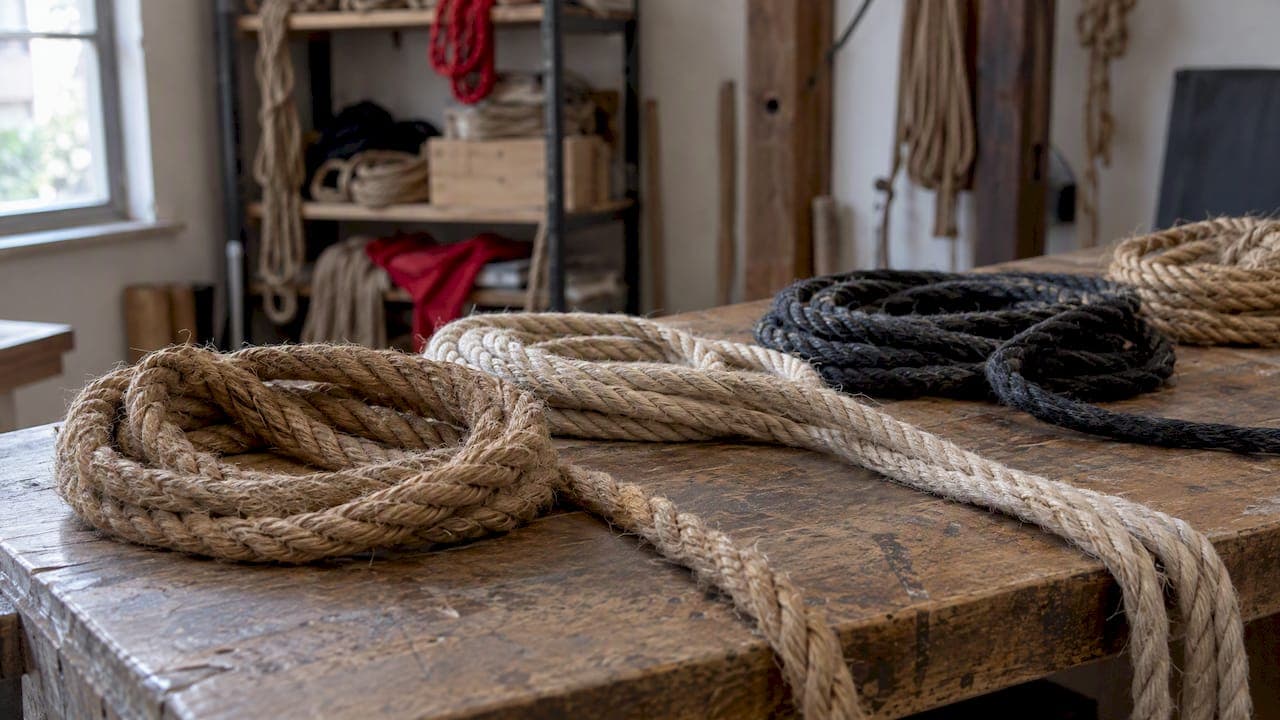
The main bondage rope materials are jute, hemp, cotton, silk or rayon, nylon or PPMF, and polyester, and the rule is simple: match the fiber and construction to what you plan to do. Soft, slick fibers suit beginners and comfort play, natural high-bite fibers suit traditional shibari, and low-stretch kernmantle synthetics suit safety-critical work. Inspection practice from ASTM F1740 and knot-efficiency research back that up, and we at Kinkykorner point you to the people who can show you in person.
TL;DR:
- Cotton is a forgiving practice rope for beginners, while jute and hemp provide strong grip; hemp generally lasts longer but needs breaking in.
- Silk and rayon suit decorative ties, not heavy loads, while nylon and PPMF vary in stretch and can generate heat against skin.
- Every knot weakens rope; a 2024 study found larger knots more efficient, and ASTM F1740 flags exposed core or irregular diameter for retirement.
- Before buying a full set, test a sample length, check listings for fiber, construction, finish, and intended use, and practice on a chair or bolster.
Table of Contents
- 1. Natural and synthetic rope families at a glance
- 2. How construction, diameter, and twist change safety
- 3. Jute, hemp, cotton, silk, nylon, and polyester compared
- 4. How to care for rope: finishing, cleaning, and retirement
- 5. Choosing rope for your use: a buying checklist
- 6. Why you can trust this advice: standards and sources
- 7. Start soft, practice slowly, learn in person
- 8. Find rope, classes, and suppliers through our listings
- FAQ
- Sources
1. Natural and synthetic rope families at a glance
Before you compare brands, get the baseline traits straight. Every material below trades off feel, grip, stretch, durability, and upkeep.
- Natural fibers (jute, hemp, cotton, silk/rayon): Jute and hemp have a dry, grabby bite that holds knots and stays put on skin. Cotton is soft and forgiving. Silk and rayon are very smooth and slick, so knots slip more easily.
- Synthetic fibers (nylon, PPMF, polyester): These are strong and consistent from one length to the next. They shrug off moisture and mildew, and they wash easily. Stretch varies a lot, and friction can build heat, so a slick synthetic can burn skin if you drag it.
- Finishing changes everything: A waxed or oiled jute rope handles very differently from the same rope raw. Singed jute sheds less. Heat-treated or coated synthetics can feel softer or stiffer than the fiber alone would suggest.
- Construction matters as much as the label: Twist direction, strand count, and diameter shape how a rope feels in your hand before the fiber does.
Quick trade-off examples: a cotton rope is gentle but can stretch and wear faster under load. A jute rope grips beautifully but needs conditioning and can shed on bare skin. A polyester rope lasts for years but may feel plasticky until it breaks in. Treat the material name as a starting point, then check how the rope is made and finished.
2. How construction, diameter, and twist change safety
Fiber is only half the story. Construction decides how a rope behaves in a knot and under load.
- Laid (3-strand) rope: Twisted strands give grip and a classic feel. Most traditional jute and hemp ropes are laid, and the strands can untwist or fuzz with use.
- Braided rope: Smoother and more uniform, but knots can slide on very slick braids.
- Kernmantle rope: A core wrapped in a protective sheath. Low-elongation versions are what climbers and riggers use when failure is not an option, and the sheath is what you inspect.
- Diameter: Thinner rope makes neat, low-bulk knots but can bite into skin. Thicker rope spreads pressure and feels gentler but makes bulkier knots. Pick for comfort first, then knot size.
- Inspection and retirement cues: ASTM F1740 is a guide for inspecting nylon, polyester, or blended kernmantle ropes. It covers rope logs, visual and tactile checks, and retiring a rope when the sheath is cut or abraded enough to expose the core, or when the diameter turns irregular.
Every knot weakens the rope. A 2024 laboratory study of low-elongation kernmantle ropes found that all knots reduce tensile strength and that larger-volume knots such as the double overhand and figure nine loop are more efficient, with knot choice shifting breaking loads by multiple kilonewtons.
3. Jute, hemp, cotton, silk, nylon, and polyester compared
Here is the practical profile of each material, one at a time.
- Jute: High bite, earthy smell, and the look most people picture for shibari. It usually arrives pre-finished and softens with use. Best for traditional aesthetics and medium-duty ties, and it asks for some care, since it can shed and dislikes damp storage.
- Hemp: Similar bite to jute, often a touch stronger and longer lived. It starts rougher and breaks in beautifully. Best for riggers who want a sustainable natural fiber that lasts.
- Cotton: Soft, cheap, and forgiving, with gentle contact against skin. It stretches and wears faster, and it can hold sweat. Best for beginners and comfort-focused play, and a good first rope for practicing knots.
- Silk and rayon (bamboo silk): Very soft and very slick, with a luxe look. Knots can creep loose, so tie carefully. Best for decorative ties and sensation play, not for heavy loads or suspension.
- Nylon and PPMF: High tensile strength with a wide range of stretch, depending on the build. It resists mildew and washes clean. Check stretch before you trust it, and remember that dragging it across skin generates heat. Best for play where breaking strength matters.
- Polyester: Balanced durability with low stretch and good abrasion resistance. It can feel stiff at first and softens with handling. Best for tough practice ropes that you plan to use for years.
Whatever you choose, keep a short length of your own material to test knots before relying on them in a scene.
4. How to care for rope: finishing, cleaning, and retirement
Good upkeep keeps a rope pleasant and safe. Finishing choices change feel: wax adds a smooth glide and some water resistance, while oil softens natural fibers and cuts dryness. Clean by material. Synthetics generally handle gentle washing, but natural fibers like jute and hemp prefer a light brush and air, since soaking can stiffen or weaken them. Retire a rope for sheath cuts, exposed core, noticeable diameter changes, brittle patches, or mildew and odor that will not leave.
- Inspect the full length by eye and by touch after heavy use.
- Brush off dust and loose fibers, and spot-clean if needed.
- Dry completely in open air, away from heat and direct sun.
- Re-condition natural fibers lightly, if the rope feels dry.
- Coil loosely and store somewhere cool, dry, and ventilated.
Pro Tip: Keep a simple log of when you bought each rope and how it has been used, so a worn one never sneaks back into a scene.
5. Choosing rope for your use: a buying checklist
Turn all of that into a short list you can carry to a shop or a listing page.
- Diameter: A moderately sized rope can be a comfortable choice for beginners and shibari. Go thicker if you want a gentler feel, and thinner if you want tidy, low-bulk knots.
- Length: Short lengths suit wrist or limb ties, and longer ropes suit full harness work. Plan your most ambitious tie first, then add a little margin.
- Reading listings: Check whether the rope is pre-waxed, oil-finished, or raw, and whether it is laid, braided, or kernmantle. Ask the seller about fiber, diameter, and finishing, and confirm what the rope is rated or intended for.
- Budget: Buy a single sample length first. Feel it, tie a few knots, and see how it behaves before you commit to a full set.
6. Why you can trust this advice: standards and sources
We lean on published sources rather than hearsay, and we flag guesswork as guesswork.
- ASTM F1740 is a recognized guide for inspecting nylon and polyester kernmantle ropes and for keeping a rope log.
- Knot-efficiency research shows that knots lower a rope's tensile strength and that larger-volume knots tend to be more efficient.
- Our own educational posts, including our beginner's safety-first guide to rope bondage and our practical kink safety tips, cover the safety habits that surround any rope choice.
7. Start soft, practice slowly, learn in person
Start with a soft rope and practice your knots on a bolster or a chair leg before you ever tie a partner. Then go feel real rope in your hands: take a class or show up to a rope night, because no description beats handling a fiber yourself. Listings and marketplaces make it easier to find the suppliers and teachers who can help, and a consent-first foundation like our BDSM education starting point keeps the learning grounded.
— Prenston
8. Find rope, classes, and suppliers through our listings
Reading about fibers only gets you so far, and trying them in person is the fastest way to learn what suits you. That is where we come in. Kinkykorner lists studios, instructors, retailers, and events, so you can find a place to sample rope and learn hands-on instead of guessing from a product photo.

Browse our categories to find retailers and studios, kink events, and professional services. If you teach or sell rope yourself, our listing plans include a free basic listing, a monthly plan at 4.99 USD per month, and a yearly premium plan at 149.95 USD per year. Start with the categories page, find a rope night or a retailer, and bring your questions.
FAQ
What is the best rope material for beginners?
Cotton is a friendly starting point because it is soft, inexpensive, and forgiving on skin. It lets you learn knots without worrying about shedding or rough fibers. Move to jute or hemp once your technique feels steady and you want more grip.
How do jute and hemp compare for shibari?
Both have a dry, grippy bite that holds knots well. Hemp is often a bit stronger and longer lasting, while jute is the more traditional look and usually comes pre-finished. The best choice comes down to how each feels in your hands.
Does the type of knot affect rope strength?
Yes. A 2024 study of kernmantle ropes found that every knot reduces tensile strength, and that larger-volume knots tend to be more efficient. That is why rope condition and knot choice both matter for safety.
When should I retire a rope?
Retire it when the sheath is cut or abraded enough to expose the core, when the diameter becomes irregular, or when it turns brittle or stays mildewed. ASTM F1740 describes these inspection cues for kernmantle ropes, and a simple rope log helps you track wear.
Sources
- ASTM F1740-96(2018) - Guide for Inspection of Kernmantle Ropes
- Determining the Safest Anchoring Knot in a Fall Arrest System by Means of Static Tests