
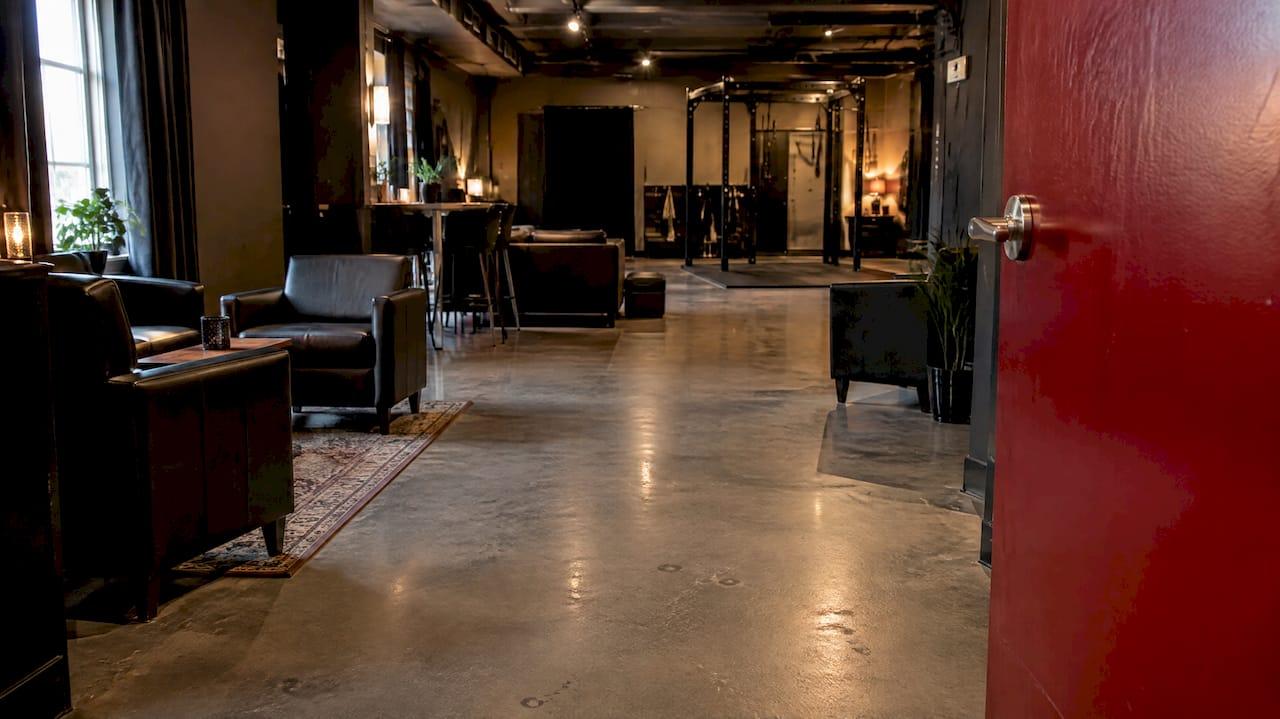
An accessible kink event is one where you can get in, move around, communicate, rest, use the bathroom, play, and leave safely, and where nobody treats you like you're less desirable or less capable of consent because of your body or brain. A step-free front door is the start, not the finish. If you're an attendee, this guide shows what to look for and what to ask. If you run events, it shows what to build and what to publish so people can decide before they show up. If you list events with us, it shows how to put access details where people will actually see them.
TL;DR
- Accessibility means participation, not just entry: communication, rest, restrooms, sensory comfort, cost and a safe exit all count.
- Organizers should publish specifics (door widths, steps, restroom layout, quiet room, scent and mask policies) plus a named contact who answers access questions.
- Consent tools must work for the person using them: adapt safewords, check them again mid-scene, and never assume a disability means no agency.
- Under the ADA, service dogs are allowed wherever their handler is, and staff may ask only two questions.
- Ask disabled kinksters what they need, pay them for that expertise, and report back on what changed.
Table of Contents
- What accessibility at a kink event really covers
- For attendees: how to size up an event before you go
- For organizers: the venue walkthrough
- Sensory comfort: lights, sound, scent and somewhere to breathe
- Seating, space and the little things that add up
- Consent tools that work for the actual person
- The access statement: say it before they ask
- How to build access in without burning out
- Getting the word out so the right people see it
- Put your accessible event where people look for it
- Our take
- FAQ
- Sources
What accessibility at a kink event really covers
Most of us picture a ramp. That's one piece. T. L. Duncan's piece on accessibility in kink frames the real question as whether someone can participate, communicate, rest, use the facilities and leave safely, and whether they'll be treated as a desirable adult with agency. It leans on the CDC's list of barriers: physical, communication, attitudinal, transportation and policy.
That list is useful because it names the stuff people rarely talk about. A venue can be technically wheelchair accessible and still be unusable if the accessible restroom is up a flight of stairs, the play space is a maze of cords, or nobody will answer an email about the layout. A policy can say "all welcome" and still require a long vetting process that doesn't work for someone who can't make a phone call.
The community has noticed. A December 2025 guest blog from the National Coalition for Sexual Freedom reports that studies have found some people describe kink spaces as physically inaccessible, the long-term cost of community involvement as financially out of reach, and some spaces as less tolerant of difference. It also says venues could do better at describing what accessibility looks like in their space, what tools they offer, and how to request accommodations.
In a 2024 Them feature on queer, disabled kink spaces, a community member named Artemis says the layout of sex shops and kink spaces is often exclusionary. Her ask is plain: room for fat people and people with limited mobility to move and sit, with chairs and couches for anyone who's overstimulated. That's not a luxury list. It's what a party needs to function for a lot of bodies.
For attendees: how to size up an event before you go
You shouldn't have to show up and find out. Here's how to do your homework without making it a second job.
Read the listing for specifics
A good listing says things like how many steps there are at the entrance, whether there's a ramp, where accessible parking is, what the restroom looks like, and where you can sit. Vague language like "accessible venue" tells you almost nothing. If the details are missing, ask. A decent organizer answers fast and without making you feel like a burden.
Questions worth sending
- Is the entrance step-free, and is that door unlocked and staffed all night?
- If there's an elevator, is it in service and big enough for my mobility device?
- Where is the accessible restroom, how do I get there, and does it lock?
- Is there seating near play areas, and can I bring my own?
- Is there a quiet room, and how loud and bright does the main space get?
- What are the mask, scent and service animal policies?
- Is there a discounted ticket if cost is a barrier?
The last one matters. Mars's guide notes that events costing $50 or more per ticket, plus transit, outfit, attendants and drinks, are often out of reach for disabled people on fixed or reduced incomes. Some events build in a fix: Society of Janus offers discounted Community Access tickets for people with financial need, requested by email.
Plan your communication in advance
Talk to your partner or the DM team before play, not during. If you're deaf or hard of hearing, or you can't speak reliably when you're deep in a scene, you need a signal that works. More on that below. For a broader grounding in how to talk through limits, our guide on why communication is key in BDSM covers the basics.
Know your rights on service animals
Under the ADA, a service dog has to be allowed wherever its handler is allowed. Staff can ask only two questions when it isn't obvious: is the dog required because of a disability, and what task is it trained to do. They can't ask about your disability or demand paperwork, as Kinky Kollege's policies page lays out. Legal gray areas can come up at private events, so confirm the policy ahead of time and keep it friendly. If you believe your rights have been violated, an ADA Center or a disability rights attorney is the right call.
For organizers: the venue walkthrough
If you're still picking a space, start with our guides on booking a kink-friendly venue and kink-friendly venues, then run the access checks below before you sign anything. Better yet, visit with a disabled friend and watch what trips them up.
Follow the whole route
Walk it start to finish, the way an attendee would. Chloe Mars's practical guide says to prioritize step-free entry, confirm the accessible entrance is unlocked, staffed and signed, and verify the elevator stays in service. Pathways need to be at least a wheelchair wide with turning room, and cords and rugs need to be taped down.
The City of Seattle's venue assessment checklist adds some solid benchmarks. An accessible route from the street should be firm, stable, slip-resistant and as level as possible. Grass, gravel, stairs and escalators don't count as an accessible route. At least one ADA-compliant restroom should be available to everyone. Ideally public transit is within one to two blocks, and free Wi-Fi is worth noting because communication devices and remote captioning depend on it.
Other numbers to keep handy: a state accessibility guide for events is useful for the communication side, and Easterseals notes that ADA-compliant ramps run one foot of ramp per inch of rise. A three-step entrance with no ramp is a no for a lot of people, and you'd better say so upfront.
Restrooms are where events fail
The accessible washroom should have grab bars, a working lock, room for a second person if someone needs help, and space to turn around. Check it on the day, too. Stored equipment, blocked approaches and signs that point to a locked room all ruin the plan. Duncan's article makes the same point: an event can have a step-free entrance and still be unusable if the restrooms are inaccessible, passages are obstructed, seating is scarce, or equipment requires impossible transfers.

Don't forget the way out
Have an evacuation plan for people who can't use stairs, and tell your staff and volunteers what it is. A fire alarm at 1 a.m. in a dungeon with a basement playroom is not the time to improvise. Society of Janus shows one honest approach: a fully accessible first floor with social and play space, and basement play equipment reachable only by stairs, disclosed in advance.
Look at the schedule, too
Duncan points out that long sessions without breaks and late-night-only events shut out people with fatigue or fluctuating symptoms. A published schedule, a heads-up before sudden changes and some daytime or early-evening options fix a lot of this for almost no money.
Sensory comfort: lights, sound, scent and somewhere to breathe
Kink spaces are often loud, dim, strobing and heavily perfumed. For autistic attendees, people with migraines, tinnitus, PTSD or chemical sensitivities, that can be a hard stop.
Mars's guide recommends a short list that most organizers can do this month:
- Free earplugs at the door.
- A quiet room with low light and minimal sound, separate from the aftercare corner.
- No strobes or rapidly flashing lights, or confine them to one area and announce them ahead of time.
- Permission to wear sunglasses.
- Music low enough that a safeword can be heard.
- A scent-reduced policy with fragrance-free cleaning products.
- HEPA air purifiers for immunocompromised guests.
Society of Janus's guidelines show how this reads in practice: music that fills the room without being blaring, earplugs available, and colored lighting that doesn't shift rapidly. Easterseals also suggests quiet or sensory-friendly areas, controlled heating and air conditioning, and no flash photography. The flash photography point is easy to overlook, and it's a seizure and migraine trigger.
One caution for organizers. Don't set up the quiet room and then use it as a dumping ground for anyone who seems "difficult." It's a choice people make for themselves.
Seating, space and the little things that add up
If there's one cheap upgrade, it's chairs. Mars suggests seating everywhere, a range of chair types, cushions and yoga blocks near play areas, and a cap on attendance so people can actually move and find a seat. Easterseals adds open seating at the ends of rows and round tables with room for mobility devices.
Also worth doing: a first-timer orientation tour, a colour-coded wristband or pin system so people can signal what kind of interaction they want, and explicit permission to leave a scene without explaining why. That last one helps everyone, not just disabled people. Our guide to kink event etiquette is a good one to link in your welcome email.
Consent tools that work for the actual person
A safeword does nothing if you can't say it. Duncan notes that a verbal safeword is insufficient if a participant can't speak reliably under the planned conditions, and a hand signal can fail if it depends on movement or strength they lack. The fix is to agree on a method that fits the person and the activity, and check it still works partway through. If restraints, positioning, noise or sensory limits get in the way, change the plan.
Sonnenfeld, writing in EBAR's "Accessing Kink", offers concrete options. Deaf or hard-of-hearing participants can use hand signals, or hold an object like a handkerchief that gets dropped to stop play. Keep the play space well lit, and have the top communicate at each step of a scene with a clear two-way mechanism. He also urges encouraging people to share specific needs and then working together to accommodate them.
The flip side is just as important. Duncan argues that disability alone does not mean someone can't consent. Someone who uses a wheelchair, communicates differently or needs help with a transfer can still understand an activity and make informed choices. Discuss risk with the person, not around them, and don't confuse difficulty speaking with difficulty understanding. Sonnenfeld puts it simply: get to know a person with a disability the same way you'd get to know anyone, start with conversation, and ask about limitations without overestimating or underestimating them. If you need a refresher on the foundations, read what consensual kink means and our kink safety tips.

The access statement: say it before they ask
This is the single most useful thing an organizer can publish. Per Mars, every event listing should include a specific access statement covering the entrance, washrooms, seating, lighting and sound expectations, the quiet room, scent, mask and service animal policies, and parking and transit. Specific means something like "three steps at the entrance and no ramp," not "limited accessibility." She also recommends:
- Photos of the entrance, play space, washroom and quiet room.
- Dimensions: door widths, stall size, elevator size and distances.
- A named contact who answers access questions within a set timeframe.
- An optional "access needs" field on registration or vetting forms.
- Accessible digital materials: image descriptions, plain language, readable fonts and captions.
Sins Invalid's access suggestions for public events make a point worth tattooing on your promo calendar: access information is as important as ticket cost. They also suggest saying which access needs are covered (ASL interpretation, wheelchair access), inviting people to write or call about specific concerns, and reaching out through multiple channels such as email, social media, phone trees, texting and face-to-face invites, because people respond best to different formats.
For presentations and workshops, the Disability Policy Consortium's accessible events guide recommends sending slides and handouts electronically in advance, having large-print copies on hand, describing visual content aloud, using microphones and testing FM loop systems, and captioning videos. Auto-captions from video platforms aren't an adequate substitute for proper captions.
On the legal side, the ADA generally puts the responsibility for communication help like interpreters on the business, unless it would be an undue burden. A May 2025 ADA explainer from the National Agricultural Law Center says undue burden is judged by the business's overall resources, not by comparing it to the fees the customer pays. If one method is too burdensome, an effective alternative must be offered. Which rules apply to your event depends on the venue and how it's run, so if you're unsure, call your regional ADA Center or talk to an attorney.
How to build access in without burning out
Nobody gets all of this right on the first try. The organizers who do well treat access as ongoing work. Mars's suggestions include:
- Ask disabled community members what would make the space work, and compensate them for that expertise.
- Invite disabled kinksters to present and to DM.
- Set up an anonymous feedback channel.
- Report back publicly on what you changed.
- Keep a running access log so improvements survive when volunteers rotate.
Easterseals frames it as a mindset: plan accommodations proactively, not as an afterthought. That's cheaper, too. Retrofitting a ramp the week of the event is nobody's idea of fun.
Getting the word out so the right people see it
Accessible events only help if people can find them and trust the details. When you promote, put the access statement near the top of the page, not buried at the bottom. Our event promotion plan walks through an email-first approach to consent-first promotion, and the adult event submission guide covers what makes a listing get approved. If you're still brainstorming formats, these kinky event ideas include options that suit smaller, seated or daytime gatherings.
Put your accessible event where people look for it
Kinky Korner has a Kink Events category where organizers can list gatherings, alongside categories for venues, retailers and studios, and professional services. We have a Free Listing plan, a Monthly plan at $4.99 per month, and a Yearly Premium plan at $149.95 per year. Whichever you pick, write your access statement into the listing itself, with steps, restrooms, seating, sensory setup and your contact, so attendees can decide before they leave the house. You can see the plans and start at Kinky Korner.
Our take
We're a marketplace, and that gives us a front-row view of a simple problem: people can't plan around what they can't see. A listing that says "all welcome" and nothing else makes a disabled kinkster do detective work, and a lot of people quietly decide it's not worth it.
So here's what we believe. Access details belong in the listing, next to the date and the price. Steps, restrooms, quiet room, scent policy, who to email. If you run a party, a dungeon, a studio or a retail space, that's the stuff that turns a maybe into a yes.
The kink community has always been good at turning hard conversations into clear agreements. Negotiation is our native language. Access is just negotiation done early, in public, for everybody. When you list with us, use the space to say what's true about your venue, including the parts that aren't perfect yet. Specific beats polished every time.
Prenston
FAQ
Do kink events have to be ADA compliant?
It depends on the venue and how the event is run. A venue open to the public generally has ADA obligations, and a private party in a rented commercial space may be affected by the venue's own duties. If you're unsure, call your regional ADA Center at 1-800-949-4232 or ask an attorney who handles disability law.
What should an access statement include?
Cover the entrance (steps, ramp, door width), restroom layout, seating, lighting and sound, a quiet room, scent, mask and service animal policies, and parking and transit. Add photos, measurements and a named contact who replies within a set time. Specific wording like "three steps, no ramp" is far more useful than "limited access."
How do I use a safeword if I can't speak or hear well?
Agree on a different signal before play. Options include hand signals or dropping a held object like a handkerchief, and the top should check in at each step of a scene. Test the method in the actual setup, because restraints, positioning and noise can break it.
Can I bring a service dog to a kink event?
In places covered by the ADA, service dogs must be allowed wherever their handler is allowed. Staff can ask only whether the dog is required because of a disability and what task it's trained to do. Check the event's policy in advance so everyone knows what to expect.
What's the cheapest way for a small event to be more accessible?
Publish a detailed access statement, provide plenty of seating, offer earplugs, keep lighting steady with no strobes, and name a contact for access questions. None of that needs a big budget, and all of it helps people decide whether they can come.
Sources
- Accessibility in Kink (T. L. Duncan)
- Guest Blog: Better Than Vanilla? Navigating Neurodivergence and Disability within the BDSM Community (NCSF)
- How Queer, Disabled People Are Finding Pleasure and Community in Kink (Them)
- Accessible Kink Spaces & Events: A Practical Guide (Chloe Mars)
- Accessible Venue Assessment Checklist (City of Seattle)
- Event Guidelines: Accessibility, Inclusivity (Society of Janus)
- Event Accessibility (Easterseals)
- Accessing Kink: Making Leather Space for All (EBAR)
- Access Suggestions for Public Events (Sins Invalid)
- Accessible Events Guide for Organizers (Disability Policy Consortium)
- Policies (Kinky Kollege)
- Navigating ADA Compliance for Agritourism Guests (National Agricultural Law Center)