

Communication in BDSM is the essential mechanism that ensures safety, consent, and deep emotional connection between partners. Without it, even the most experienced players are flying blind. The industry standard practices of pre-scene negotiation, the stoplight system, and ongoing check-ins exist for one reason: they work. BDSM practitioners who communicate openly report higher relationship satisfaction than non-practicing couples, largely because explicit communication forces clarity that most vanilla relationships never bother with. Understanding why communication is key in BDSM is not optional reading. It is the foundation everything else is built on.
Why communication is key in BDSM dynamics
Effective BDSM communication is the practice of openly expressing desires, hard limits, soft limits, and emotional states before, during, and after any scene. The industry terms you will hear most are "negotiation," "consent," and "aftercare." These are not buzzwords. They are the actual architecture of a safe and satisfying dynamic.
Pre-scene negotiation is where everything starts. Full negotiation sessions run from 10 minutes for established partners to over an hour for new pairs. That range tells you something important: the less you know someone, the more talking you need to do. New partners need to map out hard limits (absolute no-gos), soft limits (things that require care), and specific desires before anyone touches anyone.

The stoplight system is the most widely recognized real-time communication standard in BDSM. Green means continue, yellow means slow down or check in, and red means stop immediately. It is simple enough to use mid-scene without breaking immersion. Many players layer it with non-verbal signals like tapping or dropping an object, because non-verbal cues are essential safety tools when verbal communication is physically impaired.
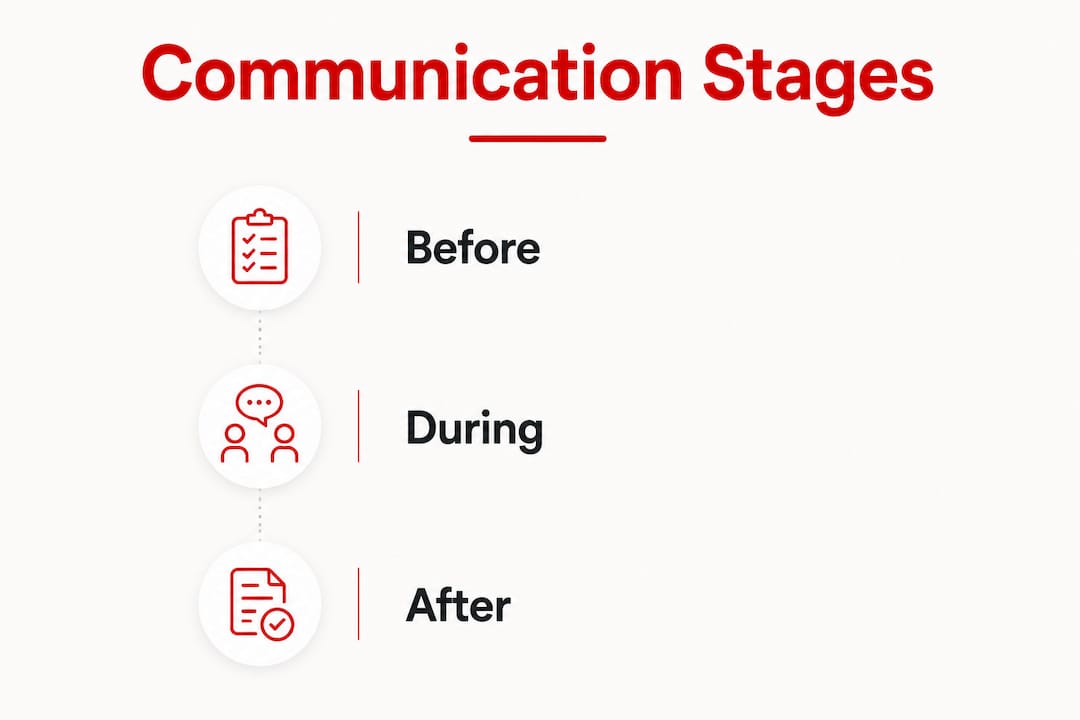
Here is what most guides miss: communication is not a one-time event. It is a rhythm. You negotiate before, you check in during, and you debrief after. Each stage serves a different function, and skipping any one of them creates gaps that can turn a good scene bad fast.
What effective communication looks like in practice:
- Pre-scene negotiation: Cover hard limits, soft limits, desires, health considerations, and emotional state.
- Safe words and signals: Agree on verbal safe words and non-verbal alternatives before the scene begins.
- Mid-scene check-ins: Brief verbal or non-verbal check-ins keep both partners calibrated without killing the mood.
- Aftercare conversations: Post-scene emotional check-ins address what worked, what did not, and how both partners feel.
- Written tools: Checklists and pre-scene messages give partners time to reflect before speaking, which often produces more honest answers.
Pro Tip: Send your negotiation checklist to your partner 24 hours before a scene. Written reflection produces more honest answers than on-the-spot conversation, especially for newer partners who feel social pressure to say yes.
How does communication build trust in BDSM relationships?
Trust in BDSM is not assumed. It is built, deliberately, through every conversation you have about what you want and what you will not do. That process is what makes power exchange dynamics function. A dominant who communicates openly and respects stated limits is seen as more trustworthy and powerful, not less. The submissive can only fully invest in vulnerability when they know the dominant has genuinely heard them.
This is the counterintuitive truth about D/s dynamics: the submissive holds enormous power through the act of communication. Stating your limits clearly is not weakness. It is what makes the power exchange real. Without that clarity, the dominant is guessing, and guessing in BDSM is dangerous.
Sex therapist Lisa Hochberger-Brown notes that BDSM's rigorous negotiation process actively improves communication skills across all areas of a relationship. That spillover effect is real. When you practice articulating your desires and limits in a high-stakes context, you get better at it everywhere else too.
Somatic sex coach Laura Jurgens takes it further:
"Negotiation is not a clinical prerequisite. Done right, it is one of the most erotic things you can do with another person. Talking about what you want, with full attention and curiosity, is desire co-creation."
That reframe matters. When you stop treating negotiation as a legal checklist and start treating it as foreplay, the whole dynamic shifts. You are not just clearing safety hurdles. You are building the specific kind of intimacy that makes BDSM deeper than most vanilla sex ever gets.
What are the most common communication challenges in BDSM?
The biggest communication failure in BDSM is not dishonesty. It is the gap between what someone says and what they actually feel. Social pressure, eagerness to please, and embarrassment all push people toward saying yes when they mean maybe or no. Fostering a culture of curiosity rather than rigid scripts is what closes that gap.
Here are the most common pitfalls and how to address each one:
-
Eagerness to please: New submissives especially tend to agree to things they are not sure about because they want to be a good partner. Counter this by explicitly asking, "Is there anything you said yes to that you want to revisit?" Give permission to change the answer.
-
Misreading non-verbal signals: Active reading of breath, tension, and eye contact is a skill, not an instinct. Dominants need to practice it. If your partner goes quiet and still in a way that feels different from subspace, check in verbally.
-
Assuming limits stay fixed: Desires and limits evolve. What felt like a hard limit six months ago might be a soft limit now, or vice versa. Even experienced partners need pre-scene check-ins every time, because context, mood, and life circumstances change what someone can handle.
-
Treating negotiation as a one-time contract: A negotiation from your first scene together does not cover your tenth. Revisit the conversation regularly, not just when something goes wrong.
Pro Tip: After any scene where something felt off, wait 24 hours before the debrief conversation. Emotions are raw immediately after intense play. A day of distance produces clearer, more honest feedback from both partners.
How to implement communication before, during, and after a scene
Practical implementation is where good intentions become actual safety. The three stages of BDSM communication each require different tools and a different mindset.
Before the scene
Full pre-scene negotiation covers hard limits, soft limits, specific desires, health considerations (physical and emotional), and agreed safe words or signals. For new partners, this conversation takes at least an hour and should not be rushed. For established partners, a 10-minute check-in before each session is the minimum. Written tools like kink checklists or pre-scene messages work well because they give both partners time to think before they speak.
During the scene
The stoplight system runs in the background of every scene. Green means everything is good. Yellow means pause and check in. Red means full stop, no questions asked. Non-verbal alternatives like tapping three times or dropping a held object serve the same function when speech is not possible. Reading body language actively, watching for changes in breathing, muscle tension, and eye contact, is the dominant's ongoing responsibility throughout.
After the scene
Aftercare is not optional. It is the emotional landing pad after intense play. The immediate post-scene period involves physical comfort: water, warmth, physical closeness if desired. The debrief conversation happens later, once both partners have regulated. That conversation covers what worked, what did not, and whether any limits need to be adjusted going forward.
| Stage | Primary tool | Time investment | Purpose |
|---|---|---|---|
| Pre-scene (new partners) | Verbal negotiation plus checklist | 1 hour or more | Map limits, desires, and safe signals |
| Pre-scene (established partners) | Brief verbal check-in | 10 minutes | Confirm current state and any changes |
| Mid-scene | Stoplight system plus non-verbal signals | Ongoing | Real-time safety and calibration |
| Post-scene (immediate) | Aftercare: physical comfort | 15–30 minutes | Emotional and physical regulation |
| Post-scene (debrief) | Honest conversation | 24 hours later | Feedback, limit review, and connection |
The BDSM roles you play shape which communication tools matter most. Dominants carry more responsibility for mid-scene reading. Submissives carry more responsibility for honest pre-scene disclosure. Both carry equal responsibility for the debrief.
Key takeaways
Communication in BDSM is not a formality. It is the mechanism that makes power exchange safe, consensual, and genuinely satisfying for everyone involved.
| Point | Details |
|---|---|
| Negotiation is non-negotiable | Pre-scene talks run 10 minutes to over an hour depending on partner familiarity. |
| The stoplight system is the standard | Green, yellow, and red give partners a shared real-time language during any scene. |
| Non-verbal signals fill the gaps | Tapping or object drops maintain safety when verbal communication is not possible. |
| Limits evolve over time | Even established partners need fresh check-ins before every scene, every time. |
| Aftercare closes the loop | Post-scene debrief builds trust and catches issues before they become problems. |
What I have learned about talking before you play
Prenston here. I will be straight with you: the first time someone handed me a negotiation checklist before a scene, I thought it was going to kill the mood completely. It did the opposite. Going through that list, watching my partner actually think about their answers, felt more intimate than most of the sex I had been having. There was something about the deliberate attention of it, the fact that we were both fully present and honest, that made everything that followed feel charged in a way I had not expected.
What I have come to believe is that people who skip negotiation are not being spontaneous. They are being lazy about the hard stuff. Real spontaneity in BDSM comes from having done the groundwork so thoroughly that you trust each other enough to move freely within it. The kink negotiation process is not a gate you pass through. It is the relationship itself, expressed out loud.
Communication in BDSM is not a chore. It is care made audible.
— Prenston
Kinkykorner: your space for kink education and community
Kinkykorner is a marketplace and content platform built for adults who take their kink seriously. Whether you are new to BDSM or years into a dynamic, the platform connects you with adult-themed services, erotic literary content, and a community that actually talks about this stuff honestly.

If this article gave you a clearer picture of how communication works in BDSM, Kinkykorner has more where that came from. The platform hosts kink education content covering consent, negotiation, and relationship dynamics written for real adults, not sanitized for a general audience. You will find the frank, unfiltered conversations that most platforms are too nervous to host. Come find your people.
FAQ
What is the stoplight system in BDSM?
The stoplight system uses green for continue, yellow for slow down, and red for immediate stop. It is the most widely used real-time communication standard in BDSM scenes.
How long should BDSM negotiation take?
Pre-scene negotiation runs from 10 minutes for established partners to over an hour for new pairs. The less familiarity between partners, the more time the conversation needs.
Why do BDSM practitioners report higher relationship satisfaction?
BDSM practitioners report higher satisfaction largely because explicit negotiation forces clarity about desires and limits that most relationships never achieve. That clarity builds trust and deepens connection.
What are non-verbal safe signals and when do you use them?
Non-verbal signals like tapping three times or dropping a held object replace verbal safe words when speech is not possible during intense play. They serve the same function as a verbal safe word and must be agreed on before the scene begins.
Do you need to renegotiate with an established partner?
Yes. Desires and limits change over time, and pre-scene check-ins are necessary before every session regardless of how long you have been playing together. A brief 10-minute conversation before each scene is the minimum standard.