
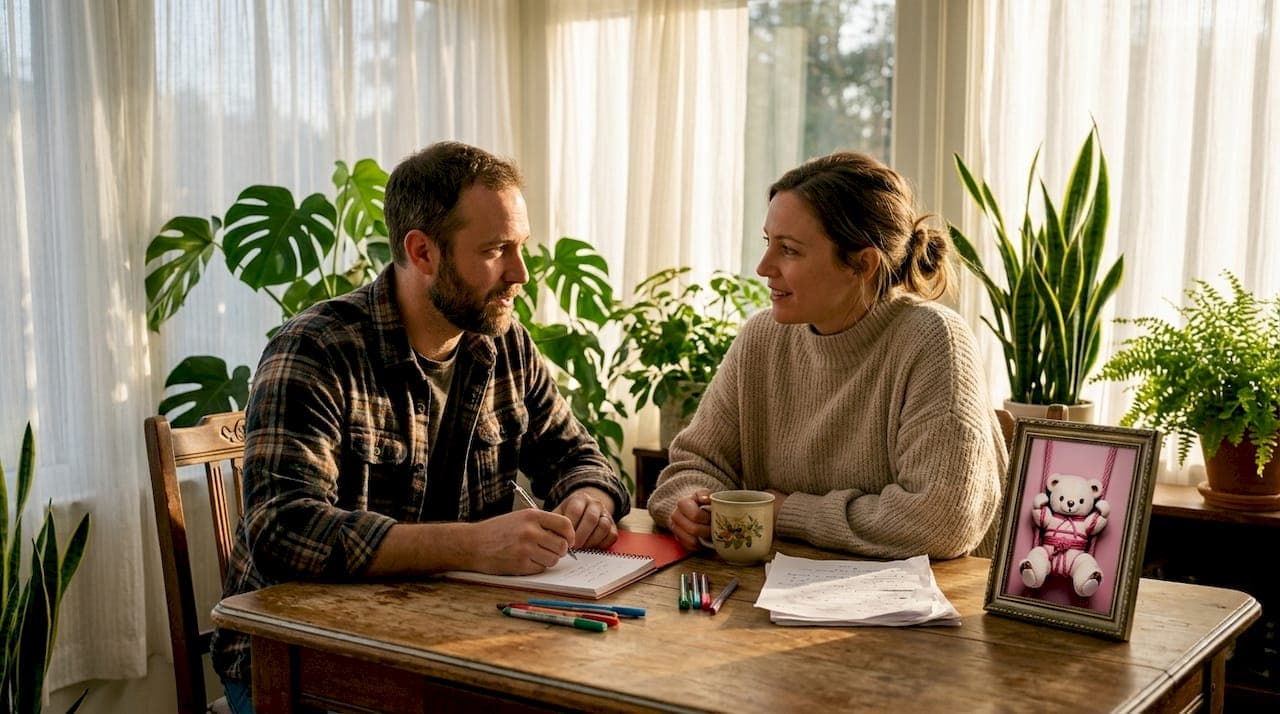
Let's get one thing straight: understanding negotiation in kink is not about sitting across a conference table with a clipboard. It's a living, breathing conversation between people who want to explore something raw and real together. Done right, it's the thing that makes the difference between a scene that leaves you both glowing and one that leaves someone feeling blindsided. Negotiation in BDSM is a pre-scene process covering wants, limits, safewords, communication styles, and aftercare. It's not a buzzkill. It's the foundation everything else gets built on.
Table of Contents
- Key Takeaways
- Understanding negotiation in kink: what it actually covers
- Communication strategies that actually work
- D/s agreements and power exchange dynamics
- Handling challenges and safety beyond the conversation
- My take on negotiation as a living practice
- Explore kink safely with Kinkykorner
- FAQ
Key Takeaways
| Point | Details |
|---|---|
| Negotiation is ongoing | Consent doesn't end after the first conversation. It gets revisited before, during, and after every scene. |
| Hard and soft limits differ | Hard limits are absolute non-starters. Soft limits can be explored carefully with explicit agreement. |
| Safewords are non-negotiable | A traffic-light system gives partners a clear, real-time way to communicate during play. |
| Timing matters | Negotiate when both people are calm and clear-headed, never during arousal or mid-scene. |
| Aftercare is part of the deal | Physical and emotional support after a scene prevents drop and builds deeper trust between partners. |
Understanding negotiation in kink: what it actually covers
Think of negotiation less like a legal deposition and more like the most honest conversation you'll ever have with someone. You're mapping out what you want, what you won't touch, and how you'll communicate when things get intense. Negotiation ensures a safe, informed, risk-aware, and genuinely satisfying experience by covering preferences, limits, and scene logistics. That's a lot of ground, so here's what actually needs to land on the table.
Desires. What does each person actually want from this scene? Not a vague "I'm into bondage" but specifics. What kind of restraint? For how long? With what kind of dynamic? The more concrete you get, the less room there is for misreading the moment.
Hard and soft limits. This distinction matters more than almost anything else in kink negotiation basics. Hard limits are absolute boundaries. "No humiliation" or "No breath play" are common examples. Soft limits are things someone might be willing to try under specific conditions, with caution, with the right partner, with clear safety measures in place. Neither category is permanent. Hard limits can loosen over time. Soft limits can become hard ones. Both deserve respect in the moment they're stated.
- Hard limits: Non-negotiable, full stop. Crossing them without consent is abuse, not kink.
- Soft limits: Require explicit, case-by-case agreement. Never assume a soft limit is blanket permission.
- Scene logistics: Tools being used, the physical environment, duration, and any relevant health considerations.
- Communication preferences: How will you check in during the scene? What words or signals mean what?
- Aftercare needs: What does each person need when the scene ends? Blankets? Silence? Physical closeness? Food?
Pro Tip: Write your limits and desires down before the conversation. Not to hand over like a form, but to organize your own thoughts. You'll be surprised how much clearer you get when you put it in writing first.
The traffic-light consent system is one of the most practical tools in this whole space. Green means keep going. Yellow means slow down or adjust. Red means stop immediately, scene over. Simple, memorable, and effective even when headspace gets deep. Non-verbal signals matter too, especially in scenes involving gags or positions that make speaking difficult. A tapped signal, a dropped object, anything agreed on in advance that communicates "I need to stop" without words.
Communication strategies that actually work
Here's the thing about timing: negotiation should happen when both partners are calm and not aroused. Not during foreplay. Not five minutes before a scene starts. When you're turned on, your risk assessment goes sideways and your ability to hold a boundary gets fuzzy. Schedule the conversation like you'd schedule anything that matters.
When you're in it, here's a sequence that works:
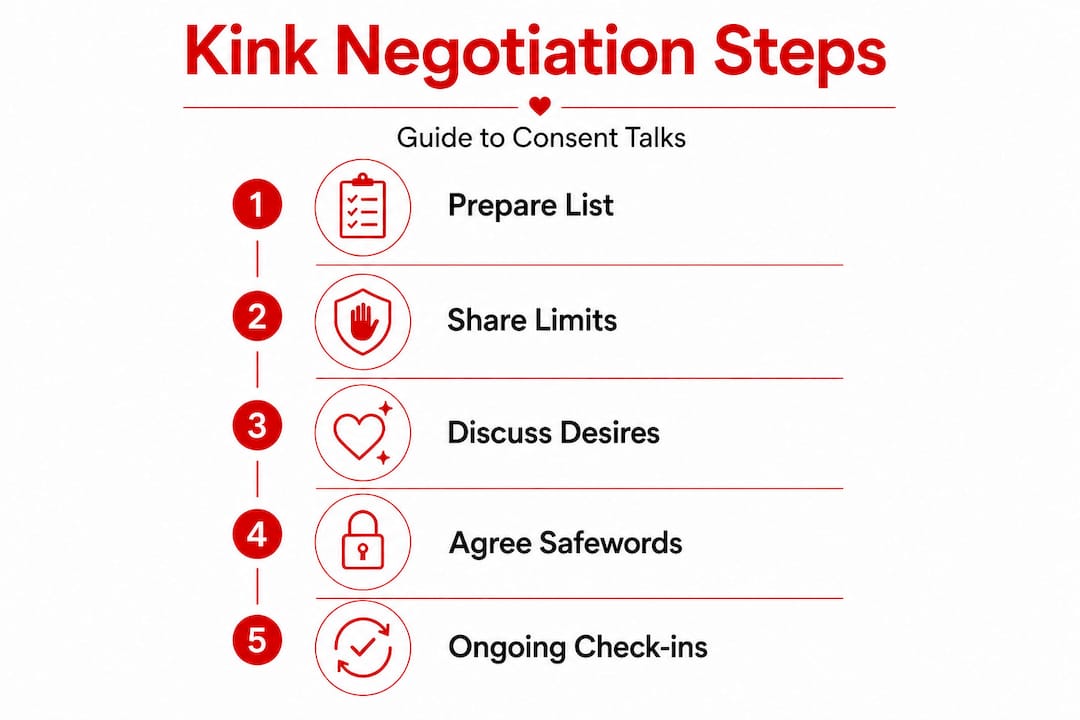
- Open with curiosity, not a checklist. Ask open-ended questions. "What are you hoping to feel during this?" gets you further than "What are your limits?" which can feel clinical and shut people down.
- Get specific about desires. Vague enthusiasm is not a plan. If someone says they're into impact play, ask what implements, what intensity, what body areas are in and out.
- Name your limits without apology. Say them clearly and expect the same in return. No hedging, no "I guess that's okay if you really want to."
- Confirm you've understood each other. Repeat back what you heard. "So you're comfortable with X but want to avoid Y, and if things get too intense you'll say yellow. Did I get that right?"
- Set up in-scene communication. Agree on safewords, signals, and how often you'll check in verbally if needed.
- Talk about aftercare before you need it. Don't leave this to chance. Knowing what someone needs after a scene is part of the negotiation, not an afterthought.
Consent works as a spectrum and requires ongoing enthusiasm beyond the initial agreement. That means checking in during a scene is not a mood-killer. It's proof you're paying attention. A simple "How are you doing?" mid-scene is not breaking the spell. It's deepening the trust.
Pro Tip: If a conversation about limits feels uncomfortable or one person keeps deflecting, that discomfort is data. Don't push through it. Pause, acknowledge it, and figure out what's underneath before you proceed.

Active listening is underrated in BDSM consent discussions. Most people are so focused on what they want to say next that they miss what their partner is actually communicating. Eye contact, pausing before responding, asking follow-up questions. These aren't just good manners. They're how you build the kind of trust that makes intense play feel safe. You can go deeper into how communication shapes safe and satisfying kink for a fuller picture of this.
D/s agreements and power exchange dynamics
Dominance and submission relationships add another layer to negotiation because the power dynamic doesn't just live inside a scene. It can shape how partners interact day to day. D/s agreements outline expectations, boundaries, roles, and communication norms, and they should be flexible and revisited regularly as needs evolve.
Here's a quick look at what a formal versus informal D/s agreement might cover:
| Element | Formal D/s Agreement | Informal Arrangement |
|---|---|---|
| Roles and titles | Explicitly defined and documented | Understood but not written down |
| Limits | Listed in detail with hard/soft distinction | Discussed verbally and trusted to memory |
| Safewords | Agreed on and documented | Agreed on verbally |
| Aftercare | Specified for different scene types | Discussed case by case |
| Review schedule | Set date for revisiting the agreement | Revisited when something feels off |
Neither format is inherently better. What matters is that both people know what they've agreed to and feel free to revisit it. Needs change. Relationships evolve. A D/s dynamic that worked six months ago might need recalibrating now, and that's not a failure. That's a healthy relationship doing its job.
For LGBTQ+ folks in kink spaces, the same principles apply with one addition: don't assume that gender, orientation, or relationship structure maps onto any particular role. A non-binary person can be a dominant. A gay man can be a submissive. Kink doesn't have a default setting. Respecting identities means asking rather than assuming, every time.
If communication around negotiation feels genuinely difficult, whether because of past trauma, anxiety, or just not knowing where to start, kink-aware therapy can be a real resource. Therapists who understand BDSM dynamics can help you work through blocks without judgment.
Handling challenges and safety beyond the conversation
Even the best negotiation can't predict everything. Scenes go sideways. Emotions surface unexpectedly. Someone uses their safeword. What happens next is just as important as everything that came before.
When a safeword gets called, the scene stops. Full stop. No "just a few more seconds," no negotiating in the moment. You check in, you make sure everyone is physically okay, and you stay present. The scene can be discussed later. Right now, the only job is care.
BDSM drop is real and it catches people off guard. It's the emotional and physical crash that can happen after an intense scene, sometimes hours or even days later. Aftercare involves physical and emotional support after scenes to mitigate drop and maintain trust, lasting from minutes to over an hour depending on intensity. Warmth, water, a blanket, quiet presence. Whatever was agreed on in negotiation.
Here's a practical safety checklist for before, during, and after a scene:
- Before: Negotiation completed, limits confirmed, safewords established, health considerations noted, environment checked.
- During: Regular check-ins (verbal or non-verbal), attention to physical and emotional cues, readiness to stop at any signal.
- After: Immediate aftercare as agreed, physical comfort prioritized, no pressure to debrief right away.
- 24 to 48 hours later: Follow-up check-in to address any delayed emotional drop, process the experience, and reinforce connection.
A 24 to 48-hour follow-up check-in addresses emotional drop and deepens connection. Most people skip this step and then wonder why things feel weird a day later. Don't skip it.
One red flag worth naming directly: refusal to negotiate signals potential boundary disrespect and indicates unsafe practice. If someone tells you negotiation is unnecessary, or that it ruins the vibe, or that you should just trust them, that's not confidence. That's a warning. Safe, consensual kink practices require open communication and explicit consent. No exceptions.
My take on negotiation as a living practice
I've seen negotiation treated like a bureaucratic hurdle, something people rush through to get to the "real" part. That framing gets it completely backwards. The negotiation is part of the experience. It's where you learn what someone actually wants versus what they think they're supposed to want. It's where trust gets built before a single rope gets tied.
What I've learned is that the people who negotiate the most thoroughly tend to have the most freedom inside their scenes. When both people know the edges of the map, they can explore the interior without fear. That's not restrictive. That's liberating.
The other thing I'd push back on is the idea that negotiation is a one-time event. Relationships shift. Desires evolve. What felt like a hard limit a year ago might be something you're curious about now, or vice versa. Treating negotiation as an ongoing conversation rather than a box you checked once changes everything. It keeps you honest with yourself and with your partner.
Approach it with curiosity. Ask questions you don't know the answers to. Be willing to hear something that surprises you. That openness is where the really good stuff lives.
— Prenston
Explore kink safely with Kinkykorner
If this got you thinking about how to level up your own negotiation practice, you're in the right place.

Kinkykorner is a community built for adults who take consensual kink seriously. Whether you're new to setting boundaries in BDSM or you've been in the scene for years and want to go deeper, Kinkykorner connects you with resources, guides, and a community of people who get it. You'll find erotic literary content, adult service listings, and a space where frank conversation about desires and limits is not just allowed but encouraged. Come find your people at Kinkykorner and keep the conversation going.
FAQ
What is negotiation in kink?
Negotiation in kink is a pre-scene conversation covering desires, hard and soft limits, safewords, scene logistics, and aftercare. It creates a shared understanding that makes consensual, satisfying play possible.
When should kink negotiation happen?
Negotiation should take place when both partners are calm and not aroused. Scheduling a dedicated conversation outside of sexual activity leads to clearer thinking and safer outcomes.
What is the traffic-light safeword system?
The traffic-light system uses green to mean continue, yellow to mean slow down or adjust, and red to mean stop the scene immediately. It gives partners a clear, real-time way to communicate during play.
What are hard limits vs. soft limits in BDSM?
Hard limits are absolute boundaries that cannot be crossed under any circumstances. Soft limits are activities someone may be willing to explore with caution and explicit agreement on a case-by-case basis.
Why does aftercare matter in kink?
Aftercare provides physical and emotional support after an intense scene to prevent BDSM drop, which is the emotional crash that can follow intense play. A follow-up check-in 24 to 48 hours later helps address any delayed emotional effects and strengthens trust between partners.