
The safest way to migrate as an adult creator is to stop treating any one platform as home. Back up everything, collect a way to reach your fans that you own, vet the new place before you commit, and run old and new side by side until the new one proves itself. Do that and a policy change becomes an annoying month, not the end of your income. Add a discoverable listing that points fans to wherever you currently sell, and you can move without starting from zero. That is what a Kinky Korner listing is for.
This guide is for creators in the kink and adult space in the U.S.: performers, writers, artists, podcasters, studio owners, anyone whose income sits on someone else's servers. We keep it frank, because the stakes are your rent.
TL;DR
- Moving is not reposting. Subscribers do not transfer with you, and some drop-off is inevitable.
- Before anything else, back up your content and start collecting fan emails so you can reach people if you lose access.
- Run two places at once. A gradual move beats a hard shutdown.
- Vet the new home: who runs it, payout minimums, commission, verification, DMCA handling and its history.
- No platform ends policy risk. Spread yours across two or three channels and keep a public listing that points fans to your current home.
Table of Contents
- Why creators move in the first place
- What actually moves, and what does not
- The migration plan, step by step
- How to vet the new home
- Protecting yourself from migration scams
- Spread the risk so the next move is smaller
- Put a listing behind your next move
- FAQ
- Sources
Why creators move in the first place
Nobody migrates for fun. It is rebuilding, and it usually starts with a policy shift you did not vote on.
In August 2021, a major subscription site announced it would ban explicit content after pressure from banking partners and payment processors. VICE's reporting on the reaction captured creators who felt betrayed by the site they had helped make valuable. The decision was later reversed, but the scramble it caused is the point: a single announcement put a lot of people's income in question overnight.
It happens outside subscription sites too. In 2025, a marketplace for indie games, books, comics and art deindexed more than 20,000 adult pages amid payment-processor pressure. The Verge also noted that many adult creators had already hopped from one blogging platform to a membership site to a digital storefront, and then hit restrictions again. A new platform does not erase future policy risk. It just resets the clock.
The pattern is consistent: the rules come from the payment chain. Payment networks' documentation and consent requirements for adult sellers put compliance pressure on platforms, and platforms pass it down to you. Knowing that tells you what to look for in any new home: how it gets paid, and how stable that arrangement looks.

What actually moves, and what does not
Here is the unglamorous truth. Your files move. Your audience does not, not automatically.
What you can usually take with you:
- Your original photos, videos, audio, scripts, comics and artwork, if you kept originals.
- Your captions, titles, tags and price lists, if you saved them somewhere.
- Your brand: handle, bio, logo, voice.
What you generally cannot take:
- Subscriber accounts. VICE reported that some sites offered integrated systems to migrate content, but it did not describe any way to carry over subscriber accounts or other account data.
- Your platform ranking, search position and recommendations.
- Reviews, comments and the social proof built on that page.
The cost is bigger than lost sales. The Verge described the practical burden: setting up new accounts, rebuilding a backlog of posts and paying for new services. Budget time and money for that before you jump.
And discoverability is its own loss. When the marketplace above deindexed NSFW-tagged works, paid content stayed available to people who had already bought it, but creators still lost discovery and sales. Existing customers keep access; new customers cannot find you. If your whole funnel depends on in-platform search, that is the part that breaks.
The migration plan, step by step
1. Do not rush
VICE's adult-industry expert, Alex Sim-Wise, recommended avoiding rash action, backing up content and researching other platforms. Panic moves are how people end up on a sketchy site with a bad contract. Unless you are locked out right now, you have more time than your stomach says.
2. Back up everything
Download every original you can, and organize it. A folder per release with the file, the title, the caption, the tags, the price and the posting date makes re-uploading a copy-and-paste job instead of an archaeology dig. Keep one copy offline and one in encrypted storage. If you work with other people, keep their signed releases and ID verification records with the matching files. Many destinations will ask for them again, and our guide to the adult content posting process walks through the paperwork side.
3. Build a list you own
This is the single most useful step, and it works even if you never move. Sim-Wise's advice was to collect fans' emails through a survey, so you can still contact them if you lose access to your platform.
Keep the ask simple: a short survey that tells fans what you plan to post and asks for an email in return. Use a business email address that is separate from your personal one. Tell people what you will send and how often, and honor unsubscribes. A list of 300 people who open your emails is worth more than 3,000 followers on an account that can vanish.
4. Research the destination before you touch it
See the next section. Do not upload a single file until you have gone through the checklist.
5. Run both places at once
A hard cutover loses people. A gradual move keeps them. VICE described a creator who planned to keep using her current site while exploring clip and subscription platforms, which is the blueprint: add the new home, keep the old one earning, and shift your best content and attention as the new one proves itself.
A workable pace looks like this:
- Week 1: set up the new account, verify it, and post a small test batch.
- Weeks 2 to 4: announce the new place to your email list and your social channels. Give people a reason to follow: exclusive posts, early access, a launch discount.
- Month 2 onward: shift your exclusives to the new home while the old one carries older content, then taper.
6. Tell people where you went
Announce on every channel you control, then use your community. The Verge noted creators using their communities and creator networks to share information about new locations after disruptions. A short, calm post that says where you are now and how to follow beats a long emotional thread. Keep the link in one place that you can update, so you never have to redo every bio.
7. Track what survives
After 30 and 90 days, compare subscribers, revenue per fan, refund and chargeback rates and the share of income coming from each channel. If one place now makes up all your income, you have recreated the original problem. Move on to the next section.
How to vet the new home
VICE's creator-industry reporting lists what a creator weighing a move should check: who runs the platform, its DMCA policy, its payout minimum, user and creator verification, whether it has been hacked or accused of misconduct, its creator commission and whether it supports marginalized communities. That reporter's source also weighed whether a platform supported Black and transgender creators next to the business terms and safety, which is a fair test for any inclusive kink community.
Here is the same list as a working table you can fill in for each candidate.
| Check | What to look for | Why it matters |
|---|---|---|
| Who runs it | A named company, a real contact, a track record | You need someone accountable when money or content goes missing |
| Commission | The exact percentage, plus payment fees on top | It decides what you keep. Our fee breakdown shows how to compare |
| Payout minimum and schedule | Threshold, frequency, methods | A high minimum can trap small earnings for months |
| Verification | Checks on both creators and buyers | Protects you and your fans from fraud and underage content |
| DMCA process | A clear takedown policy and a counter-notice route | Leaked and pirated content is a constant risk |
| History | Past breaches, misconduct claims, sudden rule changes | Past behavior predicts future behavior |
| Community fit | Support for marginalized creators, kink-literate moderation | You should not have to defend your niche |
| Payment stability | How it gets paid, and which processors it depends on | Payment compatibility drives what a platform allows |
That last row deserves a second look. When a marketplace restored free adult pages while it kept talking with processors about paid content, The Verge showed that payment compatibility affects what adult content a platform can allow. The same site told creators to make sure their NSFW material met payment processor rules while it audited content. Read the content rules and the payment terms of anywhere you move, and read them again when they change. Our guide to which adult payment processors keep U.S. merchants live goes deeper, and the piece on collecting payments discreetly covers the privacy side. For a wider look at destination types, see our guide to the best platforms for adult creators.
Match the type of platform to your work
You do not need a brand list. You need to know which kind of place fits what you sell.
- Subscription sites suit recurring content and a loyal base, but they own the relationship and the search.
- Clip and video-on-demand stores suit one-off sales and back catalogs.
- Storefronts for books, comics and art suit literary and visual work, and carry the highest processor risk when rules tighten.
- Directories and marketplaces suit discovery, in-person services, events, studios and retail, and they do not hold your fans hostage.
- Your own site and email list are the only places no one else can switch off.
Most creators end up with two or three of those, not one.
Protecting yourself from migration scams
A mass exodus attracts opportunists. Fans and creators who are scared and in a hurry are easy marks. We did not find a checked source on migration scams specifically, so treat the following as common-sense hygiene, not statistics.
- Be wary of anyone who offers to move your account for you. If a service wants your login, your password or your two-factor codes, that is the red flag. A genuine migration tool asks you to export files, not to hand over access.
- Find the real site yourself. Look-alike domains and fake support accounts show up whenever a platform is in the news. Type the address or follow a link you already trust.
- Turn on two-factor authentication on every account, and use a unique password for each in a password manager.
- Do not pay to be "verified faster" or to "unlock" a payout. Real platforms verify you through their own dashboard.
- Read before you sign. Look for exclusivity clauses, licenses that let the platform reuse your content, and fees hidden in payout terms.
- Ask other creators. Peers in your community will usually know within days if a new place is shady, which is how most of us learn anyway.
Our piece on the role of trust in the adult industry covers how to read the signals, and our six-step listing verification guide shows what a careful marketplace checks before it publishes a profile.
Spread the risk so the next move is smaller
The cleanest migration is the one you barely notice, because you already have somewhere else to point people. That means choosing two or three channels, not twelve, and giving each a job: one to earn, one to find new fans, one to keep your list. We cover how to pick them in cross promotion for adult creators, and if social media is part of your funnel, learn the rules before you build on them with our guide to X's adult content policy. For more ways to get seen without relying on one feed, read how to promote adult content and maximize revenue.
A short stability checklist:
- A current backup of every original file.
- An email list you own, with a recent send.
- At least two places where fans can pay you.
- One public page that always shows your current home.
- A record of each platform's commission, payout minimum and content rules, updated when they change.
What we think about moving
We run a marketplace for adult and kink services, so we watch what happens when a creator's home changes under them. Here is where we land.
Your audience is yours, not the platform's. The platform is a venue. Good ones are worth using, but you should always know where the exit is, and the people who walk through it with you should be able to find you.
That is why we built Kinky Korner as a directory and not a locked room. Businesses and service providers can list what they offer across categories like adult entertainment, professional services, retailers and studios, creators, podcasts and kink events, so people looking for you can find you in one place. When you move, the listing is the page you update, and your fans know where to look.
We also think the kink community deserves a place that treats it as a community, not a risk category. Our aim is a hub that serves both sides: the professionals who make the work and the people who want to find it.
Prenston
Put a listing behind your next move
If you are about to migrate, a discoverable listing is the easiest piece to put in place first. On Kinky Korner you can start with a free basic plan, or step up to the Monthly plan at $4.99 per month or the Yearly Premium plan at $149.95 per year for premium exposure. Businesses, performers, studios, podcasters and event organizers list their services, and readers browse by category.
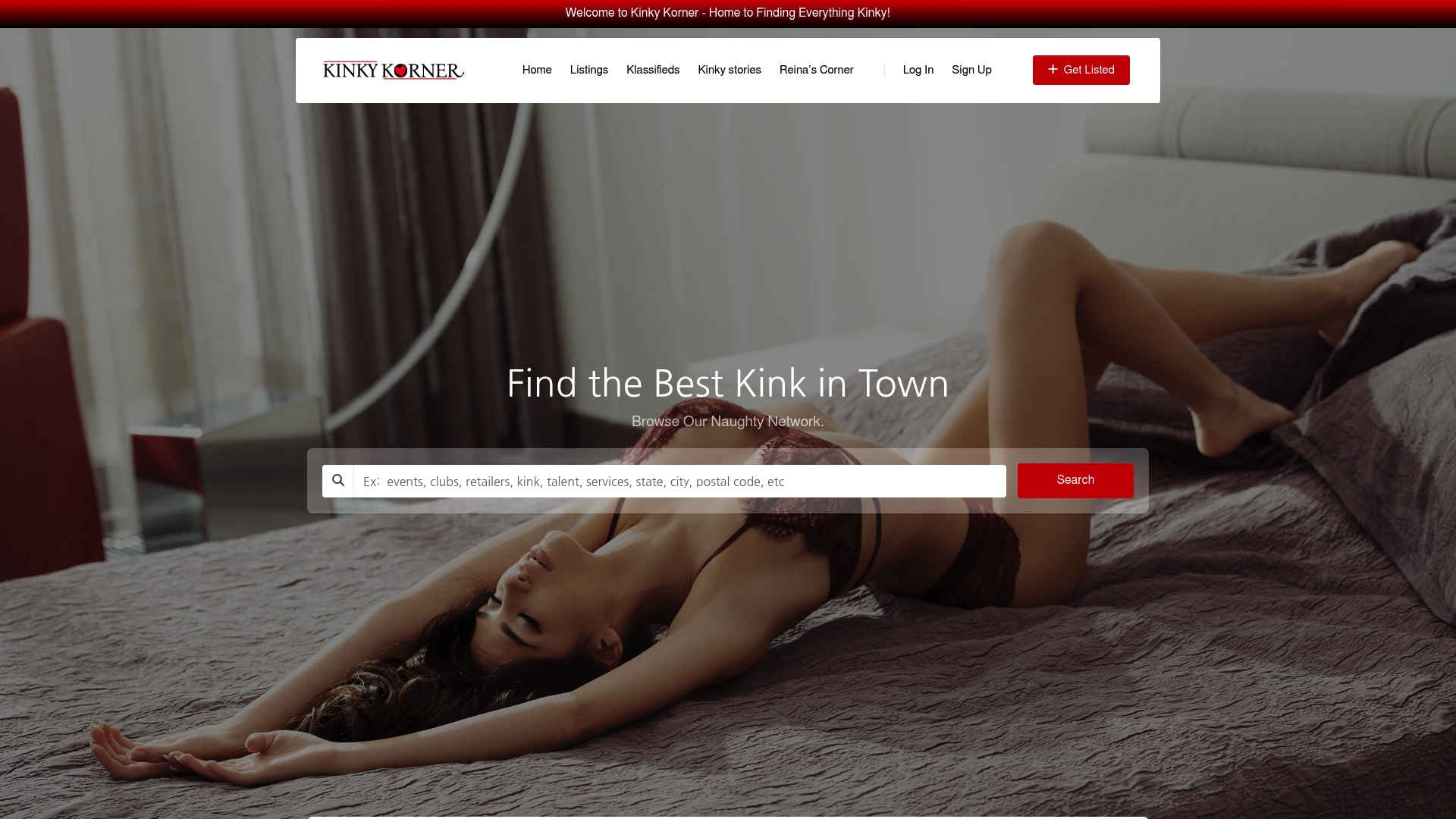
See the plans and create your listing, or head to Kinky Korner to browse the categories first.
FAQ
Will my subscribers follow me to a new platform?
Some will, but not all. VICE's reporting says some drop-off is inevitable, and subscriber accounts are not something a migration tool carries over. Your best protection is an email list you own and a clear announcement on every channel, so the fans who care know exactly where to go.
Should I delete my old account right away?
No, not unless you have to. Keep the old account running while the new one gets going, then shift your exclusives over time. A gradual transition keeps income flowing and gives you a way to tell people where you went.
What should I check before choosing a new platform?
Check who runs it, its commission, its payout minimum, how it verifies creators and buyers, its DMCA policy, its history of breaches or misconduct, and whether it supports marginalized creators. Also check how it gets paid, because payment rules shape what a platform can allow.
Can I move my content with a migration tool?
Some sites offer integrated tools to move content, but they have not been described as moving subscribers. Never give a third party your password or two-factor codes. Download your originals yourself and upload them through the new platform's own dashboard.
Is there a platform that removes policy risk completely?
No. Creators have moved from one platform to the next and met new restrictions again. The practical answer is to use two or three channels, keep your own email list and maintain a public listing that points to your current home.
Sources
- VICE: creators react to the explicit-content ban announcement
- VICE: sex workers on the instability of subscription platforms
- The Verge: what adult creators do after platform crackdowns
- The Verge: adult games delisted amid payment-processor pressure
- The Verge: free adult pages restored while paid-content talks continued
- The Verge: payment networks and the 2021 explicit-content ban
- The Verge: marketplace removes adult games, requires processor compliance