
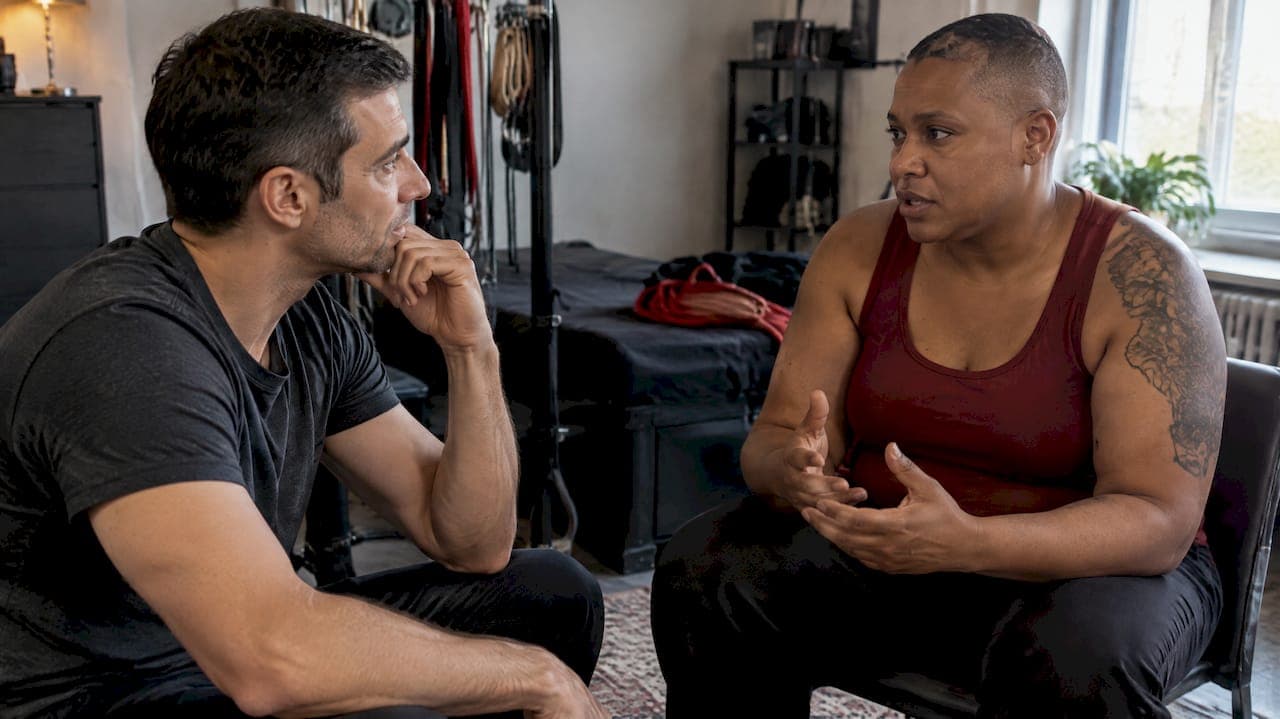
If you want a beginner-friendly safety shorthand, SSC has your back. If you're planning higher-risk play and want language that respects how real risk actually works, RACK is the better fit. Both demand enthusiastic consent and a working safeword. Neither one is a free pass to skip the hard conversations.
TL;DR:
- For suspension, breath play, or blood play, use RACK’s risk awareness and match the plan to each partner’s training; downgrade the activity when needed.
- Before play, agree on hard and soft limits, confirm technical competence, and choose a safeword plus a nonverbal signal in case speaking becomes impossible.
- For rope suspension, keep safety shears within reach and assign an uninvolved spotter; also decide in advance who will call for help.
- RACK does not excuse weak negotiation, especially when experience or power differs; established partners should keep checking consent rather than relying on old agreements.
- Participants should be sober, set an emergency plan before play, and check in afterward, seeking medical care if anything feels wrong.
Table of Contents
- What do SSC and RACK actually mean?
- Head-to-head: how each framework treats risk
- Pre-scene, in-scene, and aftercare: the tools that actually matter
- Where SSC and RACK go wrong in practice
- PRICK and the 4Cs: filling in the gaps
- How to pick your framework for tonight's scene
- Why the framework matters less than the habit
- FAQ
- Sources
What do SSC and RACK actually mean?
SSC stands for Safe, Sane, and Consensual. It showed up in the early 1980s, most often traced to the Gay Male S/M Activists in New York, who wanted a simple, public-facing phrase to separate consensual kink from abuse. It worked. It gave outsiders (and nervous newcomers) something they could hold onto.
RACK, Risk-Aware Consensual Kink, came later. Gary Switch coined the term in 1999 at the Eulenspiegel Society, partly as a direct answer to SSC's limits. His argument: nothing involving rope, impact, breath, or blood is ever fully "safe," so pretending otherwise sets people up to get blind sided.
- 1983: SSC emerges from early community organizing around safer, consensual kink.
- 1999: RACK arrives, trading the promise of safety for informed awareness of risk.
- 2014 onward: Academics and educators start proposing frameworks like the 4Cs to fill gaps both acronyms leave open.
Head-to-head: how each framework treats risk
SSC leans hard on the word "safe." That's its strength and its weakness. For a first flogging scene or a beginner's introduction to bondage, "safe" often feels comforting and reasonably reliable. But critics point out that "safe" starts to crack under scrutiny once you're talking about suspension rope, breath play, or edge work where injury is a real possibility no matter how careful anyone is. The word "sane" draws its own criticism too, since it can read as dismissive toward people managing mental illness who still practice kink responsibly and well.
RACK skips the comfort blanket. It assumes risk is baked into the activity and asks participants to get informed, not reassured. That's why RACK tends to show up more in conversations about suspension bondage, knife play, or heavy impact, while SSC still dominates beginner workshops and introductory guides.
The primary difference between the two frameworks comes down to posture toward danger: SSC tries to minimize it, RACK tries to name it honestly.
- Low-risk, beginner-friendly activities: SSC language fits naturally.
- High-risk or advanced play: RACK's informed-consent framing holds up better.
Pre-scene, in-scene, and aftercare: the tools that actually matter
A framework is a philosophy. What keeps people safe is the groundwork. NCSF's consent guidance stresses explicit prior permission before anything happens, not a vague green light given once and assumed to cover everything that follows.
- Before the scene: Talk through limits, hard and soft, and confirm competency for anything technical like rope suspension or needle play. Decide if this needs a written agreement or if a clear verbal one will do.
- During the scene: Agree on a safeword and a nonverbal signal for when someone can't speak. For rope or suspension, keep safety shears within reach and have a spotter who isn't emotionally wrapped up in the scene.
- After the scene: Check in emotionally, not just physically. Seek medical follow-up if anything feels off, and revisit limits before the next scene based on what you both learned.
Training matters more than the label you use. If you're new to a skill, take a class or shadow someone experienced before trying it solo. Our kink safety guide breaks this down activity by activity, and our negotiation guide has scripts for the pre-scene conversation if you're not sure where to start.
Pro Tip: Write down limits and safewords somewhere both partners can reference later, texts work fine, because memory gets fuzzy mid-scene and fuzzier after a few drinks.
Where SSC and RACK go wrong in practice
Every framework gets misused eventually. SSC's biggest problem is vagueness: "safe" and "sane" sound reassuring but don't tell anyone what to actually do, and the ableist undertone in "sane" has pushed plenty of educators toward other language entirely.
RACK has its own failure mode. Because it accepts risk as a given, some partners weaponize it to dodge accountability, "I told you it was risky" isn't consent, it's a loophole. This gets worse when there's a real experience gap or power imbalance in the relationship. Research on BDSM consent communication found that negotiation gets noticeably looser in established relationships compared to one-off scenes, which is exactly when complacency creeps in.
- SSC's vagueness can leave new practitioners without real guidance.
- RACK can get twisted into an excuse to skip real safety planning.
- Power imbalances make both frameworks less reliable without community accountability.
PRICK and the 4Cs: filling in the gaps
Two other frameworks try to patch what SSC and RACK miss. PRICK, Personal Responsibility Informed Consensual Kink, puts the weight on each individual to own their choices rather than outsourcing responsibility to a label.
The 4Cs, proposed in academic work from 2014, stands for Caring, Communication, Consent, and Caution. It treats consent as an ongoing conversation rather than a checkbox you tick before a scene starts.
- PRICK centers individual accountability over group-level safety promises.
- The 4Cs reframes consent as continuous, not a one-time agreement.
- Many experienced players blend RACK's risk-awareness with the 4Cs' ongoing communication for higher-stakes scenes.
Our terminology guide covers these terms if you want the full picture before your next negotiation.
How to pick your framework for tonight's scene
- Rate the activity's actual risk level, impact play and bondage sit lower than suspension, breath play, or blood play.
- Check both partners' experience and training for exactly what's planned.
- Confirm sobriety, a clear head is non-negotiable for consent to mean anything.
- Set a safeword and a backup nonverbal signal before anything starts.
- Agree on an emergency plan, including who calls for help and when.
Red flags that should stop a scene cold: pressure to skip the negotiation conversation, dismissing limits as overcautious, or one partner clearly out-experiencing the other without adjusting the plan.
A beginner couple trying light bondage for the first time leans on SSC: clear limits and a safeword, and focuses on activities that can be stopped quickly and safely. An experienced pair planning a suspension scene leans RACK, with a trained rigger, a spotter, and shears on hand, because "safe" was never really on the table.

Pro Tip: When in doubt, downgrade the scene, not the conversation.
Why the framework matters less than the habit
We've watched enough negotiation conversations fall apart to know the acronym was never the point. SSC and RACK are shorthand, nothing more, and the couples who stay safe are the ones who keep talking long after the labels stop being useful. Consent isn't a form you fill out once. It's a muscle you keep using, scene after scene, especially when the stakes go up.
If you're building that habit with a partner, our communication guide has real examples of what ongoing check-ins actually sound like, not just theory.
— Prenston
FAQ
What does SSC mean in slang?
SSC stands for Safe, Sane, and Consensual, a framework from the early 1980s meant to signal that BDSM activity is consensual and not abuse. It's used as shorthand in kink communities rather than general slang.
What does SSC mean in dating?
In a dating or kink context, SSC signals that someone expects play to stay within agreed limits with ongoing consent and basic safety precautions in place. It's less common outside kink-specific conversations.
What are the 4 Cs of kink?
The 4Cs are Caring, Communication, Consent, and Caution, a framework introduced in academic work to treat consent as an ongoing process rather than a one-time agreement. It's often used alongside RACK for higher-risk scenes.
What does SSC mean?
SSC means Safe, Sane, and Consensual, one of the two main consent frameworks used in kink alongside RACK (Risk-Aware Consensual Kink). It emphasizes minimizing harm, while RACK emphasizes informed awareness of risks that can't be fully eliminated.
How do I find safety resources or events near me?
Our categories page lists kink events, professional services, and educators by category if you're looking for in-person guidance. Providers can also list their services through a Free Listing, Monthly, or Yearly Premium plan starting at $4.99 per month.
Sources
- SSC and RACK origin notes
- NCSF 'Got consent for kink' guidance (2024)
- Academic discussion of the 4Cs and consent frameworks