

Diversity in adult content is defined as the authentic representation of varied identities, body types, sexual orientations, ethnicities, and gender expressions within adult media. The role of diversity in adult content goes far beyond casting choices. It shapes how audiences understand their own desires, how performers experience safety and dignity on set, and how the industry builds lasting cultural relevance. Transgender-related content searches increased 75% between 2020 and 2022. That number tells you where real audience appetite is heading. Kinkykorner exists at the intersection of that appetite and authentic expression.
What do current statistics reveal about diversity in the adult industry?
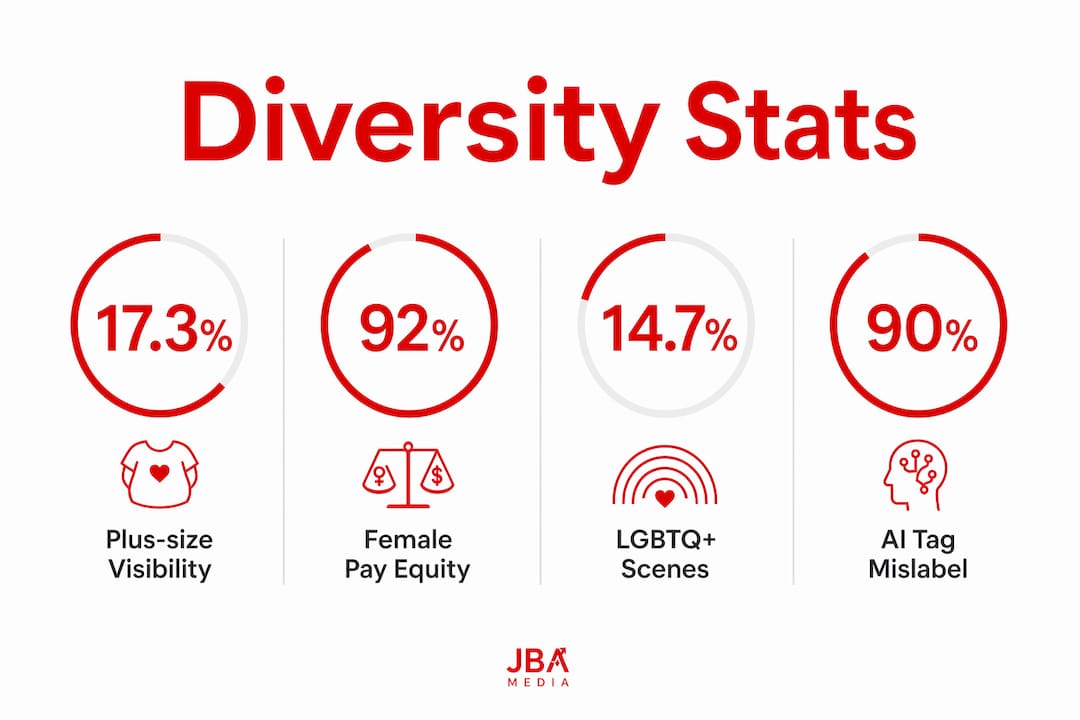
The numbers on inclusive representation in adult content are both encouraging and sobering. Plus-size performer visibility rose from 9% in 2020 to 17.3% in 2023, with promotion algorithms boosting their visibility by 22% in 2023. That is real progress. But progress on one front does not mean the whole picture is clean.
Pay equity remains a live issue. Female performers received only 92% of comparable male compensation in 2022. Women have narrowed the gender pay gap by 32% between 2018 and 2023, which shows movement, but the gap still exists. For marginalized performers, the financial reality is often worse.

The data on LGBTQ+ representation is mixed. Gay male scenes hold 14.7% of total output, and asexual representation is growing at 45% yearly as of 2026. That growth signals a genuine shift in what audiences want to see. Platforms that ignore these trends are leaving both money and meaning on the table.
Content categorization is where things get ugly fast. 90% of diversity-related meta-tags on major adult sites are generated by AI that frequently misidentifies ethnicity. That is not a minor technical glitch. It is a system that actively distorts how performers are seen and how audiences find content. 45% of performers surveyed reported that ethnic category tagging perpetuates harmful stereotypes.
| Metric | 2020 | 2023/2026 |
|---|---|---|
| Plus-size performer visibility | 9% | 17.3% |
| Algorithm visibility boost (plus-size) | N/A | +22% |
| Gender pay gap reduction (since 2018) | Baseline | 32% narrowed |
| Trans-related search growth (2020–2022) | Baseline | +75% |
| AI-misidentified ethnicity tags | N/A | 90% of tags |
Pro Tip: If you create adult content, audit your own metadata. Do not rely on platform AI to categorize your identity accurately. Manual tagging gives you control over your narrative and protects your brand.
Check out the adult content trends in 2026 for a broader look at how representation is shifting across the industry right now.
How does diversity shape sexual identity and audience experience?
Adult content acts as a vehicle for identity development and self-acceptance, allowing people to explore desires without judgment against societal norms. That is not a soft claim. For many viewers, seeing their body type, orientation, or cultural background reflected in erotic content is the first time they feel their sexuality is valid. That moment matters.
Authentic representation does something specific. It shifts adult content away from fetishizing diversity toward respecting complexity and creating relatable erotic experiences. There is a real difference between content that treats a performer's identity as a novelty and content that treats it as a full human reality. Audiences feel that difference, even if they cannot always name it.
"Inclusion is more than visible diversity. It is a feeling of belonging critical for dignity, safety, mental health, and performance." — Pineapple Support
The psychological effects of inclusive adult content on viewers include:
- Reduced shame around non-normative sexual identities and body types
- Greater confidence in communicating desires to partners
- Increased empathy toward sexual experiences different from one's own
- A stronger sense that one's erotic life is normal and worth exploring
For a deeper look at how representation influences sexual confidence, the adult creatives guide to thriving in erotic art covers this from the creator's side with real honesty.
What are the structural barriers to true inclusion in adult entertainment?
The biggest barrier is not bad intentions. It is a system built around narrow profitability assumptions that has never been seriously redesigned. AI-driven tagging misidentifies ethnicities and reinforces stereotypes, forcing performers to conform to marketable but narrow characterizations. Performers learn quickly that stepping outside those characterizations means losing algorithmic visibility. So they perform the stereotype. The feedback loop tightens.
Marginalized performers face burnout, systemic racism, and pressure to meet stereotype-based expectations that drain both creativity and mental health. Many diversify income through music or independent content production just to reclaim some autonomy. That is not a career path. That is survival.
The safety gap is concrete. 72% of LGBTQ+ performers report inadequate safety protocols in mainstream studios. Gender-affirming gear, consent-forward production practices, and mental health support are not standard. They are exceptions. The safe spaces guide for the adult industry breaks down what those protections actually look like in practice.
Tokenism is the other trap. A studio can cast one performer of color, one plus-size performer, and one nonbinary performer and call it diversity. That is not inclusion. Inclusion is about psychological safety and agency, not headcount. When performers do not feel safe to set limits, negotiate scenes, or speak up about discomfort, the diversity on screen is a performance of inclusion, not the real thing.
- Algorithm bias forces performers into stereotype-based categories to maintain visibility
- Pay gaps persist for female and marginalized performers despite measurable progress
- Safety protocols for LGBTQ+ performers are absent or inconsistent in mainstream production
- Tokenism replaces genuine culture change with surface-level casting decisions
- Emotional labor and mental health costs fall disproportionately on marginalized creators
Pro Tip: If you are a performer, document your consent agreements and scene parameters in writing before every shoot. Psychological safety starts with paper, not promises.
How can the industry build genuine inclusion in adult media?
Real inclusion requires culture change, not quota filling. True inclusion measures lived experience through psychological safety and agency rather than representation statistics. That means producers need to ask different questions. Not "do we have enough diversity on screen?" but "do our performers feel safe, respected, and fairly paid?"
Here is what that looks like in practice:
- Audit metadata manually. Do not let AI categorize performers by ethnicity or identity. Build human review into the tagging process.
- Pay performers equitably. Publish pay structures. Transparency is the fastest way to close gaps that have persisted for years.
- Invest in marginalized creators as leaders. Sponsor and mentor performers of color, LGBTQ+ creators, and plus-size talent for production and directorial roles, not just on-screen work.
- Build consent and safety into production contracts. Gender-affirming gear, mental health support, and clear scene limits should be standard, not negotiated extras.
- Support creator-owned platforms. Independent platforms give marginalized creators control over their own narrative, pricing, and audience relationships.
| Approach | What it addresses |
|---|---|
| Manual metadata review | AI stereotype reinforcement in tagging |
| Transparent pay structures | Gender and ethnicity pay gaps |
| Creator mentorship programs | Systemic barriers to leadership roles |
| Consent-forward contracts | Safety gaps for LGBTQ+ performers |
| Creator-owned distribution | Algorithm bias and visibility inequity |
The shift from performative diversity to genuine inclusion is not fast. But platforms and producers that commit to it build deeper audience loyalty and healthier working environments. Both outcomes matter. The content creation strategy guide for adult sites has practical frameworks for creators who want to build this kind of authenticity into their work from day one.
Key takeaways
Diversity in adult content only creates lasting change when it moves from visible representation to genuine psychological safety and equitable treatment for all performers.
| Point | Details |
|---|---|
| Representation is growing but uneven | Plus-size and trans visibility have risen sharply, but pay gaps and safety failures persist. |
| AI tagging actively harms inclusion | 90% of ethnicity tags are AI-generated and frequently wrong, reinforcing stereotypes. |
| Identity and audience experience are linked | Authentic representation reduces shame and builds sexual confidence for viewers. |
| Structural barriers require culture change | Tokenism and algorithm bias cannot be fixed by casting alone. |
| Inclusion is measured by safety, not headcount | Psychological safety and agency are the real metrics of a genuinely inclusive industry. |
Why the feeling of inclusion matters more than the optics
I have watched this industry celebrate diversity milestones while the performers driving those milestones quietly burn out. The visibility numbers go up. The press releases go out. And the performer of color who made that content possible is still fighting to get paid what their white co-star got, still navigating a set where no one thought to ask about their limits, still being tagged under a category that flattens their entire identity into a search term.
That gap between optics and reality is where the real work lives. Diversity in adult media is not a marketing angle. It is a structural commitment. When a platform or studio treats inclusion as a feeling rather than a checkbox, the content gets better, the performers stay longer, and the audience feels it. You feel it as a viewer when the content is made by someone who actually belongs in the room, not someone who was invited in to fill a slot.
The industry is moving. Slowly, unevenly, but moving. The creators and platforms that will define the next decade are the ones building cultures where every performer walks in knowing they are safe, valued, and seen as a full human being. That is not idealism. That is just good business, and it is the right thing to do.
— Prenston
Kinkykorner and the space for authentic adult expression
Kinkykorner is built for creators and readers who are done with content that flattens identity into a category. The platform gives adult creators a real space to list their services, share erotic literary and artistic work, and connect with an audience that actually wants what they are making. Diverse voices are not a feature here. They are the foundation. Whether you are a creator ready to own your narrative or a reader looking for content that reflects the full range of human desire, explore Kinkykorner and find what the mainstream keeps missing. Real representation starts with platforms that make room for it.
FAQ
What is the role of diversity in adult content?
Diversity in adult content means representing varied identities, body types, orientations, and ethnicities to reflect real human experience. It shapes audience sexual confidence, performer wellbeing, and the cultural relevance of the industry.
Why does inclusive representation matter for viewers?
Seeing your identity reflected in adult content reduces shame, builds sexual confidence, and increases empathy toward other experiences. Adult content functions as a space for identity development and self-acceptance.
How does AI tagging harm diversity in adult media?
90% of diversity-related meta-tags on major adult sites are AI-generated and frequently misidentify ethnicity, reinforcing harmful stereotypes. This forces performers to conform to narrow characterizations to maintain algorithmic visibility.
What is the difference between diversity and inclusion in adult entertainment?
Diversity counts who is on screen. Inclusion measures whether those performers feel psychologically safe, fairly paid, and respected. Representation without inclusion is tokenism.
How can adult content creators promote genuine inclusion?
Creators can audit their own metadata, publish transparent pay structures, use consent-forward contracts, and support creator-owned platforms that give marginalized voices direct control over their work and audience relationships.