

Seven distinct types cover almost everything paid erotic and kink coaching offers: sensuality coaching, kink/BDSM coaching, fetish coaching, erotic performance coaching, somatic intimacy coaching, couples erotic coaching, and scene/safety training or workshops. Each has its own goals, session format, and safety expectations, and the frameworks that matter most across all of them are SSC and RACK, the consent standards that shape how coaches negotiate limits before anything happens.
Pro Tip: Before you book anyone, check whether their specialization actually matches your goal. A generalist coach can talk you through communication, but a niche dynamic like rope bondage or D/s power exchange calls for someone with direct scene experience.
- Next step for consumers: ask about the coach's specific specialization, their consent process, and what a first session actually includes.
- Next step for providers: list your niche clearly, publish a consent/safety statement, and state your session format up front. Kinkykorner exists for exactly this kind of listing.
Key Takeaways
Effective intimate coaching depends on matching a coach's specific specialization to a client's exact goal, backed by clear consent frameworks and visible safety policies.
| Point | Details |
|---|---|
| Seven core types exist | Sensuality, kink/BDSM, fetish, erotic performance, somatic, couples erotic, and scene/safety training cover the field. |
| Specialization beats generalism | A coach with direct experience in your specific dynamic troubleshoots better than a generalist. |
| Sessions follow a fixed flow | Intake, negotiation, exercises or demonstration, and aftercare should appear in every legitimate session. |
| Listings need visible safety statements | Consent policy, boundaries, and cancellation terms reduce booking friction and build trust. |
| Kinkykorner connects niche providers to matched buyers | Listings let providers state specialization and safety policy directly, helping consumers vet before booking. |
Table of Contents
- Types of Intimate Coaching and What Each One Delivers
- Who Books Each Type and How Sessions Get Delivered
- What Happens in a Session: Intake, Negotiation, and Aftercare
- How to Vet a Coach and How to Write a Listing That Converts
- Why Scope and Specialization Decide Whether Coaching Works
- List or Book Intimate Coaching on Kinkykorner
- Sources
Types of Intimate Coaching and What Each One Delivers
Sensuality coaching rebuilds a client's relationship to touch, pleasure, and their own senses through breathwork, mindfulness, and body-awareness exercises. The typical goal is confidence, not performance. Clients want to feel present in their bodies again, and sensuality coaching leans on somatic, mindfulness-based techniques rather than clinical talk therapy.
Kink/BDSM coaching covers power exchange, bondage technique, and the emotional architecture of D/s dynamics. It's part skills training, part relational coaching. A coach might walk a new submissive through negotiating limits, or help a dominant partner refine rope technique and aftercare habits. Some coaches build full curriculum-style lesson plans around a client's specific goals rather than running one-size-fits-all sessions.

Fetish coaching zeroes in on a single interest area, like foot worship, latex, or impact play, helping clients build technique and confidence within that specific practice.
Erotic performance coaching trains clients for cam work, professional domination, or other paid performance roles. This is often where business mentoring overlaps with technique coaching, since pro-domme mentoring programs frequently bundle marketing advice with scene skills.
Somatic intimacy coaching overlaps with sensuality work but focuses more heavily on nervous-system regulation. Think slow, consent-based touch practice designed to reduce performance pressure entirely.
Couples erotic coaching helps two partners rebuild connection through guided touch and communication exercises, often without explicit sexual content at all.
Scene/safety trainers and workshop facilitators teach broader technique and risk-awareness, usually to groups: flogging form, suspension basics, or negotiation frameworks.
Hands-on demonstration is common in kink/BDSM, fetish, and scene training. Sensuality and couples work stays mostly verbal and exercise-based. None of this is therapy. Legitimate coaching stays forward-facing, built on homework and next steps rather than diagnosis or trauma processing, and any coach claiming otherwise without a license is a red flag.
- Sensuality coaching: sensory confidence, comfort with touch
- Kink/BDSM coaching: safer technique, negotiation skills
- Fetish coaching: deeper mastery of one specific interest
- Erotic performance coaching: camera presence, client management
- Somatic intimacy coaching: nervous-system regulation, reduced performance anxiety
- Couples erotic coaching: reconnection, mutual consent practice
- Scene/safety training: group-level risk literacy
Who Books Each Type and How Sessions Get Delivered
Beginners tend to start with one-on-one sensuality or kink coaching, where pacing is slower and questions get individual attention. Experienced players often book scene/safety workshops or short mentoring packages to sharpen a specific technique. Couples gravitate toward joint sessions built around guided touch rather than performance goals. Erotic entrepreneurs, meanwhile, usually want performance coaching bundled with a business mentoring track.
Delivery formats split roughly the same way:
- Private one-on-one sessions: most common for kink/BDSM, fetish, and somatic coaching
- Couples sessions: built for relationship-focused, non-performance work
- Group workshops: efficient for safety training and technique demonstrations
- Online consults: work well for negotiation coaching, communication skills, and business mentoring, less well for hands-on technique
A new submissive learning rope safety usually needs a private, in-person session with real hands-on correction. A prodomme building a client base might choose a multi-session mentoring package that mixes technique refinement with marketing strategy. A couple rebuilding intimacy after a rough patch often does better in a slower-paced joint session focused on touch, not tasks.
What Happens in a Session: Intake, Negotiation, and Aftercare
Every legitimate session starts with intake: goals, experience level, and any hard limits. From there, negotiation sets the specific boundaries for that session, using frameworks like SSC (safe, sane, consensual) or RACK (risk-aware consensual kink) to define what's on and off the table. The session itself runs through exercises, coaching, or demonstration, and it closes with aftercare, whether that's a debrief conversation or physical comfort measures.
Hygiene and physical safety matter as much as emotional safety. Cleaning protocols for shared equipment, clear safe words or signals, and honest conversation about STI status all belong in a well-run session. Documentation, even something as simple as a written limits list, protects both sides and gives the coach a reference point for future sessions. Kinkykorner's guide to negotiation breaks down sample language for exactly this conversation.
Providers should display their safety posture directly in the listing:
- A clear consent and safety statement
- Stated boundaries (what's included, what isn't)
- Cancellation and confidentiality policy
- Session length and what a first session covers
Pro Tip: If your coaching includes hands-on technique, state your cleaning and PPE practices in the listing itself. Clients notice, and it separates serious providers from the rest of the field.
How to Vet a Coach and How to Write a Listing That Converts
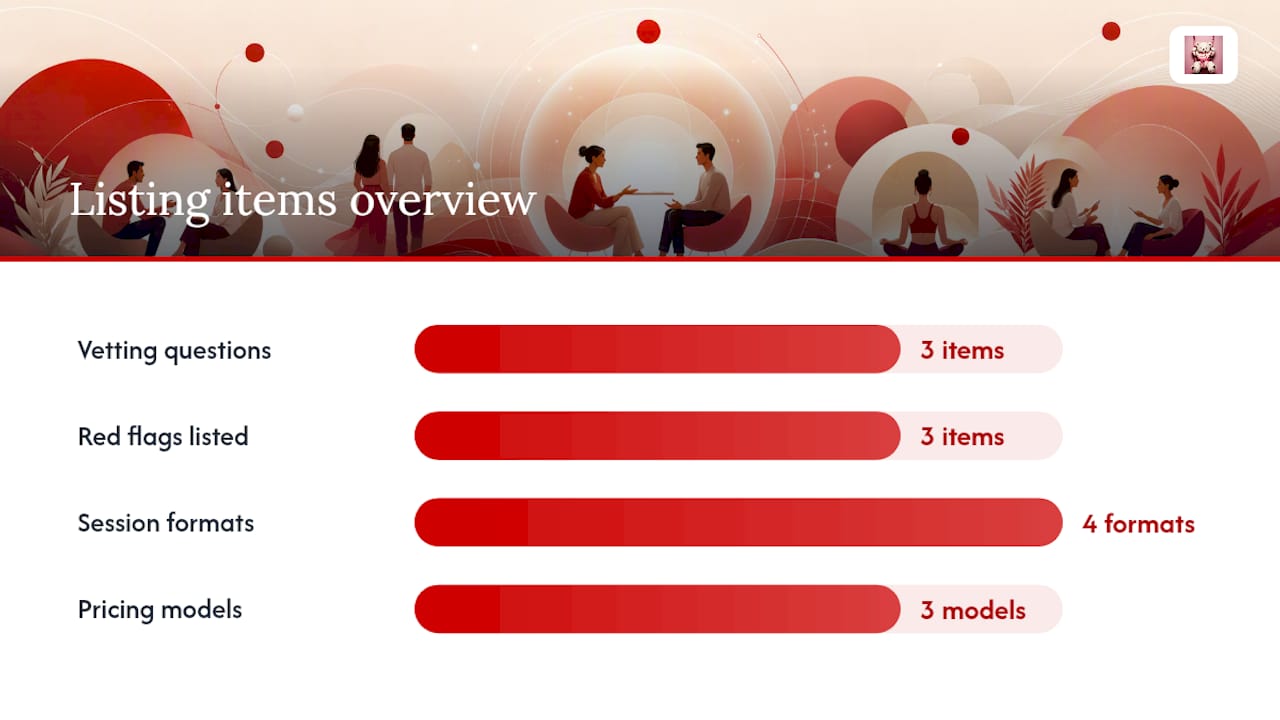
For consumers, vetting starts with three questions:
- What's your direct experience with this specific dynamic or fetish?
- What does a typical session look like, start to finish?
- What's your policy if I need to stop mid-session?
Watch for red flags: vague answers about experience, pressure to skip negotiation, or claims of therapeutic credentials without a license. Coach specialization correlates directly with troubleshooting ability in complex power-exchange dynamics, so a coach with real scene history in your specific interest beats a generalist every time.
For providers, a listing that actually books includes:
- A headline naming your specific specialization, not a generic "intimacy coach" label
- Session formats offered (private, couples, group, online) with exact durations
- A visible consent/safety statement and clear scope of what you will and won't do
- Pricing shown by structure: hourly consults, multi-session packages, or workshop tickets
- Cancellation, refund, and confidentiality terms stated plainly
Pricing usually follows one of three models: a flat hourly rate for consults, a discounted multi-session package for ongoing mentoring, or a per-seat ticket price for group workshops. Vetted testimonials and a sample session itinerary reduce booking friction more than almost anything else in a listing, because they answer the "what actually happens" question before a client has to ask it.
Pro Tip: Publish your boundaries as clearly as your pricing. A provider who states "no unprotected contact, no financial domination" upfront gets fewer awkward messages and more serious bookings.
Why Scope and Specialization Decide Whether Coaching Works
The coaches who get results aren't the ones with the broadest offer list. They're the ones who name their lane clearly: this dynamic, this technique, this population, and nothing outside it. Vague scope creates vague sessions, and vague sessions are where safety slips. A marketplace that forces providers to state their specialization and safety policy up front does more for buyer trust than any testimonial ever could.
List or Book Intimate Coaching on Kinkykorner
Kinkykorner puts your listing in front of people already searching for exactly your specialization, not a generic adult-services crowd scrolling past you. That targeting matters more than volume, because a niche kink coach converts better with 50 relevant views than 5,000 unfocused ones.
Setting up a listing takes a few steps: name your specialization, define your session formats and pricing structure, and publish a clear consent and safety statement alongside your session boundaries. Providers get subscription tiers that scale with how much visibility they want, and a limited free basic plan for anyone testing the waters first. If you're a consumer, browsing works the same way in reverse: filter by specialization and read the safety statement before you ever send a message. Start a listing on Kinkykorner and get your scope, pricing, and safety policy in front of the right audience.
Sources
For more on negotiation, safety, and consent before booking or listing:
- 6 things your sex-ed class left out on kink and consent | Johns Hopkins Wellbeing
- What is a sex and intimacy coach? | Entrepreneurshq