

You think erotic communities are just about getting laid. That's the assumption most people walk in with, and it's the one that keeps them from finding something genuinely transformative. The real reasons why join erotic communities sits at the intersection of emotional safety, identity, consent culture, and a kind of belonging that vanilla social spaces rarely offer. Whether you're curious about kink, actively exploring BDSM, or just tired of feeling alone in your desires, this article breaks down what these spaces actually give you and how to find the right one for who you are.
Table of Contents
- Key Takeaways
- Why join erotic communities: the emotional payoff
- Safety, consent, and how communities get it right
- Identity-centered communities and why they matter
- Social connection, learning, and relationship satisfaction
- Challenges to know before you join
- My perspective: what community changed for me
- Explore your desires with Kinkykorner
- FAQ
Key Takeaways
| Point | Details |
|---|---|
| More than sex | Erotic communities offer emotional connection, identity affirmation, and personal growth beyond physical acts. |
| Consent is communal | These groups model ongoing, revocable consent practices that improve safety for everyone involved. |
| Identity matters here | Communities centered on race, gender, and orientation build tailored consent frameworks that reduce harm. |
| Connection beats isolation | Shared erotic interests correlate with higher relationship satisfaction and lower stigma. |
| Vet before you dive in | Start with education and public events; ask about accountability policies before going deeper. |
Why join erotic communities: the emotional payoff
Most people who find their first real erotic community say the same thing afterward. "I didn't know I was lonely until I wasn't." That's not a small thing. It's actually the whole thing.
Erotic desire is layered emotionally and psychologically, shaped by emotional safety, fantasy, anticipation, and the tension between closeness and freedom. A random hookup or a solo porn habit doesn't touch those layers. A community does. When you're in a space where your desires are recognized, named, and respected, something shifts.
Here's what that shift actually looks like in practice:
- Shame reduction. The internal self-monitoring that follows most people around ("Am I too much? Is this weird?") starts to quiet when you're around people who share your interests without judgment.
- Erotic confidence. Being seen as desirable and curious within a group that values those qualities does wonders for confidence, as members of swinging communities consistently report.
- Fantasy as communication. Communities create the vocabulary and the safety to articulate what you actually want, often for the first time.
- Emotional aliveness. When you stop suppressing desire, other emotional channels open up too. People describe feeling more present, more engaged, and more themselves.
The psychological benefits aren't a bonus. They're the point. And they compound over time.
Pro Tip: If you're new to an erotic community, don't rush toward scenes or encounters. Attend discussions, workshops, or online spaces first. The emotional work that happens in conversation is where the real transformation starts.
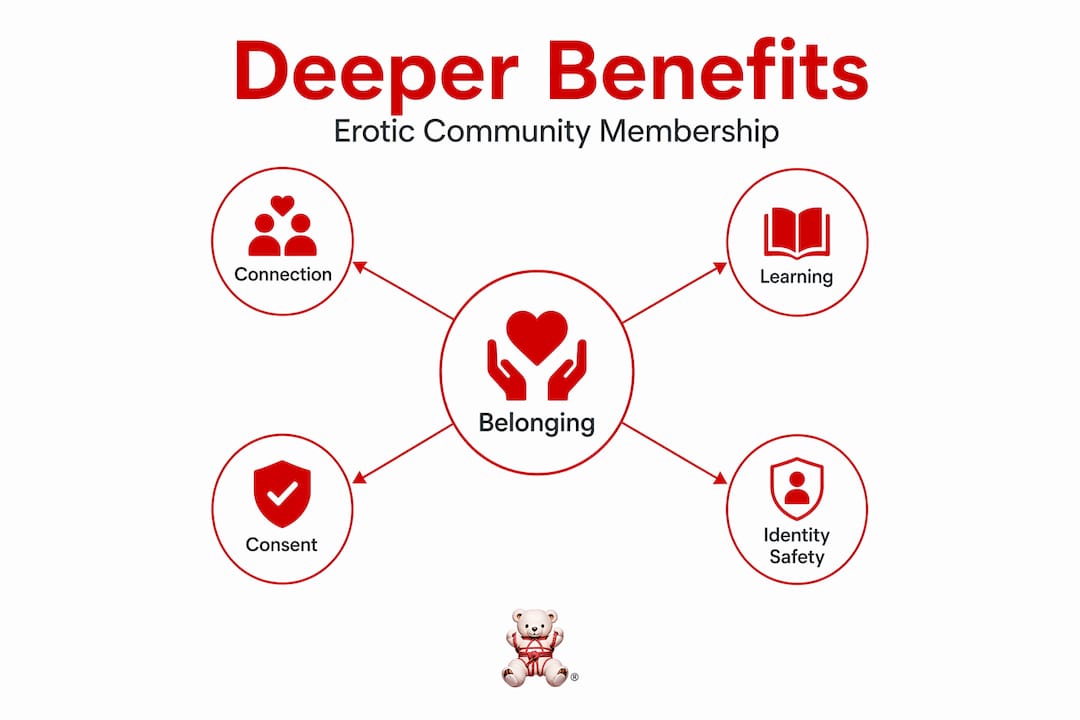
Safety, consent, and how communities get it right
Here's what separates a well-run erotic community from a risky one: the consent culture. Not consent as a legal checkbox, but consent as ongoing, specific, enthusiastic, revocable, and freely given. That's the standard that kink and BDSM communities have been developing for decades.
The consent practices you'll encounter in these spaces follow a structured logic:
- Negotiation before anything starts. Desires, limits, triggers, and expectations get discussed explicitly. Not implied. Not assumed.
- Safe words and signals. Clear mechanisms exist to pause or stop any encounter at any moment, no explanation required.
- Renegotiation as standard practice. Boundaries evolve. Regular renegotiation keeps everyone honest about where they are right now, not where they were six months ago.
- Aftercare as part of the experience. Post-scene check-ins address the emotional and physical comedown, preventing the kind of silent resentment that kills trust.
Compare that to the average dating app encounter, where consent is often assumed, never discussed, and boundaries exist only if someone explicitly protests. The contrast is stark.
| Mainstream dating culture | Erotic communities |
|---|---|
| Consent implied by participation | Consent explicitly negotiated |
| Boundaries stated only under pressure | Limits discussed before engagement |
| No structured emotional support | Aftercare built into practice |
| Accountability often absent | Community-driven consequences for violations |
Pro Tip: Ask any community you're considering: "What's your process when a consent violation is reported?" If they can't answer clearly, keep looking.
The container mindset practiced by experienced members treats consent as living and breathing, not static. It's genuinely one of the most sophisticated frameworks for relational safety that exists anywhere, not just in erotic spaces.
Identity-centered communities and why they matter
Here's a truth that mainstream erotic spaces often miss: consent is not experienced the same way by everyone. How safe you feel, how much you trust the accountability systems around you, and whether the norms in a community were built with your history in mind all vary enormously based on race, gender identity, sexual orientation, and lived trauma.
Identity-centered kink communities have developed consent models that prioritize accountability over intent and embed structural trauma awareness directly into how they operate. That's a fundamentally different approach than handing someone a checklist.
What this looks like in practice:
- Race-centered spaces (Black and Kinky, People of Color kink groups) recognize that a consent model designed without racial power dynamics in mind will consistently fail members of color.
- Queer and trans erotic communities build gender-affirming environments where bodies and identities are named and respected correctly, and where tailored consent approaches lead to meaningfully better accountability.
- Disabled erotic communities address access, communication needs, and bodily autonomy in ways that generic spaces simply don't think to accommodate.
The importance of adult social groups organized around identity isn't tribalism. It's precision. These communities exist because lived experience shapes how safety gets enacted. If you belong to a marginalized group, finding a community that was built with your reality in mind isn't just comfortable. It's safer.
Social connection, learning, and relationship satisfaction
One thing research makes clear: sharing erotic interests with a partner or community isn't a side benefit. It's correlated with relationship satisfaction at a meaningful level. A survey of 470 participants found that shared paraphilic interests tracked directly with higher relational fulfillment, and over 25% of respondents identified as non-cisgender, suggesting these communities are disproportionately home to people who've had to fight for their identity in other spaces.
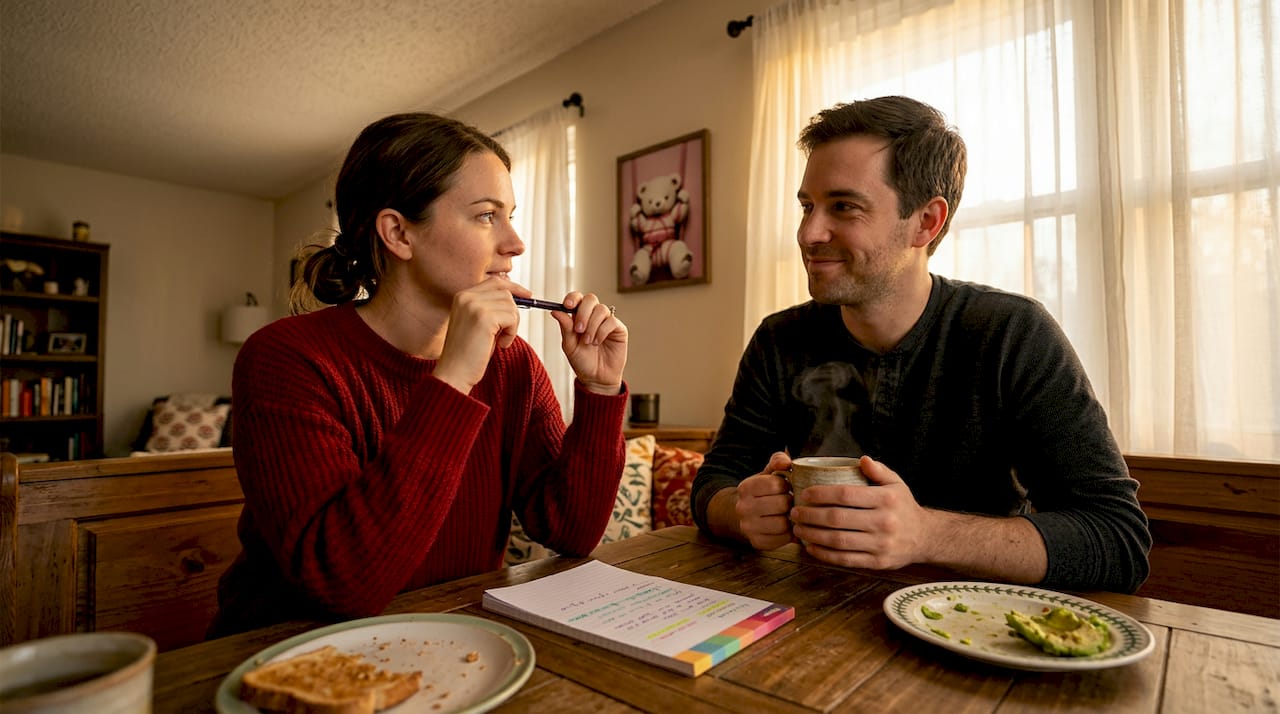
Community membership also functions as an education that you won't find in a textbook or a late-night search session. You learn by watching, asking, and being mentored by people who've been exploring longer than you have.
| What you learn | How communities teach it |
|---|---|
| Erotic communication skills | Workshops, discussions, and negotiation practice |
| Consent vocabulary | Shared language developed across the community |
| Identifying your own desires | Exposure to diverse practices and honest reflection |
| Handling rejection gracefully | Community norms around respectful refusal |
Beyond skills, there's the reduction of isolation that comes from simply being around people who get it. Erotic communication inside a community context becomes a training ground, helping you show up more honestly and accurately in your personal relationships. You stop guessing what you want and start knowing it.
- Community reduces the stigma that keeps people locked in shame and secrecy.
- Shared language makes difficult conversations easier.
- Regular exposure to diverse erotic experiences expands your self-knowledge without pressure.
- Members support each other's growth in ways that individual exploration simply can't replicate.
Challenges to know before you join
Real talk: erotic communities are not perfect. Going in with clear eyes is what keeps you safe. The 2025 NCSF incident report found that 11% of accused consent violations were community organizers, and 60% of outing reports implicated those same figures. The people with the most power to create safety are also the people most capable of violating it.
That doesn't mean you avoid communities. It means you vet them.
- Check for written accountability policies. Good communities have them posted publicly, not just promised verbally.
- Start at the edges. Attend online forums, educational events, or public gatherings before engaging in anything more intimate. Get a feel for the culture before you trust it with anything vulnerable.
- Watch how they handle conflict. You'll learn more about a community's true values by watching what happens when something goes wrong than by reading their welcome page.
- Protect your privacy actively. Use a scene name, keep personal identifying information off public forums, and be deliberate about who you share real details with.
- Know that your limits are allowed to evolve. You don't owe anyone a fixed boundary. Learning to explore at your own pace is the standard in legitimate communities.
One more thing worth saying. Aftercare isn't optional. Staying with your emotional state after any significant erotic experience, whether scene-based or just a vulnerable conversation, is what keeps the experience from leaving a bruise. Build that practice from day one.
Pro Tip: Before joining any erotic group, ask three people inside it about their worst experience there and how it was handled. The answers will tell you everything about whether accountability is real or just decorative.
My perspective: what community changed for me
I spent years exploring eroticism in isolation, convinced that the stuff I was into was either too niche or too much to share with anyone. I had experiences that felt electric in the moment and hollow afterward, a pattern I now recognize as what happens when desire is met without context or real connection.
When I finally stumbled into a community where people actually talked before and after, where consent was a conversation rather than a prayer, something I hadn't anticipated happened: I started trusting people more. Not naively. Honestly. Because the structures were there to support it.
What I've learned is that erotic exploration in community isn't louder or messier than solo exploration. It's clearer. You get a mirror for your own desires and your own limits that you genuinely cannot construct alone. The intersectionality piece took me longer to understand. It wasn't until I spent time in identity-centered spaces that I grasped how much mainstream erotic norms had been built around assumptions that didn't apply to everyone in the room.
I believe the future of erotic exploration is communal. Not because solo experience isn't real, but because it has a ceiling that community doesn't. Finding safe kink community spaces isn't about finding permission. It's about finding resonance.
— Prenston
Explore your desires with Kinkykorner
If any of this landed with you, Kinkykorner was built for exactly where you are right now.
Kinkykorner is a marketplace where you can connect with adults and adult-focused businesses who take consent, identity, and genuine connection seriously. Whether you're looking to explore erotic content and community listings, discover providers who specialize in your interests, or simply read literary and artistic erotic work that reflects your desires honestly, this is the space for it. You can browse at your own pace, find communities vetted by real members, and learn what safe, affirming erotic exploration actually feels like in practice. Your curiosity deserves a real community behind it. Start here.
FAQ
What are the main benefits of joining erotic communities?
Beyond sexual experience, the primary benefits of erotic communities include emotional safety, shame reduction, erotic confidence, and skill-building around consent and communication. Members consistently report higher relationship satisfaction and reduced isolation.
How do erotic communities handle consent differently?
Erotic communities practice explicit, ongoing, and revocable consent that includes pre-scene negotiation, safe words, renegotiation over time, and aftercare. This is structurally more thorough than consent norms in mainstream dating culture.
Are identity-centered erotic communities worth seeking out?
Yes, especially if you belong to a marginalized group. Identity-centered communities build consent frameworks around lived experience and structural power dynamics, producing meaningfully better accountability and safer spaces than generic erotic groups.
What should I watch out for when joining an adult group?
The most common risks include consent violations and outing incidents, both of which are disproportionately connected to community organizers according to 2025 NCSF data. Vet thoroughly, start slowly, and prioritize communities with written accountability policies.
How do I find erotic communities that are right for me?
Start with online forums and educational events to get a feel for the culture without pressure. Ask about consent practices and how violations are handled. Resources like Kinkykorner can help you discover communities and providers aligned with your specific interests and identity.