
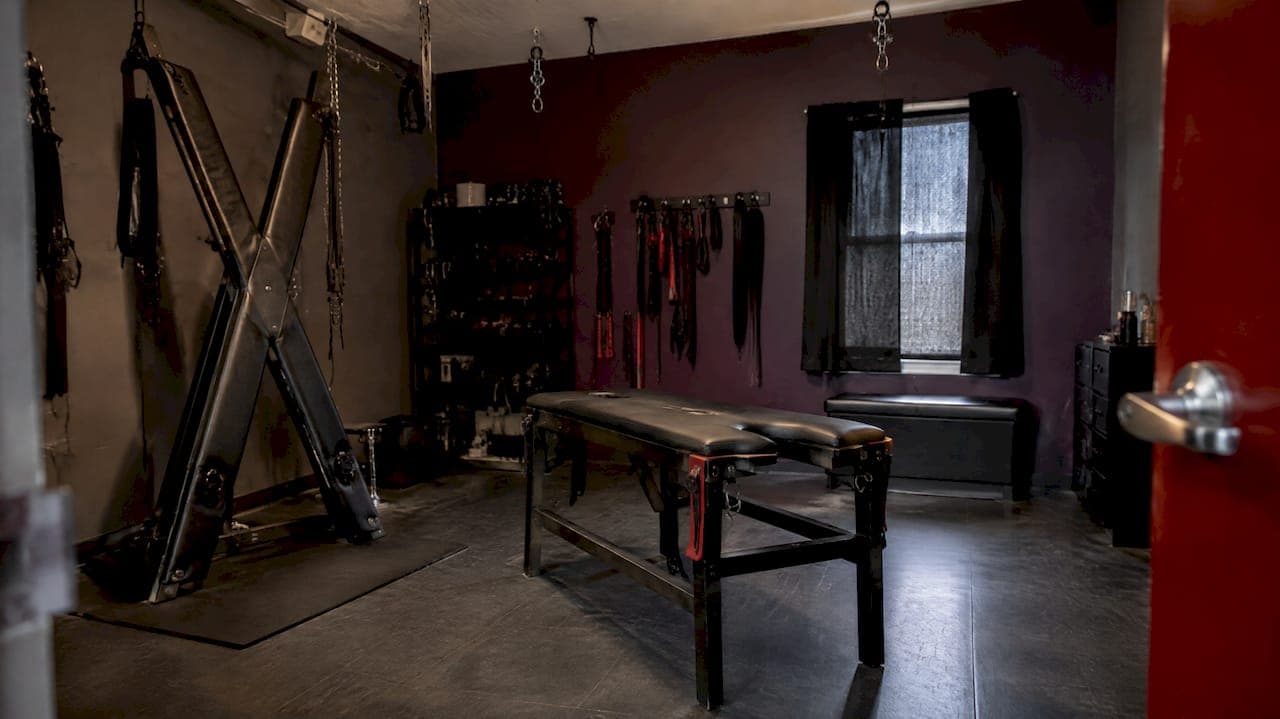
Renting a private dungeon means paying for a room, its equipment and a block of time, and agreeing to the venue's rules in exchange. Those rules usually cover who can come, how consent and safewords work, what you can drink or take, whether anyone can take photos, how you clean up, and what happens to your deposit if plans change. Read them before you pay, not after you've already got your bag packed and your heart in your throat.
We've seen the same mistakes again and again: people assume the house rules match their last play party, skip the cancellation terms, or find out at the door that the equipment they planned around is off limits. This guide walks through what to expect in the United States, what to ask, and how to avoid the awkward conversation at 9 p.m. on a Saturday.
TL;DR
- Every rental has house rules. Get them in writing before you pay, and read the parts on sobriety, photography and equipment especially closely.
- Consent, negotiated limits and a working safeword are not optional extras. Venues treat them as the baseline for everyone in the room.
- Expect to clean every surface you touch, to leave on time, and to be discreet when you arrive and leave.
- Deposits, cancellation windows and no-show terms differ a lot from one venue to the next. Check them before you confirm.
- Ask about what's included, who else is in the building, and what counts as damage. Vague answers are a signal.
Table of Contents
- What a dungeon rental actually is
- Who can book and who can come
- Consent, limits and safewords
- Alcohol, drugs and being clear-headed
- Photos, phones and privacy
- Equipment: what you can use and what you can't
- Cleanliness and cleanup
- Dress code and what to bring
- Deposits, cancellations and refunds
- Questions to ask the venue before you book
- Our perspective: how we think about venue rules
- Find a space, or list yours
- Etiquette that goes beyond the written rules
- FAQ
- Sources
What a dungeon rental actually is
A dungeon rental is a space, usually a home, studio or commercial room set up for BDSM play, that you book by the hour, block or overnight. Some are bare rooms with a few pieces of furniture. Others come with St. Andrew's crosses, spanking benches, suspension points, cages, a wall of impact toys and a bathroom you'd be happy to shower in.
Two things matter here. First, you're renting a room, not hiring a person. Some venues also offer a Dominant, coaching or a guided tour, but that's a separate service with its own terms. Second, the owner is trusting you with expensive, hard-to-replace equipment and, often, a house in a neighborhood where the neighbors have no idea what goes on inside. Almost every rule you'll hit flows from those two facts.
Who can book and who can come
Start with the plain stuff. Nearly every venue requires every guest to be an adult, and many set the minimum at 21. Some ask for a government ID from the person booking, and a few want it from everyone who walks in. Expect to give a real name, even if you play under a scene name.
Before you book, check:
- Age and ID. Is the cutoff 18 or 21? Who needs to show ID, and when?
- Headcount. How many people can be in the room? Some venues are strictly couples. Others allow small groups, a photographer, a third or a friend who watches.
- Membership or screening. Some rentals are open to anyone who books. Others ask for a short intro form, a reference, or a quick call first.
- Arrival window. Is the clock running from the moment you walk in, or from the start time you booked? Does setup and cleanup count against your block?
That last one catches people out. If your two hours include getting your bag in, changing, negotiating, playing, aftercare, cleanup and a shower, you've got less play time than you think. Plan the schedule backward from the end time.
If you're new to all this, our guide to dungeon etiquette before your first play party covers the social side of shared spaces, which differs from a private rental but shares many of the same instincts.
Consent, limits and safewords
This is the rule that sits above all the others. A venue can let you hang a scene on the wall, but it won't let you ignore your partner's no. Almost every set of house rules states that all activity must be consensual, between adults, and that stated boundaries must be respected. Some ask you to sign a waiver or consent form at booking.
What that means in practice:
- Negotiate before you arrive, not on the table. Talk through limits, wants, medical issues, triggers and aftercare needs a day or two before. The rental clock is expensive, and it's a terrible place to figure out what a hard limit is.
- Pick a safeword system and test it. A traffic-light system (green, yellow, red) is common because it's easy to say when you're breathless. Agree on a non-verbal signal too, for gags, hoods and anything that muffles speech.
- Agree who can stop the scene. Either person can, at any time, with no explanation owed.
- Know your risk level. Breath play, heavy suspension, needles and blood play all carry real injury risks. If you aren't trained, you shouldn't be learning them on a rented rig.
If you want more on the foundation, start with our consent-first look at what consensual kink means and the practical kink safety tips. Trust is the thing that makes the rest work, and we wrote about the role of trust in BDSM for that reason.
Some venues also state that they won't intervene in your scene but will end a rental if they believe someone is being coerced or is in danger. Take that seriously. It protects you too.
Alcohol, drugs and being clear-headed
This is the rule people argue with and shouldn't. Most rentals require everyone playing to be sober, or close enough to it that they can give clear, informed consent and react if something goes wrong. Illegal drugs are banned almost everywhere, and many venues also prohibit play with anyone who is impaired by any mind-altering substance, including some prescription ones.
The reasoning isn't moralizing. Impact, restraint and rope all depend on someone noticing numbness, dizziness or a panic response in time. Alcohol dulls both of those. It also blurs the line on consent, which is the one thing nobody can afford.
Some places make a small exception, such as a glass of wine with dinner on an overnight stay, but you shouldn't assume one. Ask. And don't show up with a cooler.
Smoking is another common line: usually not inside, and if allowed outside, you're expected to pick up after yourself. Vaping often gets lumped in with smoking.
Photos, phones and privacy
The default at most venues is simple: no photos or video without explicit consent from everyone present, and often from the host too. A few allow filming in a private rental if everyone agrees. Plenty ban it outright because the room might show a recognizable wall, window or piece of equipment.
Before you pull out a camera, ask three things:
- Is recording allowed during a private rental at all?
- If it is, does it need written consent from everyone on camera?
- Where can the footage go? Posting a clip taken in a rented room can expose the owner's address or business.
Also think about your own privacy. Do you want your phone in the room? Many people leave theirs in a bag or on airplane mode so a text doesn't break a scene, and so no stray notification shows up on the wrong person's screen. If you work in a profession where outing is a risk, ask the venue how it stores your ID, booking name, payment details and messages.
Discretion applies outside the room, too. Industry guidance suggests that even in private rentals, guests should practice discretion in public areas like the arrival point, so you don't draw attention to what the property is. In real terms: no gear spilling out of bags on the sidewalk, no loud talk about the night ahead, and park where the owner tells you.
Equipment: what you can use and what you can't
This is where the rental agreement does the most work. Read it for three things.
What's included. Many rentals include the furniture and anything hanging on the walls, while items in drawers, bins or cabinets may be off limits or cost extra. A venue might supply lube, gloves, wipes and condoms. Another might expect you to bring everything. Don't assume.
What's prohibited. Open flame, fire play, knife play, electricity, needles, wax and blood play are each banned at some venues and allowed at others, sometimes with a fee, a floor covering requirement or a requirement to demonstrate experience. If your plans include any of them, ask in advance, in writing.
What you bring yourself. Many venues want you to bring your own toys for anything that touches bodily fluids or skin, or to use barriers and clean everything before it goes back on the wall. Rope is the classic example: if you plan on a lesson or a tie, bring your own rope in a workable length rather than borrowing the house's.
A few practical points:
- Check suspension points before you load them. Ask what they're rated for and who installed them. If the owner can't answer, don't hang anything from them.
- Never use equipment you haven't been shown how to use. Ask for a quick walkthrough of locks, adjustable parts and the safe way to release anything.
- Report damage right away. Hiding a cracked bench or a split strap is the quickest way to lose your deposit, and it can injure the next person.
If you've never used a piece of furniture or a rope technique, a class beats a rental for learning. Our BDSM education starting point can help you find your footing first.
Cleanliness and cleanup
Cleanup is the unglamorous rule that keeps venues in business. Expect, almost without exception, to:
- Wipe down every surface you used, including floors, walls, furniture and lube bottles, with the disinfectant the venue provides.
- Use a barrier, like a condom or cover, on any insertable or vibrator that isn't yours.
- Put used linens, towels and toys in the designated basket, and throw away disposables in the trash.
- Wipe up any floor spill right away. A slick floor is one of the most common ways people hurt themselves in a dungeon.
- Keep bodily fluids off anything not meant for it, and skip flushing anything but toilet paper.
Some venues charge a cleaning fee if the room isn't left in good shape. Others keep part of your deposit. Either way, build cleanup time into your block and don't spend the last ten minutes in a hurry.
Bring a small kit of your own: a towel, a change of clothes, water, a snack, hand sanitizer and a bag for dirty items. A change of clothes matters more than people expect, since you may not want to walk to your car in the outfit you just played in.

Dress code and what to bring
Dress codes in private rentals are looser than at a public play party. You'll often be fine in anything you'd be comfortable in, as long as it's clean and doesn't damage the equipment. Some venues do ask for no street shoes inside, or require clean shoes only for the play space. Latex and leather are fine. Sharp jewelry, heavy buckles and anything that can scratch vinyl or leather furniture might not be.
A short packing list:
- ID and your booking confirmation
- Your own toys, rope or restraints, if the venue doesn't supply them
- Water and a light snack for aftercare
- A towel and a change of clothes
- Any medication you rely on, and a note of any medical issue your partner should know about
- Cash or a card for any fees due on arrival
One more thing to settle before you go: how you'll treat each other afterward. Aftercare isn't a venue rule, but it's the thing most people wish they'd planned. Leave time for it.
Deposits, cancellations and refunds
Here's where renters most often get burned, so slow down. Terms vary widely, and you'll see everything from a small deposit that is fully refundable with a day's notice to non-refundable deposits that only convert to credit. Read for these:
| Term | What to look for |
|---|---|
| Deposit | How much, whether it's a flat fee or a percentage, and whether it counts toward the rental |
| Cancellation window | The number of hours before your start time that you can cancel for a full refund or credit |
| Reschedule | Whether a deposit can be moved to a new date, and for how long it's good |
| No-show or late arrival | Whether you forfeit the full rental, and whether the clock keeps running if you're late |
| Damage and cleaning | How damage is assessed, and whether fees are taken from a deposit or charged afterward |
| Overnight terms | Check-in and check-out times, plus what counts as an extension |
| Payment | When the balance is due, and by which method |
Some venues refund only if you cancel well ahead of time, commonly a day or two. Others convert a deposit to a credit for a future stay. A few treat deposits as non-refundable regardless. None of this is wrong, but it's something you need to know before you pay, not after a babysitter cancels.
A couple of habits help. Save the confirmation email and the rules page as screenshots or PDFs on the day you book, because policies get updated. Pay by card or another traceable method rather than cash, so you have a record if a dispute comes up. And if your plans depend on a particular piece of equipment, get it written into the confirmation.
Questions to ask the venue before you book
A good host answers these quickly and without drama. A host who dodges them is telling you something.
- What exactly is included, and what's off limits?
- Who else will be in the building during my block, and can I expect to run into them?
- What are your rules on sobriety, smoking and vaping?
- Is photography or filming allowed, and under what conditions?
- How do you handle ID, names and payment records? Who sees them?
- What's the cancellation policy, and is the deposit refundable, creditable or lost?
- What counts as damage, and how is it charged?
- Is there a walkthrough or orientation, and can you show me the safe use of anything I don't know?
- What's the plan if someone is injured or ill? Where's the first aid kit and the nearest urgent care?
- Are there neighbor or parking rules I need to follow?
Ask for the answers in writing. It protects you and the host.
Our perspective: how we think about venue rules
We built Kinky Korner because people in this community spend too much time hunting for trustworthy places, providers and events, and too little time actually enjoying them. Rental rules are one of the best examples. They look like a wall of "no", but good rules are what make a room worth paying for.
Here's what we believe. A venue with clear, firm, written rules is usually easier to trust than one with none. Rules about consent, sobriety and cleanup mean the owner has thought about what happens when things go wrong. Strict doesn't mean cold. The best hosts are the ones who explain their rules in plain language and are warm about them.
It also cuts the other way. If you're renting, you owe the host the same honesty you'd want from a partner: tell them what you plan to do, ask when you're unsure, and own the mess. And if you run a venue, put your rules in front of people before they pay, not at the door. That one habit prevents nearly every argument we hear about.
Our categories include Retailers and Studios, Kink Events and more, so you can find providers, spaces and communities in one place and read what they say about themselves before you commit.
— Prenston
Find a space, or list yours
If you're looking for a venue, browse providers and events by category on Kinky Korner, and read the listing before you message anyone. If you run a dungeon, studio or event space, a listing lets you publish your house rules, pricing and booking terms where renters are already looking. We have a free basic listing, a monthly plan at $4.99 per month, and a yearly premium plan at $149.95 per year. You'll find the details on our pricing page.
Etiquette that goes beyond the written rules
House rules never cover everything. A few habits make you the guest a host remembers fondly:
- Arrive on time, leave on time. The next booking may start right after yours.
- Keep noise reasonable. Screaming is part of some scenes. Ask about neighbors, and agree on a plan if sound is an issue.
- Respect closed-off areas. If a door is shut or a cabinet is locked, it's not part of your rental.
- Treat the host like a professional. Be clear, polite and prompt with payment.
- Be kind in reviews. If you leave feedback, don't post details that could identify other guests.
If you later graduate to group events, our guide to kink event etiquette will carry over many of the same habits.
FAQ
Do I need experience to rent a dungeon?
Not always, but you do need to know your own limits and basic safety. Some venues ask about experience, especially for suspension, fire or sharp play, and a few offer a walkthrough or a lesson. If you're new, tell the host and keep the first session simple.
Can I bring my own toys and equipment?
Usually yes, and many hosts prefer it for anything that touches skin or fluids. Ask whether there are restrictions on specific items, such as fire, blades or electrical gear, and clean everything before it goes back in your bag. Don't use house items that aren't part of the rental.
Will I lose my deposit if I cancel?
It depends entirely on the venue's terms. Some refund in full if you cancel inside a set window, some convert the deposit to a credit, and some treat it as non-refundable. Read the policy before paying and keep a copy of it.
Is it okay to drink during a rental?
Often no. Most venues require sober play and ban illegal drugs, and some allow only a small exception at the host's discretion. Ask before you bring anything, and skip it altogether if you'll be using restraints, impact or rope.
Can I take photos or videos?
Only if the venue allows it and everyone involved agrees. Many ban recording entirely to protect their guests and the property. If you want content from a session, ask first and get the consent in writing.