

Tickle play is defined as the deliberate stimulation of a partner's sensitive body areas to provoke involuntary reactions like laughter, squirming, and a physical sense of surrender. It uses fingers, feathers, soft brushes, or electric sensation devices, and it shows up across a wide spectrum of adult intimacy. From playful bedroom wrestling to structured BDSM dynamics, tickle play sits at the intersection of sensation, psychology, and trust. The neuroscience behind it is genuinely surprising, and the consent principles that make it work are the same ones that underpin every healthy kink practice.
What is tickle play, exactly?
Tickle play is a sensory activity within BDSM and intimate contexts that involves deliberate stimulation of sensitive areas to evoke involuntary reactions. The standard industry term you will encounter in kink communities is "tickling," sometimes called "tickle torture" when intensity increases. Both terms describe the same core dynamic: one person controls the sensation, the other surrenders to it.
The tickle play definition covers a wide range of intensity. At the lightest end, a partner drags a feather across the back of your knee. At the other end, you are restrained, laughing so hard you can barely breathe, completely at the mercy of whoever has their fingers on your ribs. That contrast, between something that looks innocent and something that feels overwhelming, is exactly what makes it compelling for so many adults.
Tools matter here. Fingers are the most common. Feathers give a softer, more teasing sensation. Electric tickling devices deliver unpredictable pulses that remove any sense of anticipation. Each tool changes the psychological texture of the experience, not just the physical one.

Why does tickling feel the way it does?
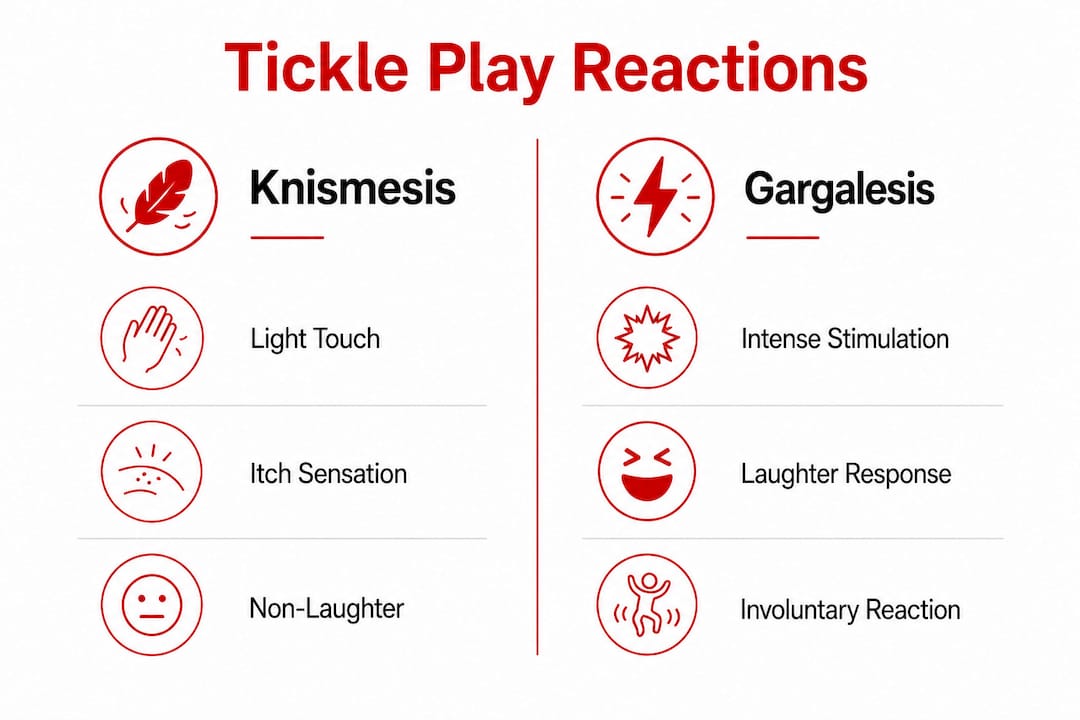
The biology of tickling splits into two distinct categories. Knismesis is the light touch that produces an itch-like crawling sensation. Gargalesis is the deeper pressure that triggers laughter, squirming, and the loss of bodily control. Only gargalesis typically drives the kind of intense social or intimate tickle play that adults explore in relationships.
Your brain processes tickling across regions tied to emotion, touch, and anticipation simultaneously. That is why the feeling is so hard to ignore. The brain cannot simply "decide" not to react. The response is wired in.
Here is the part most people find genuinely weird: you cannot tickle yourself. The motor cortex predicts the sensory feedback from your own hand and mutes the response before it registers. That predictive cancellation is why tickle play requires another person. The unpredictability of an external touch is the whole mechanism. Your nervous system cannot prepare for it, so it reacts fully.
- Knismesis: Light, feather-like touch producing an itch or crawling sensation. Low intensity, often used as a tease or warm-up.
- Gargalesis: Deep pressure tickling that triggers laughter and involuntary movement. The core of most adult tickle play.
- Predictive cancellation: The brain's mechanism that blocks self-tickling. Requires a partner to bypass it.
- Laughter as signal: Laughter during tickling is not always enjoyment. The brain produces it as a reflex, separate from emotional pleasure.
Pro Tip: If your partner is laughing, do not assume they are having a great time. Laughter is a reflex, not a consent signal. Check in verbally.
How does tickle play build intimacy and trust?
Tickle play fosters intimacy and trust in relationships, functioning as a social bonding mechanism observed in both primates and humans. Shared laughter during tickling facilitates connection and tests social hierarchy. That last part sounds clinical, but it maps directly onto what couples actually feel: there is a power dynamic at play, and both people know it.
The person doing the tickling holds control. The person being tickled surrenders it. That exchange, when it is wanted and negotiated, creates a specific kind of closeness that is hard to replicate through other activities. You are laughing, you are helpless, and you are completely safe. That combination is rare.
Within consensual kink, tickle play occupies a unique space. It delivers the psychological intensity of power exchange without pain. For partners who want to explore dominance and submission but are not drawn to impact play or other intense physical sensations, tickle play offers a genuinely different entry point.
- Tickle play observed in primates shows it is a deeply rooted social behavior, not a niche human invention.
- Shared laughter during tickling releases tension and builds emotional safety between partners.
- The power exchange in tickle play mirrors BDSM dynamics: one person leads, one surrenders.
- Controlled surrender without pain makes tickle play accessible for adults new to kink dynamics.
- Roleplay scenarios, like a "tickle interrogation," add narrative structure and deepen the psychological layer.
Is tickle play safe? Consent and communication essentials
Tickle play is safe when consent, communication, and clear boundaries are established before anyone's fingers go anywhere. Effective tickle play requires safe words and ongoing consent checks, because involuntary laughter and movement can mask genuine distress. That is the part people underestimate. Your partner might be laughing and simultaneously wanting you to stop. Without a safe word, you cannot tell the difference.
Nonverbal signals matter too. If a partner is restrained, they may not be able to speak clearly. Agree on a physical signal in advance, like tapping twice, that means "stop immediately." Treat it with the same seriousness as any other safe word.
Here is how to set up a tickle play session that stays pleasurable:
- Discuss boundaries before you start. Identify which body areas are on limits and which are off. Feet, ribs, underarms, and the back of the knees are common sensitive zones, but everyone is different.
- Agree on a safe word. Pick something you would never say accidentally. "Red" is the standard in kink communities. Use it.
- Establish a nonverbal signal. Two taps on any surface means stop. Practice it before the session.
- Check in during the session. Pause periodically and ask directly. "Are you good?" requires a real answer, not just continued laughter.
- Debrief afterward. Talk about what worked, what felt like too much, and what you want to try differently next time.
Pro Tip: Ticklishness varies by body part and by mood. A spot that felt great last week might feel overwhelming today. Ask fresh every time.
The kink safety principles that apply to impact play apply here too. Consent is ongoing, not a one-time checkbox.
How to start incorporating tickle play into your relationship
Starting with tickle play does not require a plan, a kit, or a manual. It requires a conversation. Sit with your partner and talk about curiosity, not pressure. Frame it as something you want to explore together, not something you want to do to them.
Once you have talked, start light. A single finger trailing along the inner arm. A feather drawn across the back of the neck. Watch the response. Laughter, squirming, and a "stop, stop" that sounds more like "please keep going" are green lights. A tense body, silence, or a genuine "stop" means you stop.
Tools to experiment with, from gentlest to most intense:
- Fingertips: Most control, most intimacy. Start here.
- Feathers: Softer sensation, good for teasing and anticipation.
- Soft brushes: Wider coverage, less predictable than fingers.
- Electric sensation devices: Unpredictable pulses, high intensity. For experienced partners only.
Practitioners recommend mutual exploration and respect for limits as the foundation of any tickle play session. That means both partners get to set the pace. Incorporating tickle play into erotic roleplay adds a narrative layer that many couples find deepens the experience significantly. A scenario where one partner is "captured" and tickled as "interrogation" turns sensation into story, and story into memory.
Adjust intensity as you go. The goal is not to push limits. The goal is to find the edge of what feels good and stay there, together.
Key Takeaways
Tickle play is a consent-driven, neurologically grounded form of intimate sensation that builds trust and connection when practiced with clear communication and mutual respect.
| Point | Details |
|---|---|
| Clear tickle play definition | Tickle play is deliberate sensory stimulation of sensitive areas to provoke involuntary reactions like laughter and surrender. |
| Two types of tickling | Knismesis is light touch; gargalesis is deep pressure that drives laughter and is the basis of adult tickle play. |
| Self-tickling is impossible | The brain mutes its own touch predictions, so authentic tickle play always requires a partner's external stimulation. |
| Consent is non-negotiable | Safe words, nonverbal signals, and regular check-ins are required because laughter does not equal enjoyment. |
| Start slow and communicate | Begin with light touch, discuss boundaries first, and adjust intensity based on real-time partner feedback. |
Tickle play is more complex than it looks
People dismiss tickle play as silly. I get it. On the surface, it looks like something that belongs in a pillow fight, not a serious conversation about intimacy. But I have seen it do things that more "serious" kink practices struggle to pull off.
There is something about the combination of helplessness and laughter that cracks people open in a way that pain or restraint alone does not. You cannot be guarded when you are laughing that hard. The walls come down fast. And that vulnerability, when it is held carefully by someone you trust, creates a closeness that is genuinely hard to describe.
The thing I keep coming back to is how ticklishness arises from violated sensory predictions in a safe context. Your body is surprised. Your brain cannot suppress the reaction. And yet you feel safe enough to let it happen. That is the whole game, right there. Creating a context where surprise feels good instead of threatening.
The misconception I push back on hardest is that tickle play is not "real" kink. The psychological intensity of controlled surrender without pain is as real as anything else in the kink spectrum. The contrast between its innocent appearance and what it actually produces psychologically is what makes it powerful. Do not sleep on it.
— Prenston
Kinkykorner is where curious adults go deeper
Ready to take what you have learned and actually do something with it? Kinkykorner is a marketplace and content platform built for adults who want to explore kink, intimacy, and adult play with real information and real community behind them.

Whether you are new to tickle play or looking to expand your understanding of sensation-based kink, Kinkykorner has guides, erotic content, and a directory of adult services and practitioners who take consent as seriously as you do. The kinky relationship tips on the platform cover trust-building and consent in depth, giving you a real foundation before you dive into anything new. Responsible exploration starts with good information. Kinkykorner is where you find it.
FAQ
What is the tickle play definition in kink?
Tickle play is the deliberate stimulation of sensitive body areas to provoke involuntary reactions like laughter and squirming. In kink contexts, it functions as a form of power exchange and sensory play without pain.
Why can't you tickle yourself?
The brain's motor cortex predicts sensory feedback from your own touch and cancels the response before it registers. External stimulation from a partner bypasses this mechanism entirely.
Is tickle play safe for beginners?
Tickle play is safe for beginners when partners negotiate boundaries, agree on a safe word, and establish a nonverbal stop signal before starting. Laughter does not equal consent, so clear communication is required throughout.
What body areas are most sensitive during tickle play?
The feet, ribs, underarms, inner arms, and the back of the knees are commonly sensitive zones. Sensitivity varies by person and by mood, so checking in with your partner each session is the only reliable method.
How does tickle play differ from tickle torture?
Tickle play is the broad category covering any consensual tickling between partners. Tickle torture refers specifically to high-intensity, often restrained sessions where the sensation becomes overwhelming. Both require the same consent and safe word practices.