
Shooting nude or erotic photos of a consenting adult is not a crime in the United States. The trouble starts around the shoot: where you take the picture, who ends up seeing it, whether anyone is paid, and whether the person in the frame ever agreed to the picture leaving the room. There is no single national "nude photography law." You get a federal layer, a state layer, and a few rules that only kick in when you sell or publish explicit material. This guide walks through each layer in plain language, so you can shoot, share and list your work without stepping on a landmine. It is general information, not legal advice. For a specific situation, talk to a lawyer licensed in your state.
TL;DR
- Consensual nude photography between adults is legal. Taking images without consent where someone expects privacy is not, and neither is sharing intimate images without consent.
- Agreeing to be photographed is not agreeing to be published. Consent to the picture and consent to distribution are two separate things.
- Federal law now has a criminal offense (the TAKE IT DOWN Act) and a civil lawsuit (15 U.S.C. § 6851) for non-consensual intimate images. Nearly every state has its own law on top.
- If you sell or publish sexually explicit photos, 18 U.S.C. § 2257 record-keeping can apply, with real prison time for violations.
- Anyone under 18 is off the table, full stop.
Table of Contents
- Taking the photo: consent and privacy
- Sharing the photo: where most people get in trouble
- Selling or publishing erotic photos
- A quick worked example
- If someone shares your private images
- Where to put your work once it is shot and signed
- Perspective
- FAQ
- Sources
Taking the photo: consent and privacy
Between two adults who both want to be there, shooting nudes is legal. What makes a photo a crime at the taking stage is the absence of consent combined with a reasonable expectation of privacy. WomensLaw.org explains that taking nude or semi-nude images without consent is usually criminal where the person expected privacy, such as a hidden camera in a bathroom or bedroom. State voyeurism, invasion of privacy and unlawful surveillance laws can apply too.
The same source notes that places with a lower expectation of privacy, like a nude beach or a public park, may not trigger those laws in the same way. Do not read that as a green light. Local indecent exposure rules, park rules and property rules are separate questions, and they vary block by block.
A few practical habits keep a shoot clean:
- Talk about the images before the camera comes out. Where they will live, who sees them, whether faces are in frame, whether anything gets posted.
- Shoot where privacy is real. A private home, a rented studio, a location where you have permission.
- Keep consent current. A yes last month is not a yes today. Stop when someone says stop.
If you want the paper side of this, our guide on adult model release templates and an on-set 2257 checklist covers what to get in writing.
Sharing the photo: where most people get in trouble
This is where the law has changed fastest, and where kink communities have the most to lose. The core rule is simple: consenting to an intimate image being taken, or sending it to one person, is not consent to it being shared with others. The Department of Justice's Office on Violence Against Women says exactly that.
That applies to your play partner, your ex, your scene partner and the model you shot last spring. It applies even if the image was originally sent willingly.
Federal criminal law: the TAKE IT DOWN Act
The TAKE IT DOWN Act (Public Law 119-12) makes it a federal crime to knowingly use an interactive computer service, meaning a website or app, to publish an authentic intimate depiction of an adult when certain conditions are met:
- The image was obtained or created in circumstances where the person knew or should have known the depicted person expected privacy.
- It was not voluntarily exposed in a public or commercial setting.
- It is not a matter of public concern.
- Publishing it is intended to cause harm, or does cause harm.
For AI-made or altered images (digital forgeries) of adults, the test is publication without consent, plus the public-setting, public-concern and harm conditions. Adult offenses carry up to 2 years in prison. Offenses involving minors carry up to 3 years.
The Library of Congress's Congressional Research Service summarizes the Act as creating seven criminal offenses covering real and AI-forged images of adults and minors, plus threats. It also lists exceptions: law enforcement, medical, scientific or educational purposes, and depictions of yourself.
The Act also puts duties on covered platforms. They must set up a notice-and-removal process within one year of enactment, and remove a reported depiction, plus make reasonable efforts to remove known identical copies, within 48 hours of a valid request.
Federal civil law: you can be sued
Separate from criminal charges, 15 U.S.C. § 6851 lets a person whose intimate image was disclosed without consent sue in federal court. The statute, added in 2022, applies when the image is disclosed in or affecting interstate commerce and the person doing it knew or recklessly disregarded that consent was missing. Consent has to be affirmative, conscious and voluntary, free from force, fraud, misrepresentation or coercion.
A winning plaintiff can recover actual damages or liquidated damages of $150,000, plus court costs and reasonable attorney's fees. Courts can also issue injunctions and let the plaintiff proceed under a pseudonym. The DOJ's page confirms that victims can file as "Jane Doe" or "John Doe."
Why did Congress add this? According to a Congressional Research Service analysis, before 2022 federal criminal law only reached these cases indirectly, through child exploitation statutes, threats, extortion, harassment or obscenity. The civil action filled a specific gap.

State laws: a patchwork with teeth
The same CRS analysis notes that nearly all states, plus D.C., Puerto Rico and Guam, already had non-consensual pornography laws before the federal civil action. Most require specific intent, knowledge or recklessness, and a few states, including New York, Pennsylvania and Washington, also allow state civil suits. A single act can break state and federal law at once.
A few examples show how much the details differ:
| Jurisdiction | What it covers | Penalty highlights |
|---|---|---|
| California | Intentionally distributing an image of an identifiable person's intimate body parts or sexual acts, when it was agreed to stay private and the distributor knows or should know it will cause serious emotional distress | Crime under Penal Code 647(j)(4) |
| Arizona | Intentionally disclosing an image of an identifiable person nude or in specific sexual activity, where privacy was expected and the aim is to harm, harass, intimidate, threaten or coerce | Class 5 felony, class 4 if done electronically |
| Vermont | Knowingly disclosing an identifiable nude or sexual image without consent, intending harm, harassment or intimidation | Up to 2 years or $2,000; up to 5 years or $10,000 if done for profit |
| Washington, D.C. | Knowingly publishing a sexual image of an identifiable person without consent, with intent to harm or to receive financial gain | Felony, up to 3 years and a fine |
Two details are worth noticing. Arizona's statute says sending an image electronically does not, by itself, wipe out the sender's expectation of privacy. And Vermont's law bars platforms from charging to remove such images and gives victims a private civil action.
The takeaway: the intent requirement differs by state. In some, you can be liable without wanting to hurt anyone. "I was just showing friends" is not a safe harbor.
Selling or publishing erotic photos
Publishing nude photography as art or erotica is lawful in the US when everyone in it is an adult who agreed to that use. Selling it adds paperwork. Three things matter.
1. Written consent for the specific use
A verbal "sure" is a weak foundation. A written release that names the uses (print sales, website, listings, social) protects both photographer and model. Remember that consent to being photographed does not establish consent to distribution, which is what the federal civil statute spells out. Our guide to selling erotic prints online walks through the practical side.
2. Section 2257 record-keeping
If your material contains visual depictions of actual sexually explicit conduct and is distributed in interstate commerce, 18 U.S.C. § 2257 requires producers to:
- Create and maintain identifiable records for every performer.
- Verify identity by examining an identification document.
- Put a statement on every copy, including every page of a website, saying where the records are kept.
- Make the records available to the Attorney General.
Violations carry up to 5 years in prison, and up to 10 for repeat offenders, plus fines. Whether a given set of images counts as "sexually explicit conduct" is a legal question, and it is the kind of thing a media or First Amendment attorney should answer for your specific work. For the checklist version, see our adult content legalities guide and the model release and 2257 checklist.
3. Age checks, every time
Check government ID for every person in every image, and keep the record. Anyone under 18 is outside what this article can help with, and the TAKE IT DOWN Act separately criminalizes publishing intimate images or digital forgeries of identifiable minors, with up to 3 years in prison. Material that already counts as child pornography under 18 U.S.C. § 2256 is handled under those federal child exploitation laws instead. There is no gray area here and no release that fixes it.

If you also handle age gates on your own site, read about age verification laws in the US.
A quick worked example
Say you shoot a boudoir-and-bondage series with a model you met through a scene event. You both sign a release covering print sales and your portfolio site. You verify ID and keep copies. Later, you post one image on a social platform that the release did not cover, and a month after that the relationship sours.
The release did not cover that post, so you have no clear consent for that use. If the model reports it, the platform has to act on a valid removal request within 48 hours under the TAKE IT DOWN Act. If the post caused harm and the other conditions are met, publication could draw criminal exposure. Either way, the model could consider a civil suit under § 6851 and under state law. None of that was inevitable. A release that matched the actual use, plus one more text asking "can I post this one?", would have closed the gap.
If someone shares your private images
If this is happening to you, here is the order that tends to work.
- Save evidence. Screenshots with URLs, dates, usernames. Do this before you report, because posts vanish.
- Request removal. Covered platforms are required to run a notice-and-removal process under the TAKE IT DOWN Act. If you own the image, you may also be able to use a copyright (Section 512) takedown request, as Super Lawyers' state-by-state guide notes. That guide also points out that courts can grant injunctive relief.
- Consider a police report. Nearly every state criminalizes non-consensual distribution, and the federal law adds a baseline.
- Talk to a lawyer about a civil suit. The federal action lets you sue under a pseudonym.
- If anyone is threatening to share images unless you pay or send more, treat it as extortion. Our guide to sextortion reporting explains where to report in the US.
For creators who want proof of ownership and a trail if a photo gets lifted, see secure photo sharing with watermarks and DMCA proof.
Where to put your work once it is shot and signed
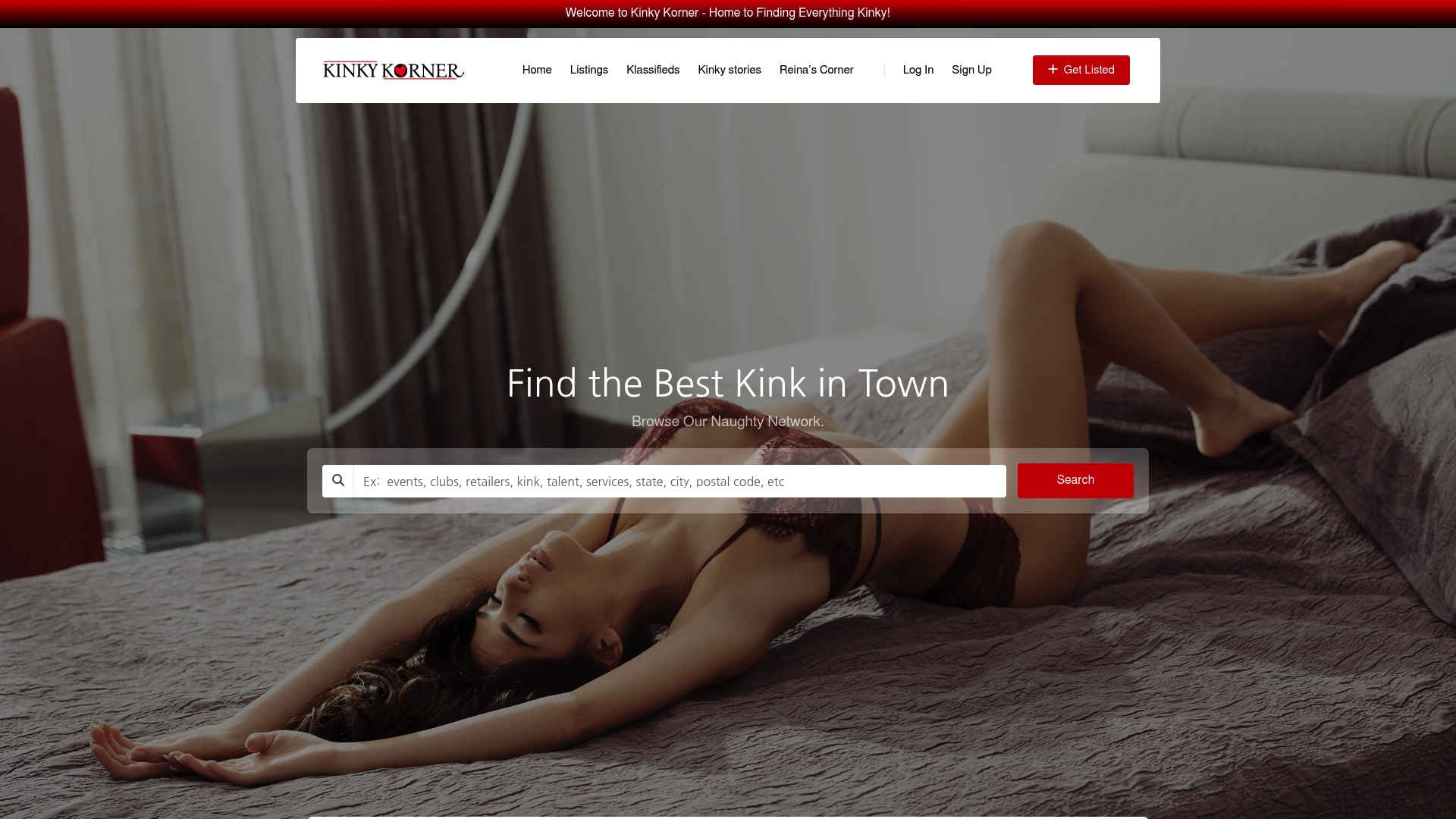
Once your releases, IDs and records are in order, the next question is where people can find you. Kinky Korner is a marketplace where individuals and businesses list adult-themed services, and where readers browse erotic writing, comics and art focused on kink and fetish interests. Photographers, studios, performers and event hosts list under categories like Retailers & Studios, Kink Events, Fetish and Only Fans Creators on our categories page.
There is a limited free listing, a monthly plan at $4.99 per month, and a yearly premium plan at $149.95 per year, all on the pricing page. You can start from kinkykorner.com and pick the tier that fits how often you shoot and book.
If you are posting classifieds, our rules on 18+ verification, consent and reporting for fetish classifieds spell out what we expect. Submitting art? Read how to submit erotic art first.
Perspective
Here is how we see it. Kink runs on trust, and photos are trust you can screenshot. The scene partner who hands you their face, their body, their marks, is handing you something the law now treats as seriously as any other private property: they can sue you for $150,000, and in many states you can face felony charges, if you pass it around.
We built Kinky Korner because the adult and kink world deserves a place that treats creators, venues and readers like adults. That means a directory where professionals list what they offer in the open, with a free tier to get started and paid tiers for those who want more exposure. It also means being straight with you about the rules, because the people who get burned are rarely villains. They are people who skipped a release, shared one image "just this once," or never read the fine print.
Get consent in writing, scoped to the use. Keep your records. Ask before every post. Then put your work where your people can find it.
Prenston
FAQ
Is it illegal to take nude photos of someone with their permission?
No. Between consenting adults, taking nude or erotic photos is legal. The legal risk comes from shooting without consent where someone expects privacy, from what happens when the images are shared or sold, and from anyone being under 18.
Can someone sell or publish my nude photos without my permission?
In most situations, no. Consent to have a photo taken is not consent to distribution, and the federal civil statute says so explicitly. Depending on the facts, the person could face federal criminal charges under the TAKE IT DOWN Act, a federal civil suit with $150,000 in liquidated damages available, and state criminal or civil liability.
Do I need a model release for nude photography?
No single federal law mandates a release for every shoot, but a written release is the best proof that the model agreed to the specific uses you have in mind. If your images show actual sexually explicit conduct and are distributed in interstate commerce, Section 2257 separately requires ID verification and record-keeping.
Is it illegal to send nudes to another adult?
Private, mutual sharing between consenting adults is not what these laws target. The laws focus on sharing images with others without consent. Forwarding someone's image, even one they sent you voluntarily, can bring criminal and civil exposure.
What should I do if someone posts my private pictures?
Save evidence first, then file a removal request with the platform. Platforms covered by the TAKE IT DOWN Act must act on valid requests within 48 hours. Then consider a police report and a consult with a lawyer in your state about civil claims.
Sources
- WomensLaw.org: Is it a crime for someone to take nude images
- TAKE IT DOWN Act, Public Law 119-12
- DOJ Office on Violence Against Women: Sharing intimate images without consent
- Congressional Research Service: The TAKE IT DOWN Act
- Congressional Research Service: Federal Civil Action for Disclosure of Intimate Images
- 15 U.S. Code § 6851
- California Attorney General: Resources for Victims
- Arizona Revised Statutes 13-1425
- 13 V.S.A. § 2606
- D.C. Code § 22-3053
- 18 U.S.C. § 2257
- Super Lawyers: Revenge Porn and the Law in My State