

A good sex educator profile answers four questions in the first screen: who you are, what you're trained in, who you teach, and what you won't do. The examples below, from working educators across the US, show how that looks in practice, and the template at the end lets you write yours without sounding like a résumé or a sales pitch.
If you teach kink, the stakes are higher. Your readers are deciding whether to trust a stranger with something vulnerable. So this guide leans on educators who work with BDSM, kink and non-monogamy, and on what makes their profiles feel safe to click "book" on.
TL;DR
- Strong profiles pair credentials with an audience: not just "certified educator" but who you serve and how.
- Name your certifying body and your scope. Say plainly what education is, and what it isn't (therapy, diagnosis, medical care).
- For kink, show risk-aware, consent-forward language and your own hard lines. Skip hype and shock value.
- Use first person, concrete specialties and one clear way to work with you.
- List your services where adult readers already look. Kinky Korner has a free listing and paid tiers.
Table of Contents
- What a sex educator profile actually has to do
- Seven sex educator profile examples, and why they work
- Credentials: say what they are and what they cover
- Educator, coach, therapist: draw the line in your own words
- Writing about kink expertise without overselling it
- A profile template you can adapt
- What makes a profile trustworthy to adult readers
- Where to put your profile so the right people find it
- Our perspective
- FAQ
- Sources
What a sex educator profile actually has to do
A sex educator, as the American Board of Sexology puts it, designs and delivers sexuality education programs in schools, community groups or public health settings, covering things like consent, safer sex and sexual orientation. In the adult and kink world the same job shows up as workshops, private coaching, rope classes, conference talks and online courses.
Your profile is the first workshop you teach, and the reader is auditing it. They want to know three things fast:
- Are you qualified? Training, certification, years of practice.
- Are you for me? Identity, relationship style, experience level, kink or vanilla.
- Are you safe? Consent language, limits, and what you refer out.
The American Board of Sexology lists cultural sensitivity, adaptability and a commitment to sex-positive education as marks of effective educators. A profile that shows those traits, rather than claiming them, wins the click.
Seven sex educator profile examples, and why they work
These are real public profiles. We're describing what each does well, not rating the educators.
1. The credentials-plus-audience profile
Holly Schaffner's profile at The Pleasure Professor is a clean model. It lists her titles (certified sexologist, certified sex and kink educator, kink-informed consultant, relationship and intimacy coach, plus a Master of Public Health). It then says who is welcome: adults of diverse identities, bodies and relationship styles, including polyamorous, swinger and kink-curious or BDSM-experienced adults.
What to steal: the audience is named in the same breath as the credentials. A reader with a specific life (poly, newly kink-curious, long-time player) finds themselves in the text.
2. The senior-educator profile
Tristan Taormino's about page stacks proof in a logical order: books written, anthologies edited, education, and a program she created for educators. Then it states her approach (keynotes, workshops and trainings built on sex-positive, public health and social justice models) and her specialties, which include kink and BDSM, ethical non-monogamy and feminist porn. It also notes nearly 500 presentations across several countries.
What to steal: a number beats an adjective. "Nearly 500 presentations" says more than "experienced speaker." If you're newer, your numbers are smaller, but you still have them: workshops taught, students served, years in the community.
3. The kink-specific profile
Maeve McBride describes herself as an erotic and BDSM educator with more than two decades exploring kink. Her approach is spelled out: evidence-based education, anatomy, goal-setting, mindfulness and communication tools in a non-judgmental, consent-forward environment. Her audience is people of all persuasions who want to explore pleasure. She also says where she works: in person in the Pacific Northwest, online and at international conferences.
What to steal: delivery details. Readers want to know whether you're local, remote or both before they read another word.
4. The identity-centered profile
Pleasure Pie, a Boston-area organization, introduces each educator through approach, audience and specialty. One educator centers women of color and survivors of color. Another builds inclusive learning spaces for BIPOC and LGBTQ+ youth and adults. A third is a trauma-informed queer educator focused on consent, pleasure and social justice. The group frames its work as sex-positive, feminist and anti-oppressive.
What to steal: a specific niche reads as more credible than "everyone is welcome." You can still welcome everyone. Lead with the people you serve best.
5. The local-credentials profile
Sex Positive Sacramento's team page ties each educator to a license or certification and a concrete audience. One is a licensed clinical social worker who is also a certified sex educator. Another is a licensed marriage and family therapist who presents to audiences from college students to mental health professionals. A third has a psychology degree with a sexuality studies minor and teaches safer sex play and toy care in kink and polyamorous communities.
What to steal: license numbers and degrees are checkable. When you're licensed in something, say so. When you aren't, say what you trained in instead.
6. The multi-certified, voice-forward profile
Anne Hodder-Shipp, a Portland educator, lists AASECT, Kinsey Institute and other training, then writes in a plain, no-b.s. voice about a sex-positive, non-judgmental approach for clients of all ages, experience levels and lifestyles. Her specialties include trauma and shame, critical thinking and emotional intelligence.
What to steal: tone. Her profile sounds like her. If your workshops are funny and blunt, your profile should be funny and blunt, with the credentials still right there.
7. The risk-aware kink educator profile
Vahavta's Kink Beyond Limits profile says she aims to give honest, risk-aware information, admits when she doesn't have the answers, and has hard lines she won't cross. She also runs a risk evaluation database and lists her identity and a decade of experience.
What to steal: limits. Telling readers what you won't do builds more trust than a list of everything you will.
Credentials: say what they are and what they cover
In the US, there isn't one license called "sex educator." Certification is voluntary and comes from professional bodies. AASECT offers a Certified Sexuality Educator credential, and that role doesn't involve one-on-one therapy or diagnosis. Sex therapists, by contrast, typically hold a mental health license plus extra AASECT training.
That's why scope language matters. The Institute for Sexuality Education's faculty page, for instance, lists AASECT-certified educators with their specific roles and focus areas, such as sexuality and autism. The Sexual Health Alliance's faculty page does something similar: it names a clinical sexologist and certified sex therapist whose work covers kink, BDSM and poly issues, next to educators certified through its training.
Write your credential line in three parts:
- The credential: "AASECT Certified Sexuality Educator," "Certified Sex and Kink Educator," or the degree.
- The body or school that issued it, so a reader can look it up.
- The year or length of practice, if it helps you.
If you hold a license in another field, keep the two separate. Heather Edwards, a physical therapist who is also an AASECT-certified sex counselor, states that her coaching and counseling fall outside her physical therapy license. That one sentence protects her and tells readers exactly what they're buying.
Educator, coach, therapist: draw the line in your own words
Readers mix these up, and a vague profile lets the confusion run. Holly Schaffner's page is direct: her work is education and coaching, not psychotherapy, diagnosis or treatment, and she refers clients to licensed providers when needed.
A simple version you can adapt: "I teach and coach. I don't diagnose or treat. If what you're dealing with needs a therapist or a doctor, I'll tell you and help you find the right kind of provider."
If you are a reader rather than an educator, the same rule applies from your side. Pain during sex, trauma that surfaces during play, or sexual health symptoms belong with a licensed therapist or a physician. A good educator will say so.
Writing about kink expertise without overselling it
Kink profiles fail in two ways. Some are so cautious they say nothing. Others are so provocative they say nothing useful. The better ones sit in the middle.
Aidan Sunassee describes a facilitation style that is trauma-aware, inclusive and informed by research and says he meets people without pathologizing their pleasure or power. That pairs affirmation with academic grounding and makes no clinical claims.
Margaux Underwood's profile names her training in somatic sex education, her membership in a professional association with ethical standards on consent and touch, and her specific skills: BDSM education and rope bondage instruction. Chels Morgan names the frameworks behind their work: intersectional, disability justice and transformative justice.
Use these as a checklist for your own kink language:
- Name your training, not just your years. "Ten years in the scene" is real, and it's stronger beside a certification or a mentor lineage.
- State your consent frame in one sentence. Negotiation, check-ins, aftercare, the right to stop.
- Be specific about risk. "Rope bondage, including nerve safety and emergency release" beats "impact play expert."
- Include your hard lines and the topics you refer elsewhere.
- Skip the shock. You can be explicit about topics without making your bio a dare.
For the vocabulary behind this, our guides on consent, safety and erotic expression and consensual kink are good references to keep open while you write.
A profile template you can adapt
Here's a skeleton. Swap every bracket for something true and specific.
Headline: [Your name], [credential], [one-line specialty]. Example: "Alex Rivera, CSE. Consent-first kink education for couples and new players."
Paragraph 1, who you are: Credential, certifying body, years of practice, one detail that makes you human.
Paragraph 2, who you teach: The audience in plain words. Identities, relationship styles, experience levels, kink or vanilla.
Paragraph 3, how you teach: Your approach in three or four phrases. Trauma-aware, humor-forward, evidence-based, hands-on or talk-only.
Paragraph 4, what you offer: Workshops, one-to-one sessions, talks, online classes. Location or "online only."
Paragraph 5, scope and limits: What you don't do and who you refer to.

Close: One next step. A booking link, an inquiry form, a listing page.
A short worked example
I'm Jordan, an AASECT Certified Sexuality Educator in Denver with six years teaching adults. I work with couples and solo folks who are curious about kink and want to start without guesswork. Expect plain talk, a lot of negotiation practice and zero pressure. I teach workshops and book private sessions, in person and online. I'm an educator and coach, not a therapist, and I'll point you to licensed help when that's what you need.
That's about eighty words, and it answers all four first-screen questions. (Jordan is a made-up example, not a real person.)
What makes a profile trustworthy to adult readers
After looking across these pages, the same traits keep showing up:
- Checkable facts: a certification, a degree, a license number, a published book or a named program.
- A named audience, with the educator's own identity stated when it matters to the work.
- Plain scope language, with the therapy and medical line drawn clearly.
- A voice, because a reader who feels your tone knows what your room will feel like.
- One clear path to work with you, not six competing buttons.
If you want a second angle on writing about yourself, our piece on building a kink profile that drives real connection covers the personal side of the same craft.
Where to put your profile so the right people find it
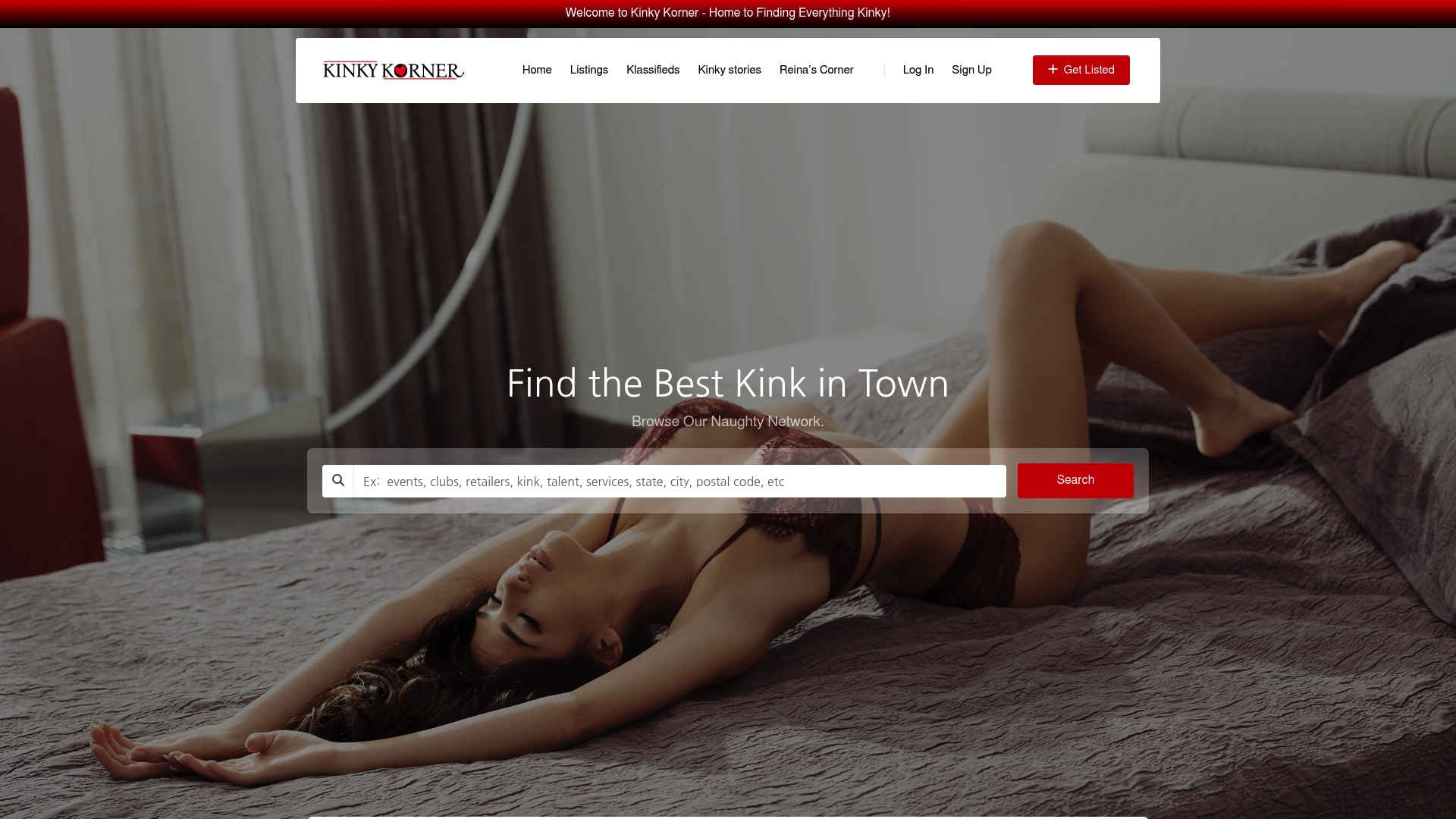
A strong profile on your own site helps people who already know your name. A listing in a directory helps the ones who don't. Kinky Korner has a Professional Services category, along with categories for kink events and fetish, so educators can sit near the workshops and communities their readers are already browsing.
We offer three listing options: a free listing, a Monthly plan at $4.99 per month, and a Yearly Premium plan at $149.95 per year. The profile you've just drafted is what goes into the listing. You can see the plans and start a listing in a few minutes.
Readers can also explore why people use kink services and why they join erotic communities, which tells you what your future students are looking for when they land on your page.
Our perspective
We read a lot of profiles, and the ones that work all do one thing: they sound like a person who has thought about the reader's safety before the reader asks.
Kink is a field where trust is the product. A new player isn't just choosing a class. They're choosing who gets to explain risk, consent and aftercare to them. So the best educator profiles don't hide behind jargon or titles. They say what they know, how they know it, who they serve and where their limits are.
We built Kinky Korner as a dedicated hub for adult services, creators, events and kink content, so educators don't have to compete with unrelated noise. A listing here puts your profile next to the people looking for exactly this kind of work. Start with the free listing, tighten your copy using the examples above, and move to a paid tier when you want more reach.
The community is better when educators are visible, clear and honest. Write the profile you'd want to read before trusting someone with your first rope.
Prenston
FAQ
Who is a sex educator?
A sex educator teaches sexuality topics such as consent, anatomy, safer sex, orientation and relationships. They design and deliver programs in schools, community groups, public health settings and private practice. In the adult world, that often means workshops, coaching and conference talks, including kink and BDSM education.
Is a sex educator the same as a sex therapist?
No. An educator teaches and coaches. A sex therapist is a licensed mental health professional who may also hold AASECT sex therapy certification. Educator certification doesn't cover one-on-one therapy or diagnosis. If you're dealing with trauma, pain or a medical issue, see a licensed therapist or physician.
What should I put first in my profile?
Put your name, your credential and your specialty in the headline, then the audience you serve in the first paragraph. Readers decide in seconds whether you're qualified and whether you're for them. Save the long story and the philosophy for further down.
Do I need a certification to list myself as an educator?
Certification is voluntary, not a license, but it gives readers something to check. If you don't have one, list the training, mentors, courses or years of practice you do have, and say honestly what they cover. Our BDSM education guide explains what a consent-first starting point looks like.
Sources
- Becoming a Sex Professional, American Board of Sexology
- About Holly Schaffner, The Pleasure Professor
- About Tristan Taormino
- Maeve McBride
- Our Educators, Pleasure Pie
- About Us, Sex Positive Sacramento
- Anne Hodder-Shipp, Portland, OR
- About Vahavta, Kink Beyond Limits
- Institute for Sexuality Education faculty
- Sexual Health Alliance faculty
- Heather Edwards
- Aidan Sunassee
- Press, Coalescent Coaching
- About Chels Morgan
- How to Become a Sex Therapist, counselingpsychology.org